
News
Subscribe to the Australian BioCommons monthly newsletter or read previous editions
Data management solutions designed for Australian bioscience
Life sciences researchers are benefiting from the nifty integration that allows secure data transfer between Galaxy Australia and CloudStor. The streamlined movement of data between the two freely-available platforms demonstrates how collaboration between services are meeting the needs of Australian life science researchers.
Life sciences researchers are benefiting from the nifty integration that allows secure data transfer between Galaxy Australia and CloudStor. The streamlined movement of data between the two freely-available platforms demonstrates how collaboration between services are meeting the needs of Australian life science researchers.

The 20,500 registered users of the Galaxy Australia data analysis platform can now easily and securely move their data to and from the AARNet CloudStor research data storage platform. The integration was introduced to allow users of Galaxy Australia to more easily share data with colleagues and collaborators through CloudStor. The ability to seamlessly move data into Galaxy for analysis and back out for long term storage avoids messy local uploads and downloads.
This powerful combination of secure scalable cloud storage with a ready-to-use analysis platform comprising all the necessary compute, tools and workflows is easily accessed. CloudStor can be linked to a Galaxy user's account through a simple configuration, with data security at both CloudStor and Galaxy. Users simply navigate to their folders and files and import data directly through Galaxy’s Upload Data / Choose remote files option. Similarly, when an analysis is finished, Galaxy users simply invoke the “Export datasets to remote files source” where they can select single, multiple or dataset collections for export to CloudStor.
If you are interested in using the Galaxy Australia and CloudStor integration, further information is available to support you to make the connection.
Galaxy Australia is an Australian BioCommons service, jointly supported by the Australian Government’s National Collaborative Research Infrastructure Strategy (NCRIS) through the Australian Research Data Commons and Bioplatforms Australia; the Queensland Government’s Research Infrastructure Co-investment Fund; and The University of Melbourne.
Managed by QCIF, Melbourne Bioinformatics and AARNet, Galaxy Australia is underpinned by computational resources provided by AARNet, the ARDC, The University of Melbourne, The University of Queensland, QCIF, National Computational Infrastructure, and the Pawsey Supercomputing Centre.
The BioCommons BYOD [Bring Your Own Data] Expansion Project received investment (doi.org/10.47486/PL105) from the Australian Research Data Commons (ARDC). The ARDC is funded by the National Collaborative Research Infrastructure Strategy.
Popularity of Galaxy Australia prompts move of core services to AARNet
Galaxy Australia has moved its head node and associated services to Australia’s Academic and Research Network (AARNet) to allow increased on-demand support for more users. This move provides a long-term, high-performing and reliable hosting environment for Galaxy Australia infrastructure.

As a key web-based platform for bioinformatics analysis in Australia, Galaxy Australia is focused on maintaining a robust front-end web presence with the scalable capacity and high performance expected by researchers. A continuous improvement approach is in place to ensure the needs of a growing cohort of researchers registering for the service are met.
Galaxy Australia has moved its head node and associated services to Australia’s Academic and Research Network (AARNet) to allow increased on-demand support for more users. This move provides a long-term, high-performing and reliable hosting environment for Galaxy Australia infrastructure. Importantly, the move also enables the Pawsey Supercomputing Research Centre (Pawsey), a tier one national infrastructure available to all researchers in Australia, to focus on providing back-end compute services to power Galaxy Australia’s more than 1,800 installed tools, covering genomics, proteomics and metabolomics, statistics and data visualisations.
AARNet is a national resource owned by Australian universities and national science agency CSIRO and has provided ultra-high-speed telecommunications and collaboration services specifically for research and education for more than three decades. A trusted sector partner renowned for an exceptionally high level of service delivery, AARNet will provide Galaxy Australia with 24/7 operational monitoring and response services, seamless network configuration and failover management, and the hardware capacity to support user and data growth projections.
With the AARNet team taking care of all the front-end physical infrastructure operations, the Galaxy Australia team can focus on using computational resources at Pawsey, University of Melbourne, QCIF, and Azure to meet the growing needs of the more than 19,500 registered users of the service.
Prior to the deployment to AARNet, an integrated team working across AARNet, Pawsey, Queensland Cyber Infrastructure Foundation (QCIF) and Melbourne Bioinformatics undertook many months of exhaustive preparation and testing. This all paid off, with little service downtime experienced during the deployment and Galaxy Australia jobs now running successfully from AARNet.
We are delighted to be providing a high-performing long-term hosting solution that will support the growth and development of Galaxy Australia and help life sciences researchers with their important work. This is a great example of how AARNet works closely with sector partners to solve complex technical problems with infrastructure and make it easier for researchers to analyse data and collaborate.
Chris Hancock, AARNet CEO
AARNet joins QCIF and Melbourne Bioinformatics in the collective responsibility for the management of the Australia BioCommons’ Galaxy Australia service.
The move to AARNet means our existing and new users will experience fast response times across all aspects of their Galaxy experience - homepage loading, history refreshes, and workflow execution to name a few. On top of the performance improvements, we add new tools weekly, have annotated tools to aid in discovery, and updated our support options. If it's been a while since you last visited Galaxy Australia I recommend coming back for a visit.
Gareth Price, Galaxy Australia’s Science Lead
Galaxy Australia is an Australian BioCommons service, jointly supported by the Australian Government’s National Collaborative Research Infrastructure Strategy (NCRIS) through the Australian Research Data Commons and Bioplatforms Australia; the Queensland Government’s Research Infrastructure Co-investment Fund; and The University of Melbourne.
Managed by QCIF, Melbourne Bioinformatics and AARNet, Galaxy Australia is underpinned by computational resources provided by AARNet, the ARDC, The University of Melbourne, The University of Queensland, QCIF, National Computational Infrastructure, and the Pawsey Supercomputing Centre.
The BioCommons BYOD [Bring Your Own Data] Expansion Project received investment (doi.org/10.47486/PL105) from the Australian Research Data Commons (ARDC). The ARDC is funded by the National Collaborative Research Infrastructure Strategy.
This announcement was co-published with AARNet.
New reports provide insights into what's needed for better sharing of human genomics research data in Australia
Insights from the Human Genomes Platform Project (HGPP) knowledge discovery phase have recently been published online. This ensures that knowledge is shared with others who will follow on the complicated path of sharing human genomics research data.

The HGPP will enhance capability for securely and responsibly sharing human genomics research data to maximise the utility of these sensitive and valuable assets.
Insights from the Human Genomes Platform Project (HGPP) knowledge discovery phase have recently been published online. This will ensure that knowledge is shared with others who will follow on the complicated path of sharing human genomics research data. Updates will be shared publicly throughout the life of the project, and the most recent reports detail the project’s Discovery Phase.
Representing many of the largest human genome sequencing and analysis efforts in Australia, the HGPP team is working with global peers to learn from other initiatives with similar ambitions to share sensitive research data. Consulting GA4GH and ELIXIR’s standards to better understand the international contexts, the project has described Australia’s own unique requirements.
At the heart of any technology platform is Identity and Access Management (IAM): a collection of standards, policies and technologies that enable a platform to determine whether to permit access to a user. In a federated environment IAM is the glue that enables loosely coupled systems to establish strong trust relationships for the purposes of data sharing. Trust relies on technologies such as cryptography but also on coordinated policies outlining shared expectations between federation participants.
The initial focus of the Federated IAM sub-project team was a discovery and recording phase to define the current state of identity and access management in the community, the set of problems that need to be addressed, and key stakeholders and their (likely) requirements. To learn more about the current state of processes and tools for identity and access management across the community, national community needs, gap analysis, and identification of international projects with components suitable to canvas and potentially pilot, read the Human Genomes Platform Project: Federated Identity and Access Management (IAM) Discovery Phase Report.
A major challenge for human genome data sharing is navigating restrictions on secondary use. Decisions on granting access to data require significant effort by Data Access Committees (DAC). This manual approach is slow and burdensome. The aims of the DAC Automation sub-project are to explore semi-automated data access request and approval processes for the national human genome research community. For an Australian genomics federation to be successful, widespread adoption of new processes and systems will be needed. To learn more about the current state of relevant processes and tools, national community needs, gap analysis, and identification of international projects with potential solution components for piloting in later project stages, read the Human Genomes Platform Project: DAC Automation Discovery Phase Report.
The Human Genomes Platform Project is a partnership between Australian Access Federation, Australian BioCommons, Australian Genomics, Garvan Institute of Medical Research, National Computational Infrastructure, QIMR Berghofer Medical Research Institute, University of Melbourne Centre for Cancer Research and Zero Childhood Cancer. The project forms part of the Australian BioCommons’ Human Genome Informatics theme and is funded through NCRIS via the Australian Research Data Commons (https://doi.org/10.47486/PL032) and Bioplatforms Australia.
‘R’-eaching for the sky: facilitating R training in the Cloud
R and RStudio are popular tools for robust and flexible data analysis but getting started can be daunting. Find out how we’re supporting life scientists on their R learning journey with collaborative training supported by access to cloud computing.
Biologists need data analysis skills to be able to interpret, visualise and communicate their research. R and RStudio are popular tools for robust and flexible data analysis but getting started with R can be daunting. While many generic R courses are available there is high demand for contextualised training in R for life scientists.
The Australian BioCommons and the National Bioinformatics Training Cooperative recently teamed up with Dr Saskia Freytag (Laboratory Head, Personalised Oncology Division, WEHI) to deliver a workshop on R: fundamental skills for biologists to a national audience. Saskia is passionate about empowering life scientists to use R and fostering connections with the R community. We’ve previously worked with Saskia to deliver a popular webinar on Getting Started with R. This workshop was based on a lesson on data analysis with R and Bioconductor that Saskia co-wrote as part of The Carpentries Incubator project.
Over four, three hour sessions in June, 110 bioscientists from across Australia joined BioCommons online to start their journey in R. Participants came from both regional and metropolitan organisations, where they work on a variety of topics from conservation of native flora to infectious diseases. Lead trainers Saskia, Ms Adele Baraguhare (Monash Bioinformatics Platform), Dr Brendan Ansell (WEHI) and Dr Maria Doyle (Peter MacCallum Cancer Centre) guided participants through topics ranging from foundations and best practices to data analysis and visualisation and generating reports with packages such as ggplot2, dplyr, tidyverse and SummarizedExperiment.
Importantly, participants also got the chance to put their new skills into action by working through hands-on exercises in small groups with support from a team of 23 facilitators. The workshop has already had an immediate positive impact on participants’ research.
“What would have taken me a long time to figure out before the workshop was comparably easy when I had to analyse my data today. The timing couldn't have been better to immediately apply the new skills!”
Participant: Julia Voelker, PhD Candidate, Southern Cross University.
The success of the workshop is down to the collaborative approach fostered by the National Bioinformatics Training Cooperative. By pooling resources and expertise we’re able to bring large groups of just the right people together - training more people more quickly and efficiently than any of us would be able to do alone. This model brings added benefits to the training community by fostering connections between trainers and the sharing of training best practice.
“The organisation was absolutely superb, one of the best I've ever seen, everything ran smoothly, adjusting as needed to keep to schedule.
The other trainers were super to watch and learn from and the facilitators were also great to learn from through their answers in Slack.”
Lead trainer: Maria Doyle, Peter MacCallum Cancer Centre
Robust technical infrastructure was also key to the success and smooth running of this workshop. Through our connections with ARDC we were able to provide access to RStudio running on the ARDC Nectar Cloud avoiding the challenges of installing R across multiple systems. The BioCommons team setup identical machines for each of the trainers, facilitators and participants by using Nectar’s OpenStack API to create 150 copies of a machine with 2 cores and 4GB of RAM on which all packages and data were preinstalled and comprehensively tested by the trainers. This ensured a consistent and proven experience for all involved and meant that the workshop could spend more time focusing on the how and why of using R.
R is a fundamental skill for life scientists. To embark on your own R learning journey you can watch our webinar on Getting Started with R and access the training materials from this workshop via Zenodo. You can find out more about our training events like our upcoming workshop on Single Cell RNAseq analysis in R by following us on Twitter and LinkedIn or subscribing to our newsletter.

Galaxy Australia to host next year's international Galaxy Community Conference
The Galaxy Community Conference is coming to Brisbane after years of campaigning by the Galaxy Australia team to bring this international event to our shores. GCC2023 will bring together hundreds of researchers, trainers, tool developers, software engineers, and computational infrastructure providers, from all over the world. This unique meeting offers a range of ways to exchange information about using the Galaxy data integration and analysis platform for data intensive science.

The Galaxy Community Conference (GCC) 2023 will come to Brisbane after years of campaigning by the Galaxy Australia team to bring this international event to our shores. The winning bid to host GCC2023 was announced overnight at GCC2022 in Minneapolis, Minnesota, USA.
Galaxy Australia’s Science Lead and Head of Computational Biology at QCIF Facility for Advanced Bioinformatics, Dr Gareth Price is elated:
Being entrusted with hosting the international GCC conference is recognition of how important our part of the world is to the Galaxy community. It’s a great opportunity to forge stronger ties with our regional colleagues while showcasing Australia to our US and European peers.
GCC2023 will bring together hundreds of researchers, trainers, tool developers, software engineers, and computational infrastructure providers, from all over the world. This unique meeting of back end developers, service deployers and research users offers a range of ways to exchange information about using the Galaxy data integration and analysis platform for data intensive science.
This annual gathering of the Galaxy community includes training, talks, posters, demos, Birds of a Feather meetups, and many other opportunities for collaboration and networking. The Galaxy community is a friendly and welcoming bunch and this conference is always a fun way for delegates to share their work and learn from others working in Galaxy-related data-intensive science.
The international Galaxy community hopes that the first GCC in the southern hemisphere will see many Galaxy users from the Asia Pacific region travelling to the Brisbane conference. Galaxy Australia is confident that GCC2023 will be a wonderful opportunity to strengthen ties between the Galaxy communities found in places like New Zealand, India, Japan and Africa.
We’ll keep you posted as the conference takes shape. Subscribe below to updates and we’ll hopefully make the decision easy to join us for GCC2023!
Bioinformatics training for researchers striving to improve the health and wellbeing of Aboriginal and Torres Strait Islander peoples
We are thrilled to announce that Menzies School of Health Research is joining our National Bioinformatics Training Cooperative. We hope to support the Northern Territory-based medical research institute in its ambition to improve the health and wellbeing of Aboriginal and Torres Strait Islander peoples.
We are thrilled to announce that Menzies School of Health Research is joining our National Bioinformatics Training Cooperative to increase its reach and impact across Australia. Menzies School of Health Research is one of Australia's leading medical research institutes dedicated to improving the health and wellbeing of Aboriginal and Torres Strait Islander peoples, and a leader in global and tropical health research into life-threatening diseases. Through partnerships with communities across northern Australia and the Asia-Pacific region, Menzies aims to translate their research into real change, and we hope the National Bioinformatics Training Cooperative can support this ambition.
In the past, we’ve noticed that national training events sometimes have participants representing all Australian states and territories - except for the Northern Territory. Seeking a way to reach more researchers in the NT, we invited Dr Mariana Barnes to join the Bioinformatics Training Cooperative.
Mariana is the Menzies’ High Performance Computing Support Officer and Bioinformatician. She’s responsible for software and user management of the HPC servicing both Charles Darwin University and Menzies. She provides training to enable researchers to utilise the local HPC, as well as undertaking her own Malaria research. Mariana is investigating targeted sequencing of diagnostic and surveillance markers in Plasmodium vivax and the human host.
“Working in the NT can be isolating, and sometimes leads to limited opportunities for networking, training and mentorship. I hope the Cooperative will be a way to facilitate some of that and I am very excited to be able to be part of it. I’m looking forward to facilitating training for - and maybe by - my colleagues here in the NT and connect us to the rest of Australia.”
Dr Mariana Barnes, Menzies School of Health Research
Mariana is going to help share information about our national program of free training events, assist with their delivery and connect us with her local research community. Say hello if you meet Mariana in a virtual break out room at one of our upcoming online workshops, and please make her NT colleagues feel welcome.

Help us make the BioHackathon global!
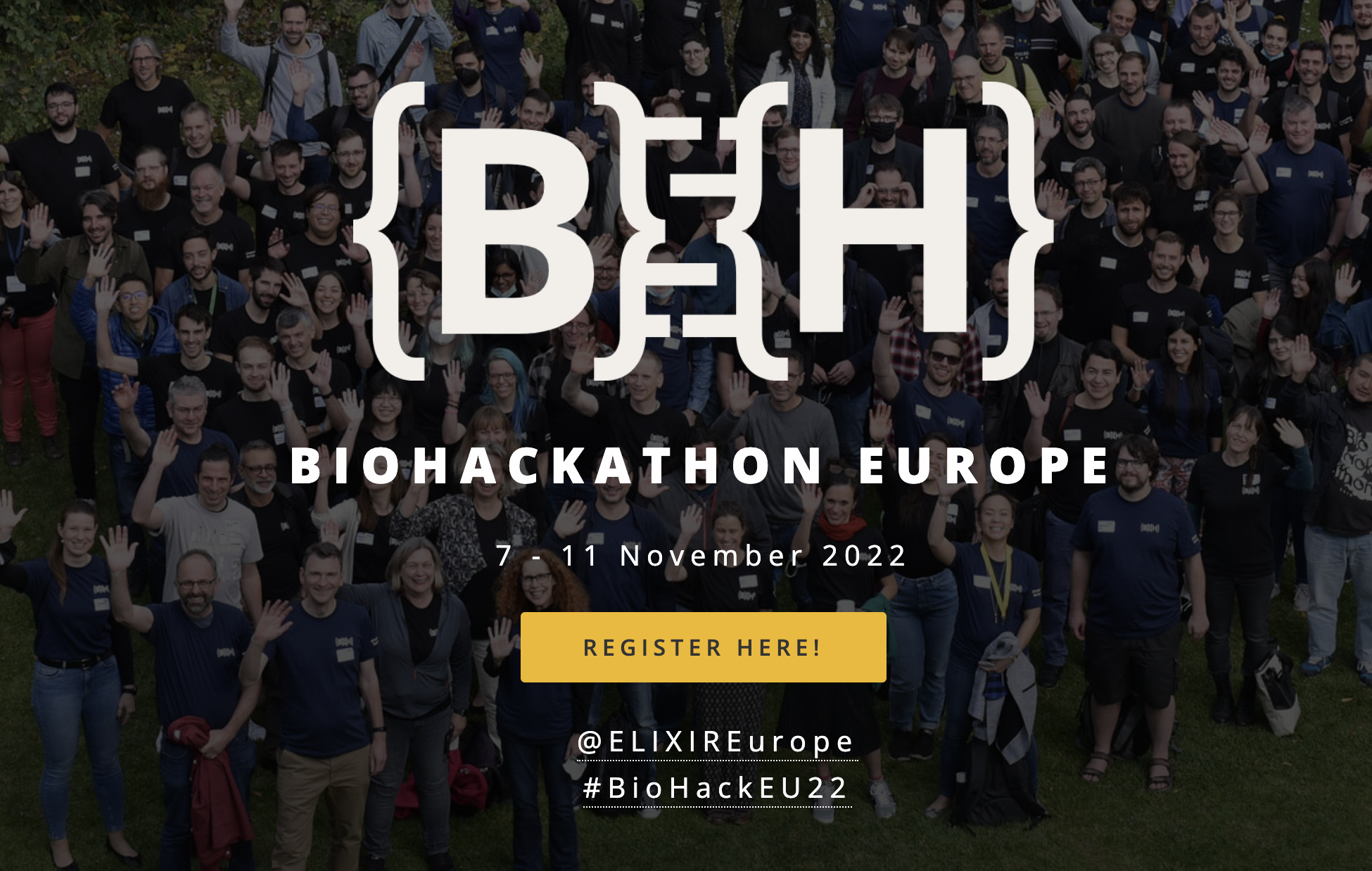
Are you interested in joining this year’s Biohackathon Europe - but from Australia? BioCommons is hosting the Australian Outpost so we are putting together a team who will work with the international participants in their timezone - but from a city close to home.
Are you interested in joining this year’s BioHackathon Europe but can’t travel to Paris? We are putting together a team who will join from Australia, working with the international participants in their timezone - but from a city close to home.
This is a unique opportunity to participate in a significant global event and network with your international peers while working intensively on practical coding challenges. We will fly you to a central point (TBC) to meet other Australian participants and set you up in a hotel for the duration of ELIXIR’s BioHackathon, 7-11 November 2022. We’ll even feed you some French food so we can all pretend we are in Paris!
We have chosen a few projects for the Australian Outpost of the Hackathon (details via links below). We will work alongside the live event in Paris, equating to 5pm-1am AEST / 3pm-11pm AWST / 7pm-3am NZST. We’ll do our best to keep you awake!
PROJECTS
Project 6: Building a robust and reproducible assembly and annotation pipeline for non-model eukaryote genomes
Project 20: Onboarding suite for Federated EGA nodes
Project 32: Training booster: developing FAIR training materials and Learning Paths
BioHackathon participation aims to:
Advance the development of an open source infrastructure for data integration to accelerate scientific innovation
Engage technical people in the bioinformatics community to work together on topics of common interest
Strengthen interactions, establish and reinforce collaborations through hands-on programming activities.
Please tell us asap if you are interested in joining the Australian Outpost of the BioHackathon Europe, which project/s would you like to participate in and why? When we get a feel for who is interested we will select a team of people and make further arrangements. No need to register for the waitlist yet on the BioHackathon Europe website - they are expecting to hear from us about the Australian Outpost soon.
Please submit your expression of interest to us before Mon 1 Aug 2022 and we will be in touch.
Adding Australian life science research’s voice to global conversations
BioCommons attended this month’s ELIXIR All Hands Meeting in Amsterdam, presenting work on behalf of national collaborators and sharing the Australian perspective on the shared needs and challenges facing bioinformatics and computational infrastructures.

BioCommons attended this month’s ELIXIR All Hands Meeting in Amsterdam, presenting work on behalf of our national collaborators and sharing the Australian perspective on the common needs and challenges facing bioinformatics and computational infrastructures. The 8th ELIXIR All Hands meeting brought together members of the ELIXIR community from across the ELIXIR Nodes, as well as collaborators from partner organisations like BioCommons, to review in-flight activities and discuss plans for the future.
Nigel Ward, our Associate Director: Platforms was invited to speak at the ELIXIR International Impact Plenary, and presented details of the impact the BioCommons-ELIXIR Collaboration Strategy has yielded so far. Sharing how we do business resulted in a lot of interest (and tweets) amongst international peers about our unique approach. Feedback confirms that our efforts are well aligned and there are many opportunities for future collaborations.
The 'Science driven improvements to tools ecosystems' workshop investigated how infrastructures are evolving to support major science drivers, including biodiversity and COVID. Our Bioinformatics Engagement Officer, Johan Gustafsson was there to chair in person, with Nigel Ward. A raft of ELIXIR colleagues also presented in person, and additional Australian collaborators Sarah Beecroft from Pawsey Supercomputing Research Centre, Brian Davis from NCI Australia and BioCommons’ Steven Manos presenting virtually. The room was full of engaged delegates who wanted to investigate how to better support users and developers of workflows.
Human Genomics Data Specialist, Marion Shadbolt presented a poster on "National and international collaboration to facilitate human genomics data sharing in Australia: The Human Genomes Platform Project” on behalf of the BioCommons project involving Australia’s human genomics research leaders and national computing infrastructure partners. The poster detailing our collaborative work to leverage best practice technologies and global standards generated lots of great discussions and is now available on F1000Research.
The next opportunity for intensive engagement with our European network will be the BioHackathon Europe. We will soon open a call for expressions of interest to join us in (in Australia) to connect with BioHackathon teams in Paris in November - stay tuned!
Galaxy Australia featured in new publication about impact
Australian Research Data Commons has published a new impact booklet documenting how digital research infrastructure ensures Australian researchers are internationally competitive, including Galaxy Australia as a case study.

Australian Research Data Commons’ new impact booklet, Accelerating Research and Innovation Through Data has been published. It documents how digital research infrastructure ensures Australian researchers are internationally competitive through access to high-quality data assets, platforms, infrastructure, policies, people and training.
Galaxy Australia is one of the case studies chosen to demonstrate the importance of excellent research infrastructure to everyday life. It tells the story of how thousands of life scientists have used the research platform Galaxy over the past decade to analyse large biological datasets, accelerating research and innovation to understand diseases and improve health.
Global Research Infrastructure is Key for Fighting the Pandemic
Ready-made training environments for uplifting computational science skills in plant biosecurity
Molecular biologists and plant pathologists recently came together to learn how to use Galaxy Australia to implement small RNA sequencing for the detection of viruses and viroids in imported plants at the Department of Agriculture, Water and the Environment’s Post Entry Quarantine (PEQ) Facility.

Molecular biologists and plant pathologists recently came together to learn how to use Galaxy Australia to implement small RNA sequencing (sRNA-Seq) for the detection of viruses and viroids in imported plants at the Post Entry Quarantine (PEQ) Facility in Mickleham, Victoria.
The Science and Surveillance Group from the Australian Government’s Department of Agriculture, Water and the Environment took part in a three-day viral pathogen detection workshop from 23-25th May. During the intensive hands-on training, the group of fourteen learnt how to process sRNA-Seq data using a bespoke Galaxy Australia pipeline, GA-VirReport.
Participants made the most of Galaxy Australia’s tools and dedicated job queue for training during the workshop. Instructors from the Queensland University of Technology (QUT) reported that the workshop received a unanimous 5-star rating from attendees. The feedback received from the mostly beginner audience was that almost everyone left feeling ‘very comfortable’ performing basic functions in Galaxy Australia, as well as using the tailored Galaxy Australia workflows for processing sRNA-Seq data and reporting positive detections.
Researchers are increasingly using Galaxy Australia for their training events as it provides a stable service for the planning and delivery of training. Supported by ample computing resources to scale with the size of the event, it comes with a robust set of over 1,500 tools and offers a dashboard of attendee progress that facilitates real-time management of jobs and immediate troubleshooting - vital both in face-to-face and online training events.
In addition to the pathogen detection workshop, over 4,500 participants taking part in 42 other training events have logged on and run their hands-on exercises on Galaxy Australia in the past 18 months. These include training delivered by individual universities, national consortia, international conference workshops and global training events - including the wildly successful Galaxy Training Network Smorgasbord.
Dr Ruvini Lelwala, Research Associate in Bioinformatics at the School of Biology & Environmental Science, QUT, was one of the instructors in the hands-on training in processing sRNA-Seq data for virus and viroid testing in plants. Dr Lelwala is an experienced user who leverages the Galaxy Australia service to develop enhanced diagnostics for the detection of exotic plant pathogens.
“I would like to thank the Galaxy Australia support team for their continuous support throughout the project which extends far beyond this workshop. The workshop itself was successful in delivering bioinformatics training to molecular biologists with limited experience in handling high throughput sequencing data using the Galaxy Australia platform.”
High Throughput Sequencing enables the rapid detection of viruses and viroids in imported plant material in a single test and can accelerate the release of quarantined plant genetic stocks. This research ultimately aims to give growers faster access to new plant stock and a competitive boost to the Australian horticulture sector.
All Australian scientists can utilise the simple training interface and sophisticated behind-the-scenes infrastructure to support their training events. For further information about how Galaxy Australia can support your training events, contact the Galaxy Australia team at help@genome.edu.au.
The two projects underpinning the GA-VirReport workshop are:
The project Improving access to new germplasm through faster and more accurate diagnostics (MT18005) is funded by Hort Innovation using citrus, nursery, raspberry and blackberry, fresh and processing potato and table grape research and development levies, co-investment from Queensland University of Technology and contributions from the Australian Government. Hort Innovation is the grower-owned, not-for-profit research and development corporation for Australian horticulture.
The project Transformation of exotic plant disease testing at PEQ, Mickleham by implementation of high-throughput sequencing (BIP202048) is funded by the Department of Agriculture, Water and the Environment (DAWE) Biosecurity Innovation Program.