Empowering wet-lab postgraduate students with computational and communication skills
Australian BioCommons team members have helped to equip the next generation of researchers with the skills and confidence to work at the cutting edge of data-driven science.
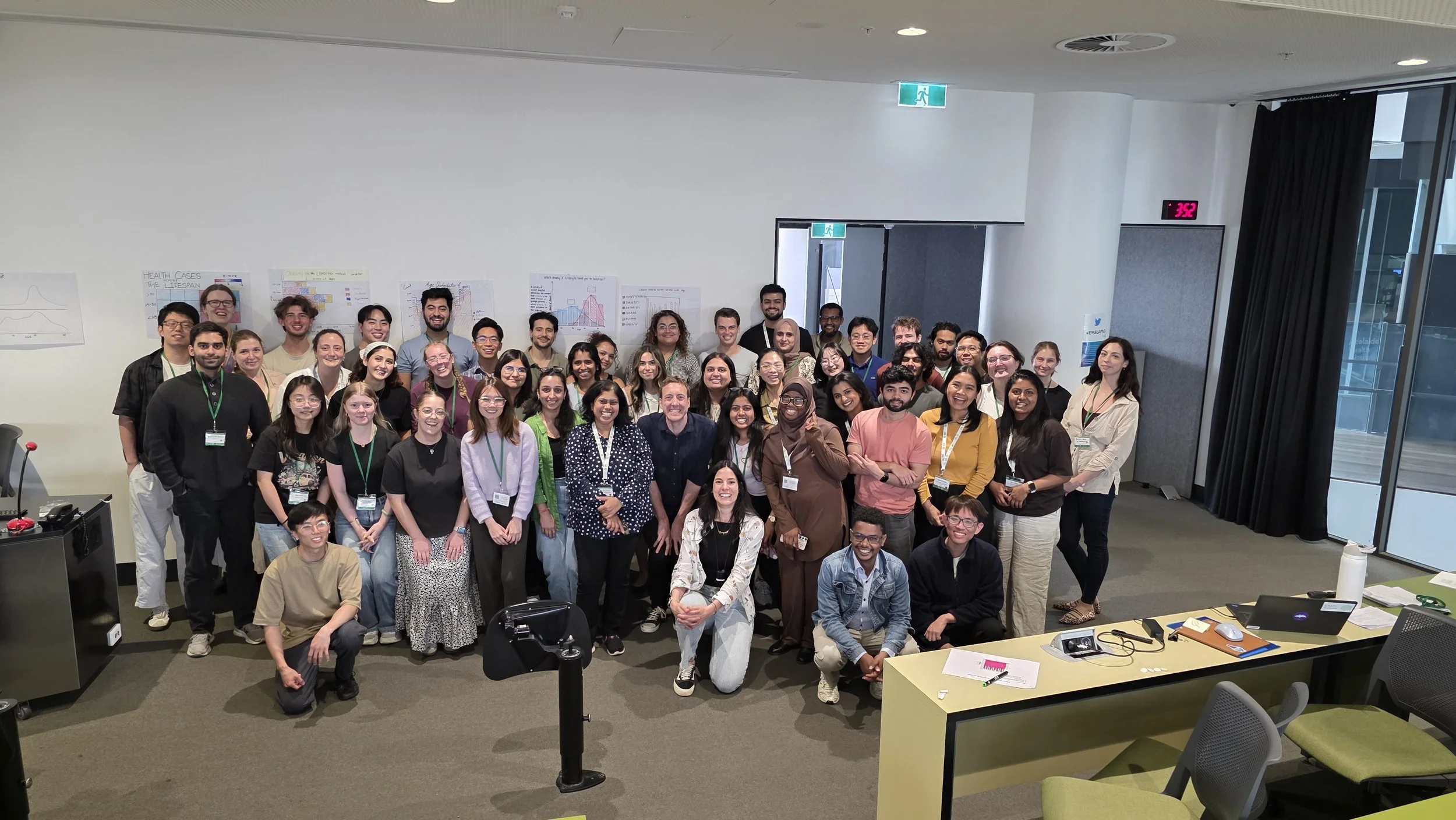
As part of EMBL Australia’s 10th annual PhD course, consisting of over 60 high-achieving PhD students in the early part of their research careers, Dr Benjamin Goudey and Dr Giorgia Mori joined other experts at South Australian immunoGENomics Cancer Institute (SAiGENCI) to deliver sessions across the two-week program.
The topics ranged from emerging life sciences technologies to Artificial Intelligence (AI) foundations and scientific modelling, and also included science communication and ethics. The goal of BioCommons’ involvement was to help bridge the gap between the wet-lab results and dry-lab computational skills that make up modern scientific research.
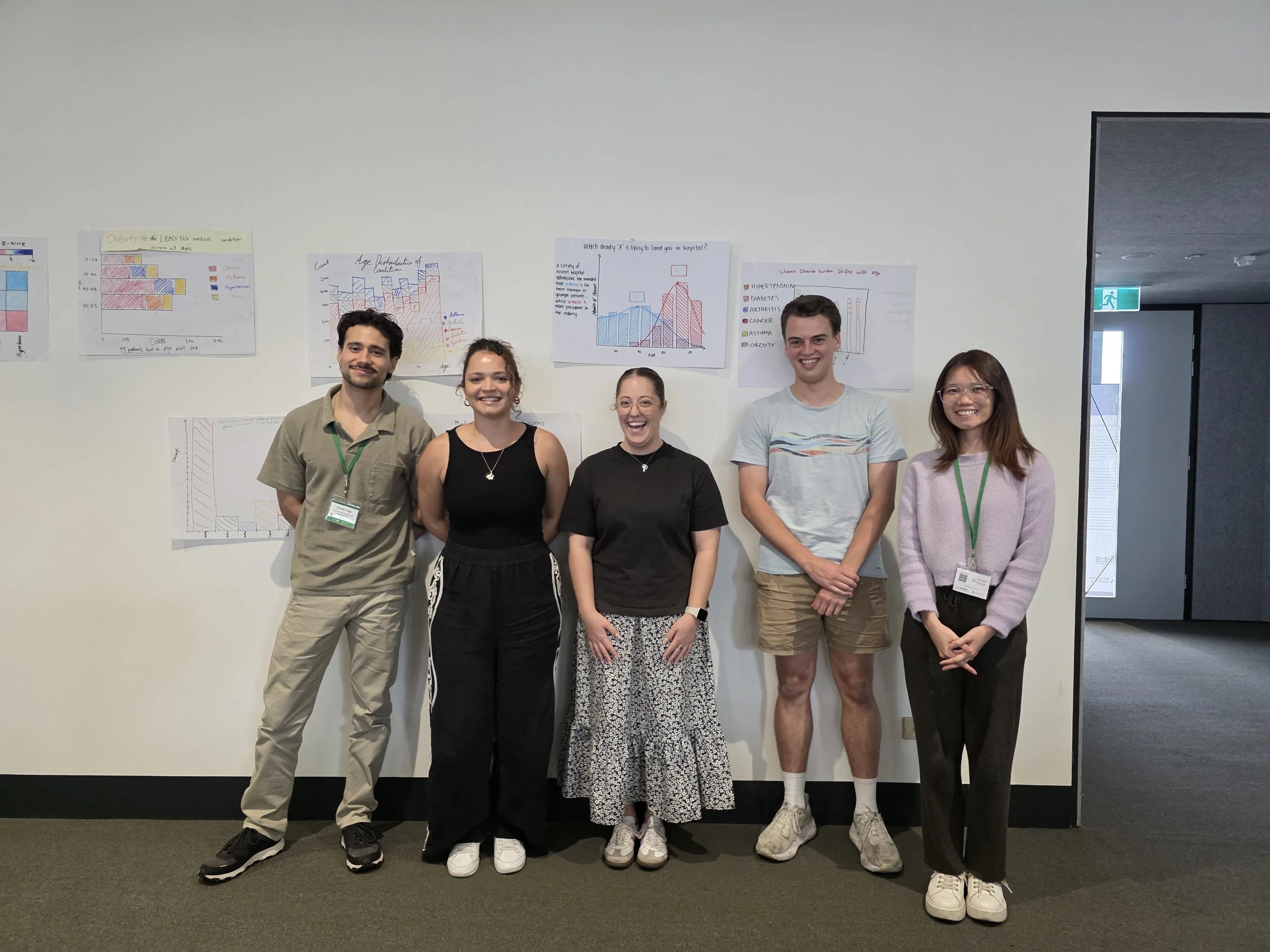
Dr Giorgia Mori’s training expertise had the room buzzing as students worked in small groups to identify the most effective data visualisation methods to explore how to tell a compelling story with their data.
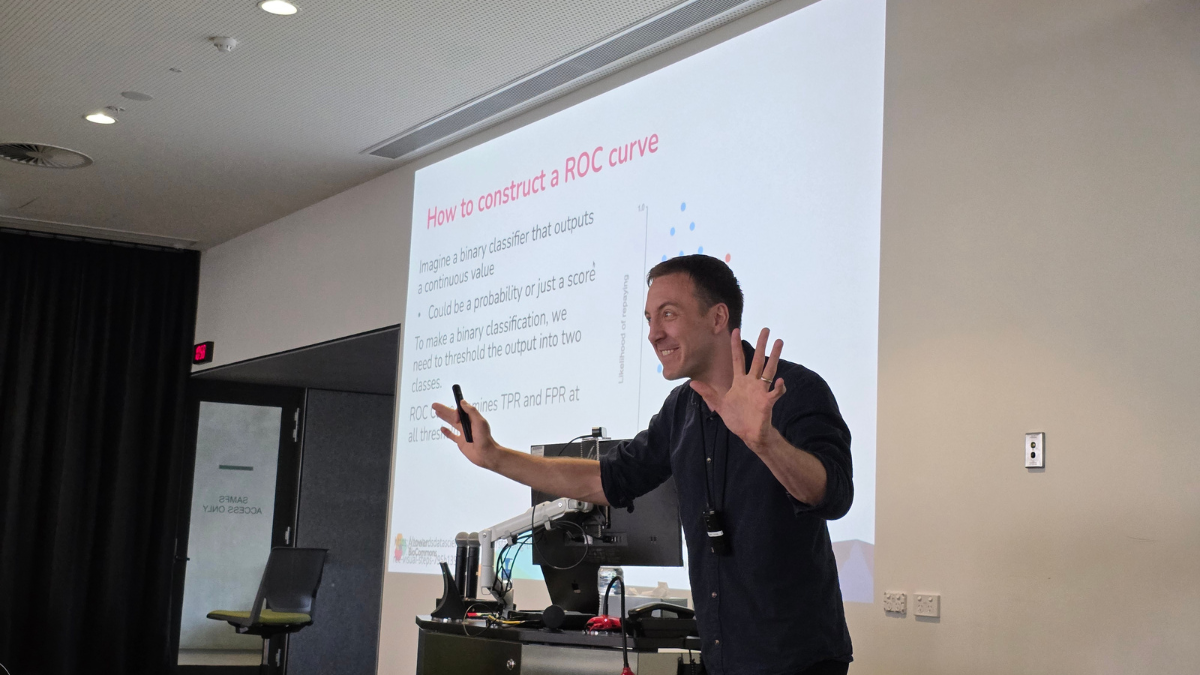
BioCommons’ AI Technical Lead, Dr Benjamin Goudey, delivered a dynamic crash course regarding these topics, giving a clear, high-level understanding of when and why AI/ML can be an appropriate tool in the life sciences.
As noted in EMBL Australia’s event report, Madison Hindes from Adelaide University came away with a new appreciation for dry-lab science:
“I definitely thought science happened in a lab until coming here and now I can appreciate there is much more to it than that.”