
News
Subscribe to the Australian BioCommons monthly newsletter or read previous editions
Microbial insights into respiratory disease enabled by national training
Learn how training on the next-generation microbiome bioinformatics platform, QIIME 2, helped progress Australian research on infectious respiratory diseases.

Considerable microbial diversity was seen on this MacConkey agar plate collected from a study patient.
Image credit: Olusola S Olagoke
Many research programs are driven by the goal of improving the lives of people impacted by chronic diseases. Genetic insights are key and researchers need to apply an arsenal of new and sophisticated tools to progress our understanding of human health. Participants in the recent workshop on the next-generation microbiome bioinformatics platform, QIIME 2, included a microbiologist working on infectious respiratory diseases, and the resulting analysis has just been published.
Researchers from 22 different Australian institutes and organisations gathered online for the Introduction to Metabarcoding using QIIME 2 workshop hosted by BioCommons. A/Prof Erin Price, from the University of the Sunshine Coast, joined the workshop wanting to learn how to use QIIME 2 to investigate pleural infections. The recent publication, Performance of next-generation molecular methods in the diagnosis of pleural infections and their aetiology, acknowledged the workshop, and Erin is positive about the uplift the training provided.
The workshop provided a fantastic, well-paced, clear, thorough, hands-on introduction to QIIME 2. I was impressed with how much ground they covered, and I left feeling very confident that I could use QIIME 2 for my own work.
Erin’s ultimate research goal is to improve outcomes for people impacted by respiratory diseases such as chronic obstructive pulmonary disease, bronchiectasis, cystic fibrosis, lung cancer, and pleural infections. Her team applies omics methods to better understand microbial prevalence, origin, transmission, evolution, ecology, diversity, and antimicrobial resistance. To date, only a handful of studies have examined the pleural infection microbiome, and none have been in Australian cohorts. But as Erin explains, her team has changed that:
We used QIIME 2 bacterial (16S rRNA) metataxonomics to compare microbiome profiles with shotgun metagenomics, which allowed us to compare our Australian pleural infection cohort with international studies that predominantly used 16S rRNA metataxonomics.
QIIME 2 enables researchers to start an analysis with raw DNA sequence data and finish with visualised data and statistical outputs. Expert user, Dr Ashley Dungan, generously offered to lead the online workshop to share her skills nationally with peers. As a Research Fellow at The University of Melbourne, Ashley knew others could benefit from using this free, open source, community-developed and extensible tool:
QIIME 2 helps to quantify the changes in microbial communities when an experimental system is exposed to a stressor like disease. Hundreds of samples are sequenced at a time and each is given a unique barcode. This barcode allows the sequencing reads to be binned by sample and go through data quality control and taxonomic assignment in QIIME2. QIIME2 can also then provide immediate visualisations and output files that can be directly used for further statistical analyses.
Read our related story where trainer Ashley explains what motivated her to run this training for a national audience, and what the experience was like.
Are you fluent in the use of a tool that you know others would benefit from using? Reach out if you’re interested in delivering training, or sign up to our Cooperative if you’d like to participate in other ways.
New handbook to improve FAIRness and sustainability of bioinformatics training materials
Featuring contributions from the Australian research infrastructure community, the ELIXIR FAIR Training Handbook will help trainers make their training materials easier to find and reuse.

Trainers can now make their training material easier to find and reuse, thanks to a new FAIR training handbook released by the ELIXIR FAIR training focus group. This process is globally recognised as essential for ensuring bioinformatics and data science training is effective and inclusive.
The comprehensive handbook gives trainers and training coordinators simple, step-by-step guidance and practical examples on improving the Findability, Accessibility, Interoperability and Reusability (FAIRness) of training materials. It serves as a reference to learn about general best-practices or to quickly look up specific how-tos.
The handbook is the culmination of a large collaborative effort across international data science and bioinformatics training communities. Dr Melissa Burke, BioCommons’ Training and Communications Officer, is a member of the focus group and co-lead of several sections of the handbook. She is also a co-author of the publication on which this guide is based. BioCommons is proud to have enabled additional contributions from the Australian community including Kathryn Unsworth (Manager, Skilled Workforce Development, ARDC), Dr Anastasios Papaioannou (Data Science Manager, Intersect), and Steven Morgan (Academic Specialist - Bioinformatics, Melbourne Bioinformatics) through their participation in the 2022 Biohackathon Europe.
Read the handbook to find out how to make your training materials FAIR and enable their reuse.
Find out more about how the BioCommons’ makes training materials FAIR.
Human Genomes Platform Project delivers collaborative vision for a national human omics research data ecosystem
Discover the toolbox of services designed to enhance Australian capabilities for secure and responsible sharing of human omics research data.
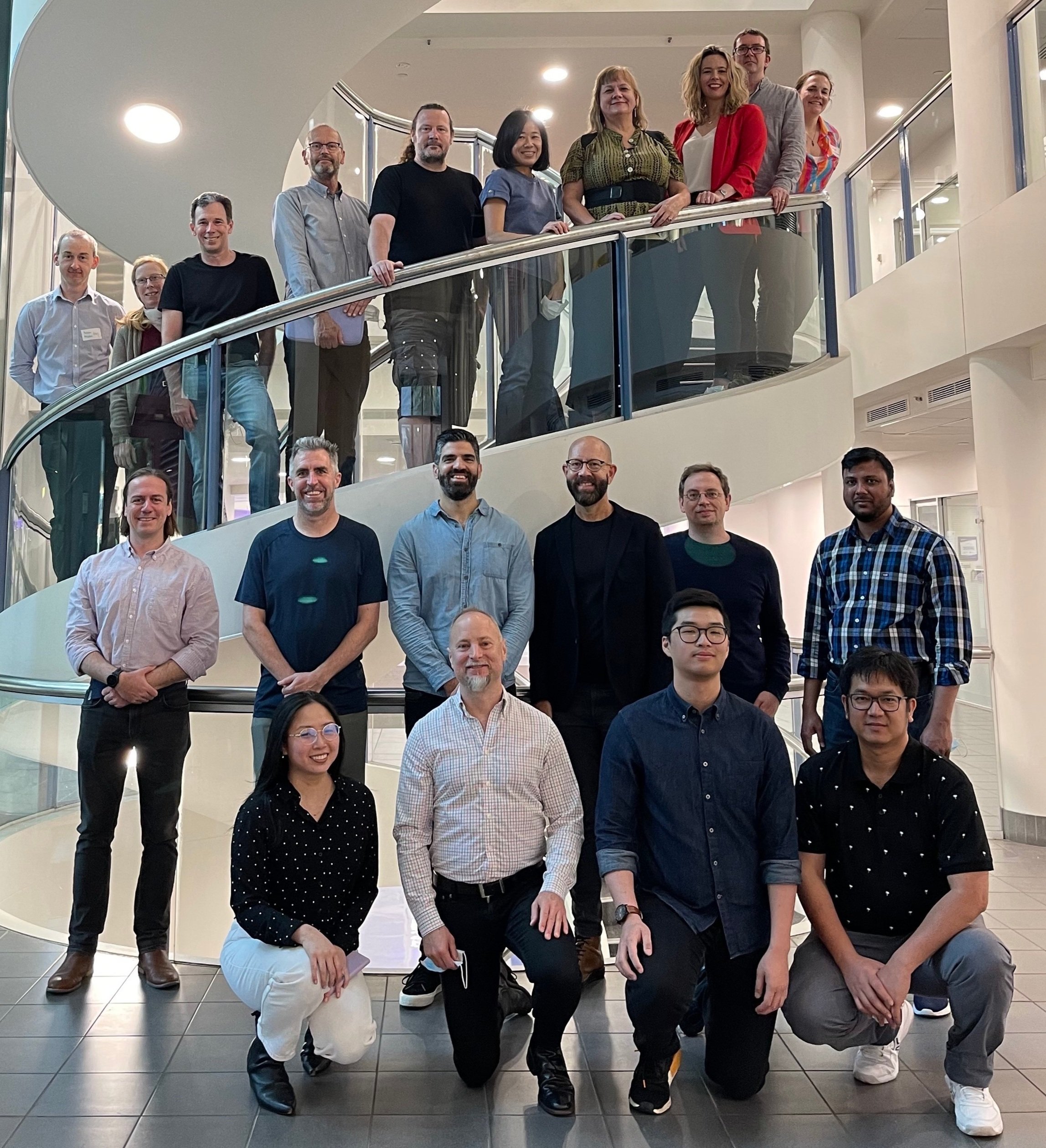
The Human Genomes Platform Project (HGPP) wrapped up in November 2023, having investigated and prototyped a toolbox of services designed to enhance Australian capabilities for secure and responsible sharing of human omics research data.
Extensive investigations since January 2021 into global best practice technologies for human omics in Australia focused on:
A customised user interface for discovering virtual cohorts, using a GA4GH Beacon (version 2) network
An online management system that removes the burden associated with data access committee approvals
Finely controlled identity and access management enabled by CILogon and COmanage
A comprehensive report and proposal for the development of a national repository for human omics data aligned with international efforts, such as the Federated European Phenome Genome Archive (FEGA).
To learn more about the toolbox contents and the project more generally, watch the final HGPP showcase.
Despite a desire to share data for research use, there are many siloed collections of human omics data in Australia that are often difficult for outside users to access. With this challenge in mind, the HGPP assembled a network of experts across biomedical research and digital infrastructure domains. The group explored and tested a selection of foundational infrastructure to pave the way for human omics data in Australia to be findable, searchable, shareable, and linkable to analytical capabilities, all while ensuring the privacy of individuals is protected and data processing is performed ethically, securely and safely.
Looking to the future and building on the HGPP, the Australian BioCommons Human Genome Informatics initiative has ambitious plans to continue exploring and establishing national infrastructure to propel human omics research in Australia. New HGI pursuits include building the Australian Cardiovascular disease Data Commons and the recently announced GUARDIANS project.
Key Outputs from HGPP
- Flyer describing the HGPP
- Webinar - establishing Gen3 to enable better human genome data sharing in Australia
- Webinar - Protection of genomic data and the Australian Privacy Act: is genomic data ‘personal information’?
- Webinar - Improving discovery and access management of genomic data
- Subproject reports including:
- Virtual Cohort Assembly discovery phase and pilot phase reports
- Data Access Committee Management Systems discovery phase and candidate solutions evaluation reports
- Federated Identity and Access Management discovery phase and candidate solutions evaluation reports
- Data and Metadata Archiving feasibility report
- Documentation for infrastructure managers including:
The HGPP formed part of the Human Genome Informatics initiative and was funded by NCRIS via the Australian Research Data Commons (https://doi.org/10.47486/PL032) and Bioplatforms Australia. Contributions were also made by partner organisations: Australian Access Federation, Garvan Institute for Medical Research, National Computational Infrastructure, QIMR Berghofer Medical Research Institute, The University of Melbourne Centre for Cancer Research, Children’s Cancer Institute, and ZERO Childhood Cancer.
ABLeS: Enabling Australian researchers to tackle challenges in bioinformatics
We spotlight how several Australian researchers are leveraging ABLeS in their work across the life sciences.

Dr Ziad Al Bkhetan presenting the three ABLeS allocation schemes.
The Australian BioCommons Leadership Share (ABLeS) has enabled 148 researchers from 26 institutes, organisations and research groups to respond to key bioinformatics challenges since its inception in 2021. Ahead of the upcoming webinar in March that will feature three participants from across Australia, we’ve spotlighted how some Australian life sciences researchers are leveraging ABLeS in their work.
The challenge
Researchers’ ability to leverage molecular analyses is continuously improving, and with this improvement come larger sample sizes, data sizes and computational complexity. This rapid expansion requires resource intensive analyses, plus the development of new, improved and optimised research software, particularly for reference data assets that require significant computational resources to prepare and maintain.
The Australian BioCommons response
The ABLeS program provides access to a mix of infrastructure and computational resources that has been specifically tailored to enable life science research groups to solve these challenges. The team behind ABLeS offers their extensive experience in research software engineering, digital infrastructure and bioinformatics to all participants, in the form of three distinct allocation schemes:
1. Reference data asset generation
Dedicated compute capacity is provided by ABLeS to allow efficient construction of reference data assets that are of enduring value to the research community, and will therefore underpin and enable downstream research. The Bioplatforms Australia Genomics for Australian Plants (GAP) framework initiative accesses this allocation type to advance our understanding of the evolutionary tree of life for flowering Australian plants, and to build complete plant genomes. GAP’s Bioinformatics Lead at the Royal Botanical Gardens of Victoria, Dr Theodore Allnut said:
GAP has produced vast amounts of sequence data that has required storage, processing, and analysis. Access to the supercomputer resources at NCI provided by ABLeS have been essential for GAP work. Overall, 17 botanists and bioinformaticians have processed their data on NCI’s ‘Gadi’ supercomputer and thanks to our ABLeS allocation, GAP has assembled 33 plant reference genomes, constructed the Australian Angiosperm Tree of Life, and undertaken six further species-level evolutionary studies.
2. Production bioinformatics
Research groups are supported to implement and run their existing best practice computational workflow approaches for omics data analysis at a much larger scale than is available through existing in-house computational infrastructure. This approach explains how ABLeS uplifted the research of University of Canberra’s Dr Ambikesh Jayal, Senior Lecturer in Data Science:
My team needed to extend our analysis to the whole Tasmanian Devil genome, which is fairly large (about 3 GB). Running such a large scale analysis was not possible in-house but the excellent and timely support provided by the ABLeS team means we are now running these analyses and plan to publish them in the coming months.
Dr Marie Wong-Erasmus, Principal Bioinformatics Engineer & Data Chair at the Children’s Cancer Institute said:
ABLeS first played a crucial role in creating high-quality and standardised reference datasets for The Zero Childhood Cancer program. Now, we are analysing these datasets using Pawsey infrastructure and we are constantly working to strengthen this partnership as our research program expands.
3. The Software Accelerator
The Software Accelerator supports the further development, installation, optimisation, testing and/or benchmarking of research software and focuses on a culture of software best practice. Bioinformaticians are supported to effectively implement, share, and document their work by embracing the FAIR (findable, accessible, interoperable and reusable) principles. Dr Cali Willet, Senior Research Bioinformatician at Sydney Informatics Hub, The University of Sydney, believes new opportunities have opened up with the ABLeS Software Accelerator:
ABLeS support has allowed us to optimise the highly popular DIA-NN proteomics tool for scalable high throughput analysis on HPC. We have tested and implemented this on NCI’s ‘Gadi’ supercomputer and are excited by the potential for proteomics studies to analyse thousands of samples at once within just one day of computing time.
All ABLeS groups are invited to contribute to, and benefit from, a shared repository of research software, housed by our partners at NCI. Dr Hardip Patel, Bioinformatics Lead in the National Centre for Indigenous Genomics at ANU and member of Bioplatforms Australia’s Australian Amphibian and Reptile Genomics (AusARG) Framework Initiative, sees great potential for the repository:
We've created a large-scale software repository for all the genomic resources prepared by AusARG by leveraging NCI resources under the ABLeS framework. We’ve utilised the repository to create analysis workflows, making them easily accessible to all NCI users and building Australia’s ability to initiate significant genomics projects.
Dr Ian Brennan, Postdoctoral Researcher at Australian National University and AusARG, described working with Ziad (BioCommons’ bioinformatics applications specialist) and the team as:
A fantastic, truly cross-disciplinary experience. The input and creativity of the BioCommons team has helped us to make our workflow much more efficient and user friendly, with the bonus of designing it to be lightweight and portable. Importantly, this means the workflow is no longer just a solution that works for our small research group - it can be picked up, used, and modified to suit a much broader community. Overall it has been a really satisfying and genuinely collaborative experience.
To learn more about the ABLeS program and hear directly from researchers involved, register now to attend the upcoming webinar on March 12.
ABLeS is co-funded by Bioplatforms Australia, National Computational Infrastructure and Pawsey Supercomputing Research Centre, and forms part of the national Australian BioCommons infrastructure.
Genomics in focus: Galaxy features at the 31st Plant & Animal Genome Conference
Learn about the international Galaxy Project’s participation in the 31st annual Plant & Animal Genome Conference (PAG31), the largest ag-genomics meeting in the world.

The international Galaxy Project recently participated in the 31st annual Plant & Animal Genome Conference (PAG31), the largest ag-genomics meeting in the world. The team hosted a hands-on workshop and offered presentations on next-generation sequencing data analysis, training, and the Vertebrate Genomes Project. Galaxy's dedication to open-source, FAIR data access, and comprehensive analyses shone through at PAG31.
Galaxy workshops leveraged the platform’s tools, workflows, and existing training materials. Workshop attendees experienced running their own microbiome analyses on reference data, and the assembly and annotation of microbial genomes. One workshop emphasised the integration of long and short-read sequencing methods and highlighted the significance of predicting protein structures using ColabFold, bridging genomic sequencing data with functional proteomics analysis. Participants agreed they had gained a deeper understanding of Galaxy's capabilities.
A spotlight on the Galaxy Training Network (GTN) emphasised its collaborative, open, and FAIR approach to scientific training materials. With over 300 tutorials authored and reviewed by a global community, the GTN serves researchers, educators, and scientific tool developers.
The Vertebrate Genomes Project (VGP) took the spotlight at PAG31, offering a series of talks that delved into the project's ambitious goal of generating phased, error-free, chromosome-level, near-complete, and annotated reference genome assemblies for all ~75,000 extant vertebrate species. Galaxy is a linchpin in the VGP's mission, facilitating seamless data integration, analysis, and collaboration among researchers. Galaxy is helping to overcome challenges related to genome-wide alignments, phylogenetic tree inference, universal gene nomenclature, and comparative genomics of specialised traits within the VGP's Phase 1 scientific studies, in which a representative species from (nearly) every vertebrate order will be assembled and released. Extensive documentation to guide users implementing the genome assembly workflows has been prepared by Dr Anna Syme, BioCommons bioinformatician and Galaxy Australia workflows specialist.
The recent paper ‘Scalable, accessible and reproducible reference genome assembly and evaluation in Galaxy’ identified how Galaxy is a crucial component in the VGP methodology and underscores Galaxy's pivotal role in enabling cutting-edge genomic studies on a global scale.
The ‘Justice, equity, diversity and inclusion’ workshop investigated how to acknowledge and address systemic injustices in genomics, and encourage and establish an environment where the field can realise its full scientific potential while embracing social responsibility and inclusivity. Prof Carolyn Hogg’s presentation, ‘Implementation: Genomic Resources’, highlighted the role Galaxy Australia plays in her work and emphasised the importance of integrating tools like Galaxy in the pursuit of justice, equity, diversity, and inclusion within genomics. Carolyn is co-lead of the Australasian Wildlife Genomics Group at the University of Sydney, Science Lead and Chair of the Bioplatforms Australia Threatened Species Initiative, and we are thrilled to see her regularly championing the use of the Galaxy Australia service by her genomics and genetics research peers.
This story was adapted from the detailed meeting report on the Galaxy Community Hub, where you can learn more about Galaxy’s involvement in PAG31.
Creative collisions: Bio Day a hit at Supercomputing Asia 2024
Learn more the dedicated ‘Bio Day’ at SCA, which focused on the intersection of biology and computing.

This month's Supercomputing Asia (SCA) conference featured a dedicated ‘Bio Day’ which focused on the intersection of biology and computing. Life scientists were enthusiastically invited to interact with the Asia Pacific high performance computing (HPC) community at the Sydney event. The conference organisers offered special access to almost 40 researchers and research infrastructure providers who were keen to participate in the biology-focused sessions. This extra support to add the unique voice of life scientists to the HPC forum was generously provided through Bioplatforms Australia's platinum sponsorship of the event.
Bio Day commenced with Prof Alex Brown, Director - National Centre for Indigenous Genomics, delivering a keynote presentation ‘Towards a National Indigenous genomics Ecosystem within Australia.’ As Professor of Indigenous Genomics at the Telethon Kids Institute and The Australian National University, Alex is an internationally leading Aboriginal clinician/researcher who has worked his entire career in Aboriginal health in the provision of public health services, infectious diseases and chronic disease care, health care policy and research.
Later, sessions titled ‘Building the Foundation: Genomic Data Infrastructure for Precision Medicine and Beyond’ showcased several key pieces of research infrastructure that Australian BioCommons has developed to support life scientists including:
The newly funded GUARDIANS project
A pilot program bringing Seqera Platform to Australian researchers
Some of BioCommons’ significant national partners such as the Australian Amphibian and Reptile Genomics Initiative (AusARG) and international collaborators ELIXIR were also showcased on Bio Day. Additionally, Dr Kate Michie’s (UNSW) talk revealed the ‘Transformative Impact of Deep Learning on Accelerating Molecular Research: A Focus on AlphaFold2 and its Implementation Challenges.’ The Skills and Training Track on the same day also featured our training guru, Dr Melissa Burke, presenting our unique Training Cooperative model.
Sessions held on Bio Day illuminated the unique challenges that bioinformatics research brings to HPC, including:
Episodic and extended access is required for compute resources
Compute use is reliant on experimental outcomes, and difficult to predict in advance
Software is diverse, rapidly evolving, and in many cases not optimised for HPC
Researchers may have limited experience working in HPC environments
The light shone on these unique challenges stimulated some uncommon conversations at SCA, which aim to improve life science researchers' access to appropriate and scalable bioinformatics methods and compute resources. Dr Johan Gustafsson, Bioinformatics Engagement Officer at BioCommons said:
The conference was a unique opportunity to bring two worlds together - researchers working hard in their particular field of biology don’t normally attend HPC conferences, and vice versa. So it was great to see them starting to speak the same language!
Uwe Winter, BioCloud DevOps Engineer at BioCommons attended a workshop on the recently launched Trillion Parameter Consortium (TPC), a group formed to address the challenges of building large-scale artificial intelligence (AI) systems and advancing trustworthy and reliable AI for scientific research.
Discussions at the TPC workshop brought up a lot of exciting ideas on utilising AI in a fully automated research environment. I was inspired to hear TPC’s future plans and can’t wait to apply them to BioCommons infrastructure for the benefit of Australian researchers!
Overall, Bio Day at SCA was a fantastic chance to continue important conversations around the specialised support and infrastructure that life scientists need. BioCommons extends our thanks to Bioplatforms Australia for their sponsorship and to the conference organisers for running a successful event.
Galaxy Australia celebrates 8 million jobs to open 2024
Learn how Jess Hawes uses Galaxy Australia and why it is the platform of choice for many researchers conducting bioinformatics analyses.

University of Sydney researcher, Jess Hawes, recently demonstrated that Galaxy Australia is the platform of choice for many researchers conducting bioinformatics analyses. The team behind the service have been eagerly awaiting submission of the key 8 millionth job and were thrilled when Galaxy-newcomer, Jess, lodged a suite of jobs to support her fascinating PhD project.
Jess is part of Dr Alyson Ashe’s research group within the School of Life and Environmental Studies at the University of Sydney and has rapidly become a sophisticated user of Galaxy Australia who processes up to 300 Gb of sequence data at a time.
Prior to starting my PhD, I had never done any bioinformatics and the prospect of jumping straight into command-line was intimidating. My supervisor suggested I try Galaxy Australia first. The setup was so quick, there were heaps of guides, templates and shared workflows that I could use to start from, and there’s a massive global community with lots of support and tips. It has been a really good introduction to bioinformatics!
Jess is working to understand the molecular basis for epigenetic inheritance, using model organism C. elegans to investigate how histone modifications and small RNAs interact in the context of epigenetic inheritance. Her workflow is completed end-to-end without leaving the Galaxy Australia site: from preparing sequencing files, pairing them, trimming off the adapters, aligning the reads to a reference genome and calling peaks. With large amounts of data to process at once, Jess requested extra storage:
It was so easy to ask for extra storage and I had a response within days. The email from the team saying that I’d be able to access 2 TB was such a relief! And for free!
Jess finds the Galaxy web interface very user-friendly:
I love that it saves a lot of the parameters and inputs that lead to the generation of different files. This means I can easily work out which inputs and which variables lead me down the right path. I also love that within Galaxy, if one of my samples fails at step 3 of 10 in the workflow, all the future steps that rely on that sample pause. This means I can go back, find the step that failed, troubleshoot and then re-run that one sample. There’s even a little toggle option that means after this step successfully runs, all the following steps will also resume. This means I am not stuck repeating every single step every time for all my datasets when only one step fails – saving both my time and computing time!
Overall, Jess has improved a wide range of skills through her experience using Galaxy Australia, describing it as:
A really good introduction to working in a command-line setting. If I needed to, I’d be more confident jumping into the back-end side of things. But so far I haven’t needed to because everything is ready to go!
Jess is one of more than 30,000 researchers who have used Galaxy Australia in their work. If you haven’t already, head to usegalaxy.org.au to get started today!
Streamlining metagenomics and single cell transcriptomics data processing with new workflows
Discover three new resources on the fully subsided Galaxy Australia service for anyone to transform raw metagenomics and single cell transcriptomics data into an analysis-ready state.

Three new computational workflows are transforming raw metagenomics and single cell transcriptomics data into an analysis-ready state. Perfect for fresh experimental data or analysis of publicly available datasets, the workflows come with best practice tools installed and well documented how-to guides. While originally developed for use by a core facility generating huge quantities of new data, the new resources are available on the fully subsidised Galaxy Australia service so that anyone can put them to work.
The workflows were developed through a collaboration between Griffith University’s Central Facility for Genomics (GU-CFG) and Australian BioCommons. With an expected influx of spatial omics and single cell data from new instrument installations, these common workflows were the ideal solution to do the heavy lifting of data preprocessing before delivery to end users.
Dr Sarah Williams, Senior Bioinformatician at QCIF, said that the team built their workflows within the Galaxy Australia platform as:
“The web accessible interface is intuitive to use. Histories can be quickly shared along with custom reports for GU-CFG to provide to their end users, and researchers can then choose to continue with further analyses without leaving the Galaxy interface.”
Valentine Murigneux, Bioinformatician at QCIF added:
“Researchers can just bring their data into Galaxy and use the workflows straight away, as they come with the best practice tools pre-selected and installed ready to go on Galaxy, saving time often spent researching the best tools for the job and installing the databases required.”
One example of this benefit is the inclusion of CellRanger within the single cell RNA (scRNA) sequencing workflow. CellRanger is a proprietary tool for 10X single cell data, and access is now fully subsidised for Australian-based researchers through an application process within Galaxy Australia.
All three workflows have extensive user guides available, so if you are looking to efficiently process raw metagenomics or single cell transcriptomics data, be sure to check out the new workflows via WorkflowHub:
You’ll find all of the background information you need about the workflows in their how-to guides:
Looking ahead, BioCommons are establishing two new activities - the ‘Methods Commons’ and ‘BioCLI’ to continue where BYOD has left off. Stay tuned for more in this space!
The Australian BioCommons BYOD Expansion Project was funded through NCRIS investments from Bioplatforms Australia and the Australian Research Data Commons (https://doi.org/10.47486/PL105) that were matched with co-investments from AARNet, Melbourne Bioinformatics, NCI, Pawsey, QCIF via the Queensland Government RICF fund, The University of Sydney, AGRF, Griffith University and Monash University.
Partnership with Genetics Society of AustralAsia enables quality new training
Learn more about a novel training opportunity that is available thanks to a collaboration between the University of Auckland’s Dr Katarina Stuart, the Genetics Society of Australasia (GSA) and Australian BioCommons.

A novel training opportunity is available thanks to a collaboration between the University of Auckland’s Dr Katarina Stuart, the Genetics Society of AustralAsia (GSA) and Australian BioCommons. The genetic outlier analysis workshop will introduce participants to the basics of genomic selection analysis. Delivered online across 27-28 Feb 2024, the code-along sessions will step through the process of identifying signals of selection using the outlier analysis method in an example genomic dataset.
Lead trainer Katarina’s previous research has involved an array of genomics approaches to explore rapid adaptation in the invasive bird, the European starling, and her current postdoctoral research investigates the role of transposable elements in other biological invasions. Seeing that others could benefit from her experience in the area, Katarina initially developed the workshop with financial support from GSA and the Australasian Evolution Society, which led to in-person workshops in Aotearoa/New Zealand. Demand for that workshop led to a collaboration with BioCommons to facilitate a virtual version and an invitation to offer the valuable training in Australia.
A new partnership with GSA and BioCommons is enabling this busy researcher to deliver her high quality training workshop internationally. A broad range of researchers have already applied to take part in this unique opportunity, which will for the first time be underpinned by the BioImage environment on the powerful Pawsey Nimbus Research Cloud.
Do you want to participate in the workshop?
This workshop is for members of the Genetics Society of AustralAsia and/or researchers associated with an Australian research organisation who will use genomic selection analysis as part of their projects. The workshop is free but participation is subject to application with selection. If you are interested, read through the details and apply by 9 Feb 2024.
Further in-person workshops will be offered later in 2024. These will be designed for researchers who already have their own data, so that participants can begin applying these techniques to their own datasets, and comparing outcomes with other participants.
Do you have training materials that your peers could learn from?
GSA offers an ongoing Workshop Support Program that provides contributions towards workshops that share knowledge and/or exchange ideas across genetics. Up to $1,000 AUD funding can be provided for up to 5 events per year on a competitive basis. There is an easy application process and the call outs for proposals generally close in June each year.
BioCommons can offer support for training events in lots of ways - from providing the compute environment you need to connecting you with the right participants. We partner with professional associations like GSA to ensure we are supporting the training that the research community needs.
Wrapping up the ‘Bring Your Own Data’ project and a look to the future
Read how BYOD enabled highly accessible, available, and scalable data analysis and sharing capabilities for the benefit of Australian life science researchers.
Important Outputs
- Australian Apollo Service
- Australian Alphafold Service
- Australian Fgenesh++ Service
- Grew Galaxy Australia significantly, from two to seven million submitted jobs
- Established Galaxy Australia’s TIaaS and the Genome Lab
- Tool Finder
- Seqera Platform pilot
- Bioimage, a purpose built bioinformatics environment on the command-line
Four new national services, major expansions to Galaxy Australia, 15 training workshops and webinars, many specialised workflows, and even more stories of impact, all thanks to collaborative efforts of 12 organisations. It’s fair to say that the Australian BioCommons ‘Bring Your Own Data’ (BYOD) project met its aim to enable highly accessible, available, and scalable data analysis and sharing capabilities for the benefit of Australian life science researchers.
Winding down at the end of 2023, the BYOD Expansion project’s legacy will continue through the delivery and constant improvement of our national services.
The project began in June 2019 thanks to investment from BioPlatforms Australia and the Australian Research Data Commons (ARDC), and brought together a large group of collaborators and co-investors including AAF, AARNet, Melbourne Bioinformatics, NCI, Pawsey, QCIF via the Queensland Government RICF fund, The University of Sydney, AGRF, Griffith University and Monash University. There were three focus areas: web-based bioinformatics workbenches for life sciences researchers, a complementary command line interface (CLI)-focused platform, and creation of data infrastructure connecting ‘omics instruments and reference datasets to the analysis infrastructure. Work in these areas has had a wide ranging and extremely positive impact on the life sciences research landscape, as showcased in the words of infrastructure end users.
TESTIMONIALS
Tool Finder will be a really useful resource for researchers, particularly those who are just getting started and want to understand what software is available for their analysis and what computing platform would be most suitable. It’s awesome to have all of that information on hand in the one place!
Dr Parice Brandies, The University of Sydney
Galaxy Australia is intuitive to use, it’s easy because students don’t have to install software, it has lots of really good documentation and visualisation, and all of this helps the students to understand what they are doing and more importantly why they are doing it.
Dr Kylie Munyard, Curtin Medical School
The Fgenesh++ service has helped us easily and efficiently annotate multiple diverse genomes to a high standard.
Dr Kate Farquharson, The University of Sydney
For my PhD project I assembled close to 4000 RNA-Seq datasets from samples from all over the world - a task that would have been impossible without Galaxy Australia.
Dr Rhys Parry, University of Queensland
So much software gets left without regular updates and from year to year you realise that it isn’t maintained or updated. So we look for things that are stable - this is the reason we call on the Australian Apollo Service.
Assoc Prof Charles Robin, University of Melbourne
We are looking at how a particular genus of plant viruses evolved to only infect plants. We make virus-like particles in order to determine the structure of viruses and also for drug discovery and biomedical use. AlphaFold was used to check for evidence of a core structural domain of a putative coat protein and the fact that it was there gave us the confidence to go on and make virus-like particles.
Dr Frank Sainsbury, Griffith Institute for Drug Discovery
TIaaS helps keep workshops on track. Trainers have live insight into how participants’ jobs are running and can identify sticking points almost before they happen. The special training queue means that everyone has a consistent experience. Even large jobs submitted simultaneously from all around Australia run fast.
Dr Melissa Burke, Australian BioCommons
The Bioimage was a great place to enter the world of bioinformatics and really helped me to upskill on the command-line. I was able to jump right in and make use of Nextflow pipelines, Singularity containers and interactive Rstudio sessions.
Alexandra Boyling, ANZAC Research Institute

Looking ahead, BioCommons are establishing two new activities - the ‘Workflow Commons’ and ‘BioCLI’ to continue where BYOD has left off. Stay tuned for more in this space!
The Australian BioCommons BYOD Expansion Project is funded through NCRIS investments from Bioplatforms Australia and the Australian Research Data Commons (http://doi.org/10.47486/PL105) that are matched with co-investments from AARNet, Melbourne Bioinformatics, NCI, Pawsey, QCIF via the Queensland Government RICF fund, The University of Sydney, AGRF, Griffith University and Monash University.