
News
Subscribe to the Australian BioCommons monthly newsletter or read previous editions
Help to shape Australia’s 2026 National Research Infrastructure Roadmap
The Australian Government is seeking feedback on the newly released 2026 National Research Infrastructure (NRI) Roadmap Issues Paper. This is a crucial opportunity for the research community to help shape Australia’s future research infrastructure planning.
The Australian Government is seeking feedback on the newly released 2026 National Research Infrastructure (NRI) Roadmap Issues Paper. This is a crucial opportunity for the research community to help shape Australia’s future research infrastructure planning.
How to provide feedback
To have your say, you can fill out the Issues Paper Consultation Survey (you can preview the survey here) prior to Monday 1 December.
About the Roadmap process
Infrastructure that advances research requires strategic foresight and long-term planning. The Australian Government develops a National Research Infrastructure (NRI) Roadmap every five years to ensure Australian research is supported by world-class infrastructure that is aligned to Australia’s priorities, including through the National Collaborative Research Infrastructure Strategy (NCRIS). The development process for the 2026 NRI Roadmap is now underway, offering a crucial opportunity for the research community to provide input.

The Department of Education and NRI Advisory Group have released a 2026 NRI Roadmap Issues Paper, following the public consultation that we alerted you to earlier this year. This paper seeks input on aspects of NRI, including Aboriginal and Torres Strait Islander knowledge systems, the humanities, the research infrastructure workforce, translation and industry, and new research infrastructure. Feedback gathered in response to this Issues Paper, in combination with the outcomes of other government reviews and other discussions and consultations, will inform the next Roadmap, so it is a wonderful opportunity to voice your opinion.
Many organisations, including the University of Melbourne, the University of Queensland and UNSW, are coordinating institutional submissions. We encourage all members of the Australian life science community to engage with this important process, either individually or through your institution, to ensure future national research infrastructure meets your evolving needs.
If you’d like further information, the NRI Roadmap Expert Working Group will host a webinar to present the Issues Paper, providing context and outlining the process for engaging in the consultation on Thu 6 Nov 2025, 3pm AEDT.
Register now: 2026 NRI Roadmap Issues Paper Townhall
Prof Bernie Pope on the future of cancer genomics with Open Access Government
Our A/Director of Human Genome Informatics and GUARDIANS Project Lead spoke to Open Access Government about the future of cancer genomics. He discussed how global data sharing through GA4GH and new tech like multiomics are essential for making progress against complex cancers.
Our A/Director of Human Genome Informatics (HGI) at BioCommons, Prof Bernie Pope, was recently featured in an interview with the international policy publication Open Access Government. As a Co-Lead of the Cancer Community within the Global Alliance for Genomics and Health (GA4GH), Bernie was asked for his perspective on how the field of cancer genomics is evolving.
Bernie and his GA4GH Cancer Community Co-Leads, EMBL-EBI’s Dr Zinaida Perova and the University Health Network’s Dr Benjamin Haibe-Kains, explained the importance of GA4GH, which creates the technical standards and policy frameworks that allow researchers across the world to share sensitive genomic data ethically and effectively. This sharing of data is essential to understand complex and diverse types of cancer, especially for rarer types. As it is challenging for individual institutions to accumulate large enough datasets on their own, aggregating this data is highly beneficial for identifying meaningful insights.
An example of a large collaboration is the Pan-Prostate Cancer Group (PPCG), an initiative Bernie helps to lead, focusing on whole genome sequencing for primary and metastatic prostate cancer. One of the goals for this group is to answer important clinical questions, such as identifying which patients need intensive treatment early on versus a watchful waiting approach to avoid overtreatment and associated morbidities.
Gaps in our knowledge are being enriched by combining data from different techniques with cancer genomics, addressing the limitation that Bernie identifies in the interview, of taking a “static snapshot” at a single point in time for a collection of cells that are, in reality, exhibiting dynamic behaviour.

While genomics technology may be limited when used in isolation, in combination with other ‘omics’ technologies our understanding continues to improve.
“Multiomics is contributing to this by enabling us to combine data from genomics, proteomics, metabolomics, lipidomics, and transcriptomics to gain a better understanding of dynamic cellular behaviours.”
Beyond multiomics, the interview highlights the promise and complexity of exciting new technologies for early cancer detection like circulating tumour DNA (ctDNA). This minimally invasive blood test can detect early-stage disease and even cancer recurrence much earlier than traditional scans. However, as Bernie notes, there are further considerations that come with early detection - the benefits of being able to treat the disease at that stage versus the anxiety a patient may experience with the knowledge of their cancer, necessitating better individual risk assessments or ‘precision medicine’.
It is this international leadership and perspective into the current and future states of cancer genomics that directly informs the work of the HGI program at BioCommons. Under Bernie’s direction, we are coordinating the GUARDIANS (human Genomics Uplift for Australia through Research Data Infrastructure At National Scale) project, which aims to accelerate human genomics and related omics research in Australia through the development of world-class digital infrastructure.
Read the full interview in Cancer genomics and global collaboration
Making Microbiome workflows more accessible for researchers
A group of Australian microbiome specialists recently joined multiple ELIXIR nodes and the international Galaxy community for an ‘Optimising MAGS-building workflows’ hackathon.
A group of Australian microbiome specialists recently participated in the Optimising MAGs-building workflows hackathon, joining multiple ELIXIR nodes and the international Galaxy community in Europe. Gathering to work together from Melbourne and connecting online with international colleagues, the group worked on enhancing the FAIRness of MAGs-building workflows and developing user-friendly training materials to support their uptake.
Microbiology, microbiome, and metagenomics researchers generate Metagenome Assembled Genomes (MAGs) from samples of mixed DNA in soil, air, water or other sources. Sophisticated workflows for genome assembly, including the scoring of completeness and contamination are required for identification of what is present in the sample and an indication of its function.
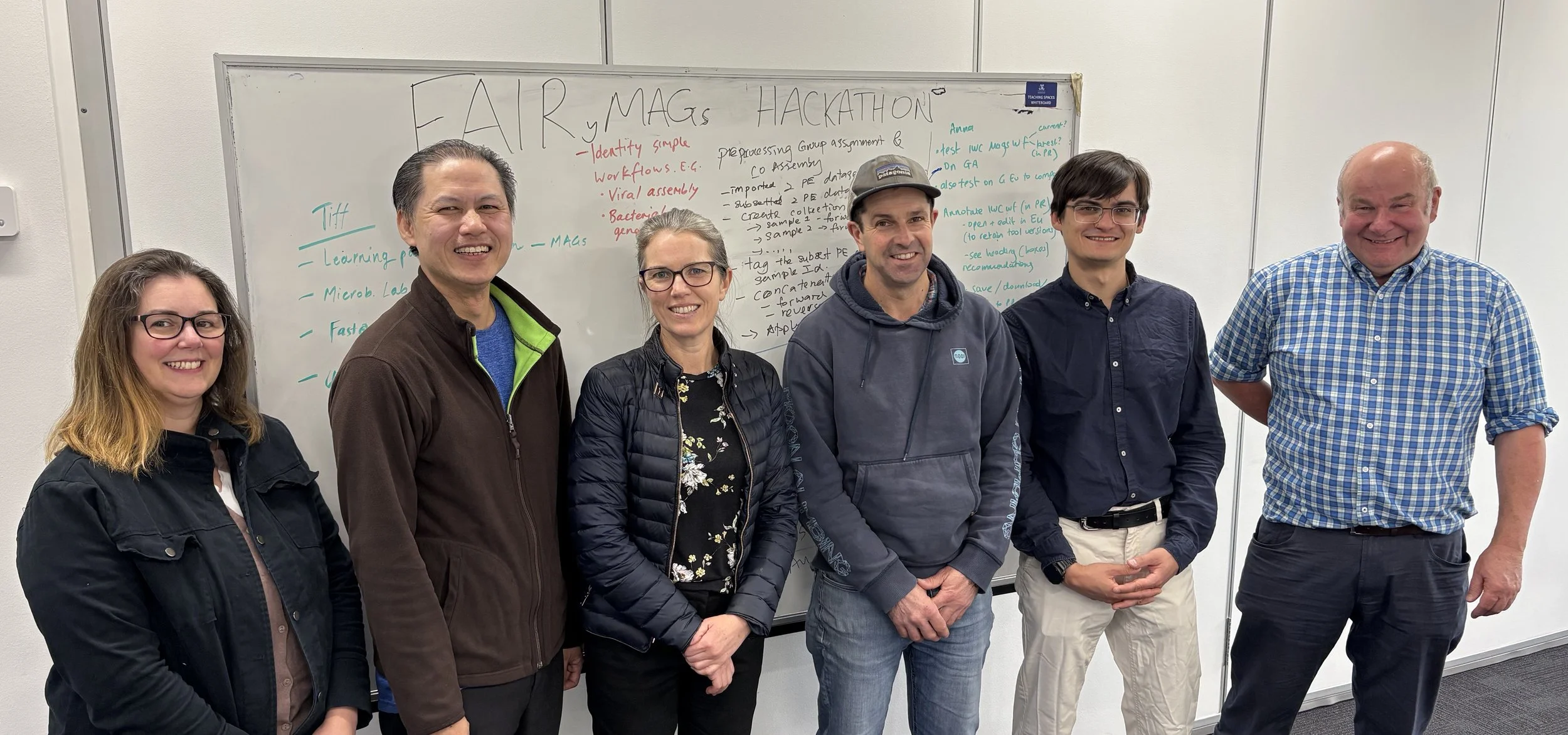
The Hackathon Team (L-R): Anna Syme, Mike Thang, Tiff Nelson, Andrew Bisset, Viní Salazar, Dieter Baluch
There are a few trusted workflows that researchers rely on like nf-core/mag and the Galaxy Metagenome-Assembled Genomes (MAGs) Generation workflow. This event focussed on improving Galaxy MAGs workflows and developing self-guided materials to add to the Galaxy Training collection of tutorials.
Assoc Prof Dieter Bulach joined the event to better understand if he might be able to use this MAGs workflow on his project’s data. As a Bioinformation in the Ecology & Environment Team of the Revitalising Informal Settlements and their Environments (RISE), he has metagenomic data with lots of potential. Based in the Melbourne Veterinary School, Dieter is looking at antimicrobial resistance in bacteria, to support the RISE consortium’s vision to transform human and environmental health through water-sensitive changes.“I run training for wet lab researchers who are actively learning bioinformatics while they are doing assemblies. Improving the Galaxy MAGs workflow and training resources will help them use these tools. And being at the hackathon gives me connections into the Galaxy project, exposure to new capabilities in the platform, visibility of what’s going on in Europe and importantly, who to ask when I need help!”
Direct assistance was available from two Galaxy Australia team members who were participating: Dr Anna Syme (Australian BioCommons) and Michael Thang (University of Queensland). Given both are passionate about supporting researchers and regularly offer training in bioinformatics techniques, their insights were invaluable to the hackathon group. Melbourne Bioinformatics’ Vini Salazar also brought an education focus, given he is a subject coordinator in the University of Melbourne MSci (Bioinformatics) program. With extensive experience in metagenomics and software education, Vini worked on updating existing training materials to reflect current best practices in MAG-building.
Dr Andrew Bissett participated with a different goal in mind. As the group leader of the Marine Observations and Analytics in CSIRO's Sustainable Marine Futures program, and the Scientific Lead of the Australian Microbiome Initiative, he was interested in raising awareness of valuable microbial genomic data. By referencing the Australian Microbiome data in Galaxy training materials, Andrew hopes to highlight the availability of this unique resource to a new international audience.
While everyone brings different skills and motivations to our hackathons, the overwhelming feedback is that the time spent together in person leads to wide-ranging conversations, new connections and unexpected benefits. Community Engagement Lead for BioCommons, Dr Tiff Nelson, identified the potential for this hackathon to bring together people who otherwise wouldn’t collaborate on shared tasks, and to drive international activities with local benefits. It is just one activity of many that supports the research community’s vision to help researchers undertake microbiome analyses that was captured in the Microbiome Analysis Infrastructure Roadmap for Australia.
Building a trusted ecosystem to accelerate research: the Australian Cardiovascular disease Data Commons
A new paper describing the progress and vision of the Australian Cardiovascular disease Data Commons (ACDC) project has been published in Nature Reviews Cardiology. This national-scale project is designed to accelerate the fight against Australia’s single biggest killer through creating a comprehensive, secure, scalable and internationally integrated data infrastructure.
A new paper describing the progress and vision of the Australian Cardiovascular disease Data Commons (ACDC) project has been published in Nature Reviews Cardiology. This national-scale project is designed to accelerate the fight against Australia’s single biggest killer through creating a comprehensive, secure, scalable and internationally integrated data infrastructure, offering cardiovascular researchers around the world the opportunity to uncover the hidden drivers of disease risk and progression, as well as patient recovery and survivorship.
Authors Corey Giles and Peter J. Meikle from the Baker Heart and Diabetes Institute (Baker Institute) describe how the ACDC project will provide researchers with secure access to pooled data from approximately 400,000 individuals across 18 clinical and population cohorts within Australia.

These cohorts contain a wealth of diverse information, including rich omics phenotyping, genotyping data, longitudinal cardiovascular outcomes, and comprehensive imaging data.
The path to a comprehensive, secure, scalable, and internationally integrated data infrastructure connected to global best practice analysis platforms includes many complex phases. Led by the Baker Institute, contributions from a diverse group of participants are co-ordinated by BioCommons. Baker Heart and Diabetes Institute, ACvA, University of Sydney, 23Strands, CSL Limited, BioCommons, data custodians and other partners are working together on infrastructure establishment, cohort onboarding and harmonisation, testing, validation, use case exploration, user experience, documentation, training, governance and intellectual property arrangements. BioCommons leads the implementation of the critical digital infrastructure underpinning ACDC as part of the Australian BioCommons Human Genome Informatics activity.
The highly collaborative project receives advice and oversight from a multi-disciplinary Scientific Advisory Committee made up of clinicians, researchers, digital infrastructure experts, and consumer representatives. The group has representatives from BioCommons, Baker Heart and Diabetes Institute, University of Sydney, University of Tasmania, Busselton Health Study, RENCI, NHLBI, University of Chicago, Broad Institute, HeartBeat Victoria, as well as a large number of data custodians. They are responsible for shaping the scientific objectives of the platform and providing feedback to the Project Management Committee to ensure that the development and implementation of the ACDC platform aligns with those objectives.
The ACDC project is synchronising the efforts and experiences of a large and diverse group of experts who together can advance the early detection of disease processes and the discovery of new disease-modifying pathways that contribute to cardiovascular disease development.
Read the paper Building the Australian Cardiovascular disease Data Commons.
Learn more about how BioCommons is implementing the ACDC infrastructure.
The ACDC project is led by the Baker Heart and Diabetes Institute and funded by Bioplatforms Australia and the Medical Research Future Fund (MRFF 2022 National Critical Research Infrastructure Grant: Building an Australian Cardiovascular disease Data Commons). Additional contributions are being made by the Baker Heart and Diabetes Institute, ACvA, University of Sydney, 23Strands, CSL Limited, Australian BioCommons, data custodians and other partners.
Taking Nextflow to the next level: HPC Workshop applications now open
A new workshop will build practical skills to configure, optimise, and troubleshoot Nextflow pipelines for efficient and scalable execution on High Performance Computing (HPC) systems. It builds on the success of a recent national in-person training event attended by 90 life science researchers.
Life sciences research increasingly depends on analysing large and complex datasets. Tools like the workflow management system, Nextflow, can make this process reproducible, scalable, and efficient. But for many researchers, getting started with Nextflow can feel like a daunting leap.
Earlier this year the Nextflow for Life Sciences workshop introduced the fundamental principles of Nextflow pipeline development and guided newcomers to build reproducible and scalable scientific workflows with Nextflow, creating a multi-sample Nextflow workflow for RNAseq data preparation as an example. Led by trainers from the Australian BioCommons team at SIH, University of Sydney and supported by the National Bioinformatics Training Cooperative, 90 learners gathered at satellite sites in Sydney, Melbourne, Brisbane, Adelaide, Canberra and Perth, giving researchers the chance to connect locally with peers while benefitting from the national-level training.
Participants praised the balance of theory and practice, and nearly 90% of attendees rated the content as “very good” or “excellent”. A key highlight was the use of research-relevant datasets that empower scientists to apply their new skills directly to their work. As one participant reflected, “I got lots of knowledge on how to build my own Nextflow pipeline. The RNAseq example was fantastic - so many workshops use ‘Hello World’ examples that are impossible to scale up.”
We are excited to announce that applications are now open for our follow up workshop Nextflow on HPC to be held in November. This hands-on workshop will will provide participants with the practical skills to configure, optimise, and troubleshoot Nextflow pipelines for efficient and scalable execution on High-Performance Computing (HPC) systems.
Participants can expect to learn how to identify the differences between traditional HPC job submission and workflow execution via Nextflow, and how to best configure and execute scalable Nextflow workflows on HPC systems. Managing software environments using tools like singularity, and adapt these to fit within different HPC ecosystem constraints will be covered, along with tips on troubleshooting Nextflow workflows on HPC systems.
To make the most of this workshop you’ll need to have experience running simple Nextflow pipelines, and be looking to scale up your workflows to an HPC environment. You will be supported with access to national Tier 1 computing resources at Pawsey and NCI, so you must be associated with an Australian organisation.
These Nextflow workshops are part of Australian BioCommons’ mission to make advanced bioinformatics tools more accessible to researchers across the country. By combining national expertise with local support, this training is helping build capacity and strengthen the life sciences community.
Find out more about the workshop and submit your application: Nextflow on HPC.
Applications close 3 November 2025.
Leading sessions and launching tools in a packed schedule of upcoming events
The BioCommons team is leveraging the opportunity to share, learn and collaborate across a multitude of events. Browse our upcoming activities so we can meet up to talk ‘research infrastructure’.
The final quarter is always a busy time of year for conferences in our sector, but the activities surrounding International Data Week (IDW) 2025 in Brisbane this October have really raised the bar! The BioCommons team is leveraging the opportunity to share, learn and collaborate across a multitude of different events.
IDW takes place every two years and is hosted for the first time in Australia by Australian Research Data Commons (ARDC). Jointly organised by the International Science Council’s Committee on Data (CODATA) and World Data System (WDS), and the Research Data Alliance (RDA), IDW will combine the Research Data Alliance Plenary Meeting with SciDataCon.

The RDA Plenary Meeting is a biannual meeting of the international member organisation working to develop and support global infrastructure facilitating data sharing and reuse. BioCommons Director, Dr Jeff Christiansen will co-lead the interest group meeting, Linking Pixels, Proteins & Populations: Integrating Data Across Life Science Domains. Prof Bernie Pope, A/Director, Human Genome Informatics (HGI), will deliver a Plenary with international colleagues: Open Research and Federated Systems: Disciplinary, Regional and International Perspectives. Bernie says he’s “thrilled to discuss the remarkable growth in research programs within Australia, driven by cutting-edge omics technologies. The current human omics research ecosystem is facing significant infrastructure challenges due to the explosion of complex data. This situation creates an urgent need for coordinated investment and scaling.”
SciDataCon addresses the frontier issues of data in research, and Jeff will co-lead the session, Digital Research Infrastructure Supporting FAIR, Reproducible and Impactful Research: A Global Ecosystem of Tools, Resources and Skills. The full-featured Australian Reference Genome Atlas (ARGA) app will be officially launched on Day 1 with The Australian Reference Genome Atlas: supercharged exploratory infrastructure for national-scale genomic data discovery.
There are several co-located events taking place in October, including the foundingGIDE community event. The community aims to establish a Global Image Data Ecosystem (GIDE) by developing common recommendations for metadata and interoperability in biological imaging, and have invited BioCommons Research Community Engagement Lead, Dr Johan Gustafsson, to contribute to the foundingGIDE Community Event Program to speak about Galaxy and WorkflowHub: Open Access to Large-Scale Image Analysis Workflows.
The following week in Brisbane, many of the BioCommons team will join eResearch Australasia, hosted by Australasian eResearch Organisations (AeRO) Inc. BioCommons Scientific Business Analyst, Keeva Connolly will present Harmonising metadata to improve data discoverability and interoperability, complementing the presentation from Dr Kathryn Hall and BioCommons authors, The importance of being indexed: introducing Genome Tracker by the Australian Reference Genome Atlas. BioCommons Software Engineering Group Lead, Amanda Zhu, is presenting Towards a Unified Access Infrastructure for Australia’s Life Sciences Platforms, and will be joined by many other BioCommons people at the conference.
Some BioCommons team members are travelling further afield, with Irene Hung, HGI Senior Project Manager, attending the Global Alliance for Genomics & Health (GA4GH) 13th Plenary Meeting in Uppsala, Sweden, to present a poster on the GUARDIANS program. Dr Tom Harrop, Senior Bioinformatician and Lead for the BioCommons Australian Tree of Life (AToL) project, will travel to Berlin for the BioHackathon Europe 2025. He will co-lead a project and ensure a close connection is maintained with the Australian Outpost of this event. Tom will also visit the European Nucleotide Archive (ENA) and the Darwin Tree of Life Project (DToL) in the UK, ensuring alignment of AToL with these major international genomic initiatives.
Our team attends these meetings hoping to engage with our different communities, so we look forward to catching up with many of you in person!
From cancer genomics to evolutionary biology: how ABLeS is powering Australian research
A recent series of publications across the life sciences highlight how the Australian BioCommons Leadership Share (ABLeS) program is accelerating research across the country through streamlined access to national supercomputing resources.
A recent wave of publications, spanning the fields of conservation genomics, precision oncology, and evolutionary biology, highlight the growing impact of the Australian BioCommons Leadership Share (ABLeS) program. These studies demonstrate the breadth of data-intensive challenges being tackled by Australian researchers, and showcase how streamlined access to national supercomputing resources is accelerating life sciences research across the country.
Recent highlights include:
Australian plant evolution: a phylogenomic analysis has clarified the complex evolutionary history of the native plant genus Teucrium, highlighting repeated colonisation of the continent and the development of unique adaptations to the arid Australian environment.
ABLeS enables access to 3 TB long term storage, 2 TB temporary storage on scratch and 100 KSUs per quarter.
Childhood precision oncology: in a study of high-risk paediatric tumours, researchers demonstrated that RNA-seq provides additional functional insights into mutation pathogenicity and that it is an indispensable companion to whole genome sequencing in precision medicine.
ABLeS enables access to 1 TB temporary storage, 5 TB long term storage and 100 KSUs per quarter.
Respiratory medicine: the study outlines observations regarding the significant overlap in gene expression and network structure between paired amniotic and nasal epithelial samples, supporting the potential of the amnion as a non-invasive and abundant tissue surrogate for investigating the respiratory system of newborns.
ABLeS enables access to unlimited temporary storage on scratch, 5 TB permanent storage and 50 KSUs per quarter.
A group of papers have been published are from partners involved in the Australian Amphibian and Reptile Genomics Initiative (AusARG), Bioplatforms Australia’s national collaborative project facilitating research using genomics approaches towards a more thorough understanding of evolution and conservation of Australia’s unique native amphibians and reptiles that are now under threat, through climate, disease or habitat modification:
Australian alpine skink: researchers present a chromosome-scale genomic assembly for the Australian alpine skink Bassiana duperreyi, which provides a crucial resource for research into thermolabile sex reversal in this threatened species.
Central bearded dragon: the study describes a new, near telomere-to-telomere phased genome assembly for the central bearded dragon Pogona vitticeps, to serve as a resource to enable and accelerate research into the unusual reproductive attributes of the species, such as temperature-dependant sex reversal.
Dragon lizards: a new phylogenomic tree shows that the colonisation of Australia by Amphibolurinae dragon lizards (Family Agamidae) was followed by rapid morphological expansion, which was facilitated by a transition from a tree-living ancestor to a generalist form before specialisation.
ABLeS enables access to 135 TB long term storage, 1 TB temporary storage on scratch and 100 KSUs per quarter.

Australian central bearded dragon, Pogona vitticeps
As BioCommons’ Product Manager, Bioinformatics Platforms, Dr Ziad Al Bkhetan has supported these projects since they started using the ABLeS service:
“It is incredibly rewarding to see the direct connection between facilitating computational resources and the fascinating science that follows. Through ABLeS, we have been able to help researchers build foundational genomes for unique Australian reptiles, and then see other teams use the technology to gain insights into treating childhood cancers. Our goal is to enable these communities to take advantage of the incredible research infrastructure we have here in Australia, and these papers showcase the success of our partnerships through the program.”
These diverse studies are just a few examples of how the ABLeS program is providing Australian researchers with the vital, large-scale computational power needed to tackle complex bioinformatic challenges. By providing access to Australia’s Tier 1 high-performance computing facilities, ABLeS offers a streamlined pathway for research communities to harness national infrastructure and accelerate their discoveries.
Learn more about ABLeS
ABLeS is co-funded by Bioplatforms Australia, National Computational Infrastructure and Pawsey Supercomputing Research Centre.
Cancer researchers level up their high performance computing
Researchers investigating cancer evolution and treatment resistance have successfully leveraged ABLeS to expand their high-performance computing (HPC) capabilities. The Trigos Lab received the support they needed to formally integrate external HPC resources into their research workflows at Peter Mac.
Researchers investigating cancer evolution and treatment resistance have successfully leveraged the Australian BioCommons Leadership Share (ABLeS) program to expand their high-performance computing (HPC) capabilities.
A group within the Computational Biology Program at Peter MacCallum Cancer Centre, led by Dr Anna Trigos, were offered guidance and access to national HPC resources through ABLeS. The Trigos Lab was supported to begin utilising the Pawsey Supercomputing Research Centre which significantly enhanced the lab's computational prowess.
The ABLeS experience helped the researchers to gain proficiency working portably across multiple large HPC environments, including a better understanding of the differences between their on-premise HPC and Pawsey’s Setonix, different scratch storage limitations, the portability and reproducibly benefits of setting up and utilising containers and Conda on HPC, as well as improving data management skills.
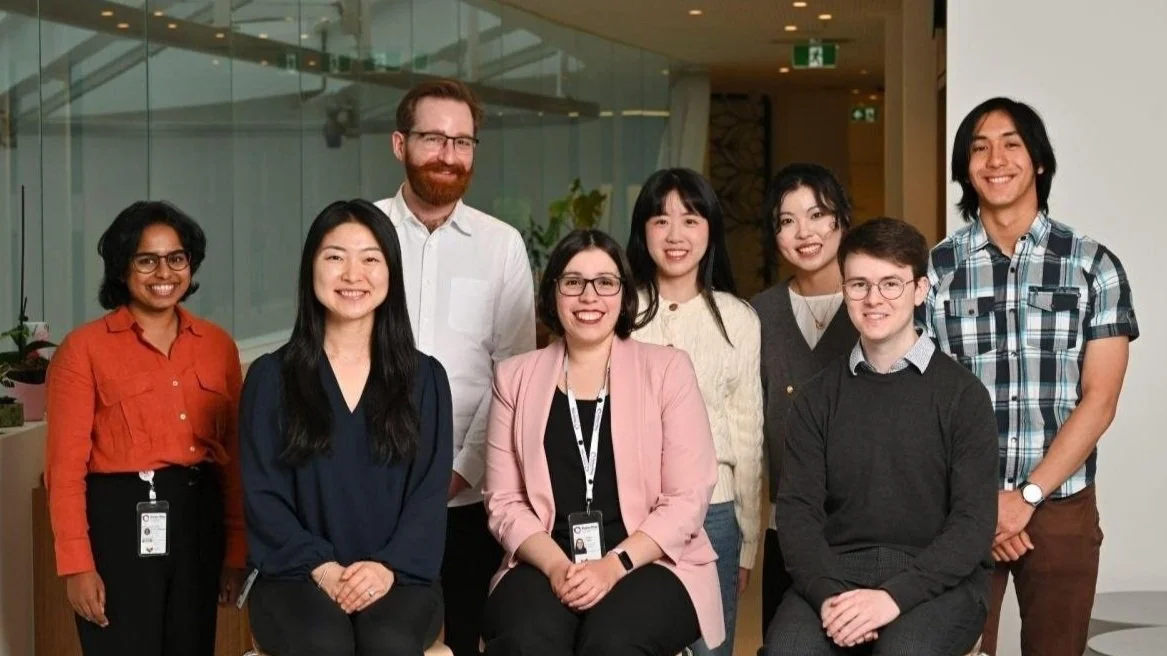
Members of the Trigos Lab Research group
The work served as a crucial feasibility study, providing insights that paved the way for the Trigos Lab to formally integrate external HPC resources into their research workflows. It also provided a vital head start for success in the competitive National Computational Merit Allocation Scheme.
Anna explained, “My team could demonstrate they could set up, test, benchmark, and optimise Nextflow pipelines critical for ongoing data processing. This experience put us in the right position to submit our first application for national compute, which was successful.”
Sharing her experiences with other ABLeS participants at the recent ABLeS User Meeting, Anna was happy to report the success of her Honours student David Le, whose analysis and simulation of 3D spatial cancer tissue data benefited greatly from the increased computational power.
The Trigos Lab focuses on understanding treatment resistance and response through the lens of both cancer evolution and ecosystems. While their primary focus is on multiple myeloma and prostate cancer, they also apply their methods to other cancers. They utilise omics data, including genomics, transcriptomics, epigenomics, and single-cell data, as well as patient imaging. Their methodology incorporates bioinformatics, computational biology, engineering, statistics, deep learning, and now HPC.
Learn more about Anna Trigos’ Multi-omic Evolution and Ecosystems Lab
Learn more about the Australian BioCommons Leadership Share (ABLeS)
DAWN of a new era for international wheat research
The Diversity Among Wheat geNomes (DAWN) resource supports the exploration of the genetics of wheat strains. Now researchers seeking insights into genetic diversity have the capability to visualise and collaboratively annotate wheat genomes.

The enduring management of valuable genomics data can be a challenge as time goes on. The Diversity Among Wheat geNomes (DAWN) resource continues to yield valuable insights into the diversity among wheat genomes years after its initial creation, and is hosted on the Australian Apollo Service to ensure sustained and stable access for the international wheat research community.
DAWN supports the exploration of the genetics of wheat strains by providing an accessible way to visualise and compare the Trictium aestivum (bread wheat) genomes and associated data, such as protein-coding regions (exome capture data) and gene expression (RNA-seq data) to further understand genetic diversity. Researchers importantly now have the capability of collaboratively annotating wheat genomes and editing their models using the Apollo software.
The original developer of DAWN, Dr Nathan Watson-Haigh, supported the capability expansion from static visualisations to collaborative annotations and is pleased to see researchers making excellent use of the resource. Rudi Appels, Professor (Honorary), University of Melbourne, Research Fellow, AgriBio, Latrobe University, is leveraging both the Australian Apollo Service and DAWN to continually identify and update variable regions in the wheat genome.
Rudi has witnessed rapid advances over his years involved in the research of the large and complex wheat genome, overcoming challenges in sequencing, assembly and analysis. He reflects that new tools offer new opportunities for increased engagement amongst researchers, which in turn supports better research outputs.
“For the analysis of the large datasets that underpin wheat genomes, the Apollo software has provided the much needed support for biology-oriented researchers such as myself. The Apollo software speaks in a visual language that enables biologists to communicate with their bioinformatics colleagues at a level normally reserved for computational and bioinformatics experts. Real-time sharing is now feasible too, which allows communal activity during teaching or working with colleagues.”
The ability to collaboratively improve genome annotations using Apollo fast-tracks advances. Computer-generated gene models based on work from other organisms such as rice, barley and Arabidopsis can provide a first approximation of structure. Using Apollo, RNA transcript data can be easily integrated to edit missing sections of genes, correct naming of genes, amend intron-exon structure details, and investigate sections of the genome sequence not tackled by the automated methods.
Read more about DAWN, Rudi’s research, or Apollo, or apply for your own access to the fully-subsided Australian Apollo Service.
BioCommons partners with QCIF to manage the Australian Apollo Service, which is underpinned by computational resources provided by AARNET’s ARDC Nectar Research Cloud node. These efforts are supported by funding from Bioplatforms Australia and the Queensland Government RICF. Bioplatforms is enabled by NCRIS.
Join the Australian Outpost of BioHackathon Europe 2025
Are you interested in joining this year’s BioHackathon Europe, but can’t face the long haul flights? You should join the Australian Outpost team who will gather in Melbourne, while checking in regularly with our international colleagues.

Are you interested in joining this year’s BioHackathon Europe, but can’t face the long haul flights? You should join the Australian Outpost team who will gather to work locally, while checking in regularly with our international colleagues.
This is a unique opportunity to participate in a significant global event and network with your international peers while working intensively on practical bioinformatics challenges. We will cover your costs when you come to Melbourne for the duration of ELIXIR’s BioHackathon: 3 Nov to 7 Nov 2025. Participation will work mostly within our business hours, plus catch up live in the early evening with the teams in Berlin. We always make it fun, and you’ll get to know others from around Australia while you learn new skills.
We’ve narrowed down the projects we’re interested in, and want to hear what you want the Australian Outpost of the BioHackathon to work on:
Automatic workflow for benchmarking BUSCO genes for phylogenomics
Streamlining FAIR Metadata for Biodiversity Genome Annotations
METRICS - Monitoring of Key Performance Indicators for ELIXIR Services
BioHackathon aims to:
Advance the development of an open source infrastructure for data integration to accelerate scientific innovation
Engage technical people in the bioinformatics community to work together on topics of common interest
Strengthen interactions, establish and reinforce collaborations through hands-on programming activities.
Please contact us if you are interested in joining the Australian Outpost of the BioHackathon Europe, and tell us which project/s you would like to participate in, and why. You can read last year’s story and a participant's blog post on why attending is so valuable for inspiration. Once we get a feel for who is interested, we will select a team of people and organise our meetup. There’s no need to register for a place on the BioHackathon Europe website - they have reserved places for the Australian Outpost.
Expressions of interest have now closed