
News
Subscribe to the Australian BioCommons monthly newsletter or read previous editions
Galaxy Australia to host next year's international Galaxy Community Conference
The Galaxy Community Conference is coming to Brisbane after years of campaigning by the Galaxy Australia team to bring this international event to our shores. GCC2023 will bring together hundreds of researchers, trainers, tool developers, software engineers, and computational infrastructure providers, from all over the world. This unique meeting offers a range of ways to exchange information about using the Galaxy data integration and analysis platform for data intensive science.

The Galaxy Community Conference (GCC) 2023 will come to Brisbane after years of campaigning by the Galaxy Australia team to bring this international event to our shores. The winning bid to host GCC2023 was announced overnight at GCC2022 in Minneapolis, Minnesota, USA.
Galaxy Australia’s Science Lead and Head of Computational Biology at QCIF Facility for Advanced Bioinformatics, Dr Gareth Price is elated:
Being entrusted with hosting the international GCC conference is recognition of how important our part of the world is to the Galaxy community. It’s a great opportunity to forge stronger ties with our regional colleagues while showcasing Australia to our US and European peers.
GCC2023 will bring together hundreds of researchers, trainers, tool developers, software engineers, and computational infrastructure providers, from all over the world. This unique meeting of back end developers, service deployers and research users offers a range of ways to exchange information about using the Galaxy data integration and analysis platform for data intensive science.
This annual gathering of the Galaxy community includes training, talks, posters, demos, Birds of a Feather meetups, and many other opportunities for collaboration and networking. The Galaxy community is a friendly and welcoming bunch and this conference is always a fun way for delegates to share their work and learn from others working in Galaxy-related data-intensive science.
The international Galaxy community hopes that the first GCC in the southern hemisphere will see many Galaxy users from the Asia Pacific region travelling to the Brisbane conference. Galaxy Australia is confident that GCC2023 will be a wonderful opportunity to strengthen ties between the Galaxy communities found in places like New Zealand, India, Japan and Africa.
We’ll keep you posted as the conference takes shape. Subscribe below to updates and we’ll hopefully make the decision easy to join us for GCC2023!
Bioinformatics training for researchers striving to improve the health and wellbeing of Aboriginal and Torres Strait Islander peoples
We are thrilled to announce that Menzies School of Health Research is joining our National Bioinformatics Training Cooperative. We hope to support the Northern Territory-based medical research institute in its ambition to improve the health and wellbeing of Aboriginal and Torres Strait Islander peoples.
We are thrilled to announce that Menzies School of Health Research is joining our National Bioinformatics Training Cooperative to increase its reach and impact across Australia. Menzies School of Health Research is one of Australia's leading medical research institutes dedicated to improving the health and wellbeing of Aboriginal and Torres Strait Islander peoples, and a leader in global and tropical health research into life-threatening diseases. Through partnerships with communities across northern Australia and the Asia-Pacific region, Menzies aims to translate their research into real change, and we hope the National Bioinformatics Training Cooperative can support this ambition.
In the past, we’ve noticed that national training events sometimes have participants representing all Australian states and territories - except for the Northern Territory. Seeking a way to reach more researchers in the NT, we invited Dr Mariana Barnes to join the Bioinformatics Training Cooperative.
Mariana is the Menzies’ High Performance Computing Support Officer and Bioinformatician. She’s responsible for software and user management of the HPC servicing both Charles Darwin University and Menzies. She provides training to enable researchers to utilise the local HPC, as well as undertaking her own Malaria research. Mariana is investigating targeted sequencing of diagnostic and surveillance markers in Plasmodium vivax and the human host.
“Working in the NT can be isolating, and sometimes leads to limited opportunities for networking, training and mentorship. I hope the Cooperative will be a way to facilitate some of that and I am very excited to be able to be part of it. I’m looking forward to facilitating training for - and maybe by - my colleagues here in the NT and connect us to the rest of Australia.”
Dr Mariana Barnes, Menzies School of Health Research
Mariana is going to help share information about our national program of free training events, assist with their delivery and connect us with her local research community. Say hello if you meet Mariana in a virtual break out room at one of our upcoming online workshops, and please make her NT colleagues feel welcome.

Help us make the BioHackathon global!
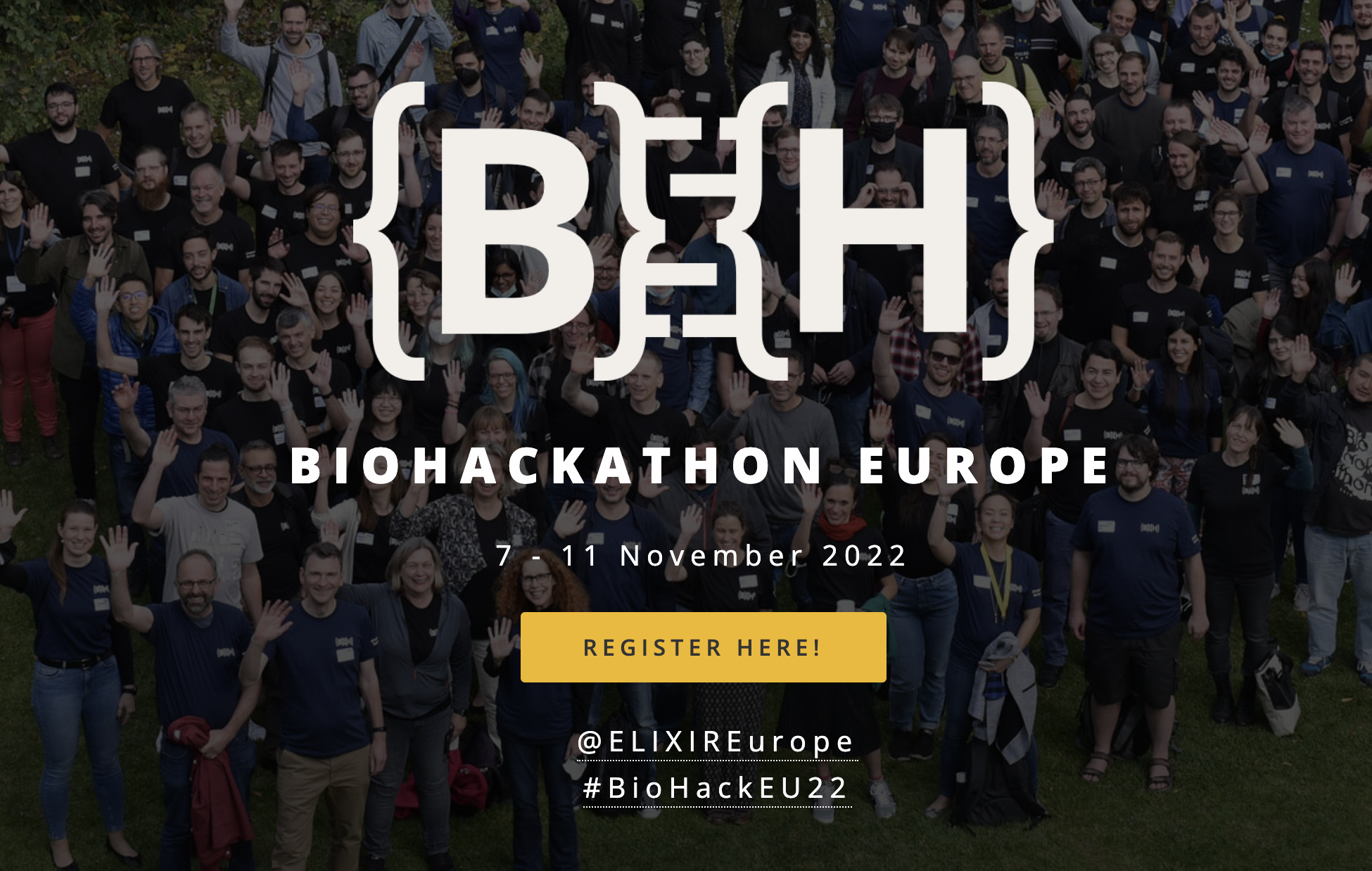
Are you interested in joining this year’s Biohackathon Europe - but from Australia? BioCommons is hosting the Australian Outpost so we are putting together a team who will work with the international participants in their timezone - but from a city close to home.
Are you interested in joining this year’s BioHackathon Europe but can’t travel to Paris? We are putting together a team who will join from Australia, working with the international participants in their timezone - but from a city close to home.
This is a unique opportunity to participate in a significant global event and network with your international peers while working intensively on practical coding challenges. We will fly you to a central point (TBC) to meet other Australian participants and set you up in a hotel for the duration of ELIXIR’s BioHackathon, 7-11 November 2022. We’ll even feed you some French food so we can all pretend we are in Paris!
We have chosen a few projects for the Australian Outpost of the Hackathon (details via links below). We will work alongside the live event in Paris, equating to 5pm-1am AEST / 3pm-11pm AWST / 7pm-3am NZST. We’ll do our best to keep you awake!
PROJECTS
Project 6: Building a robust and reproducible assembly and annotation pipeline for non-model eukaryote genomes
Project 20: Onboarding suite for Federated EGA nodes
Project 32: Training booster: developing FAIR training materials and Learning Paths
BioHackathon participation aims to:
Advance the development of an open source infrastructure for data integration to accelerate scientific innovation
Engage technical people in the bioinformatics community to work together on topics of common interest
Strengthen interactions, establish and reinforce collaborations through hands-on programming activities.
Please tell us asap if you are interested in joining the Australian Outpost of the BioHackathon Europe, which project/s would you like to participate in and why? When we get a feel for who is interested we will select a team of people and make further arrangements. No need to register for the waitlist yet on the BioHackathon Europe website - they are expecting to hear from us about the Australian Outpost soon.
Please submit your expression of interest to us before Mon 1 Aug 2022 and we will be in touch.
Adding Australian life science research’s voice to global conversations
BioCommons attended this month’s ELIXIR All Hands Meeting in Amsterdam, presenting work on behalf of national collaborators and sharing the Australian perspective on the shared needs and challenges facing bioinformatics and computational infrastructures.

BioCommons attended this month’s ELIXIR All Hands Meeting in Amsterdam, presenting work on behalf of our national collaborators and sharing the Australian perspective on the common needs and challenges facing bioinformatics and computational infrastructures. The 8th ELIXIR All Hands meeting brought together members of the ELIXIR community from across the ELIXIR Nodes, as well as collaborators from partner organisations like BioCommons, to review in-flight activities and discuss plans for the future.
Nigel Ward, our Associate Director: Platforms was invited to speak at the ELIXIR International Impact Plenary, and presented details of the impact the BioCommons-ELIXIR Collaboration Strategy has yielded so far. Sharing how we do business resulted in a lot of interest (and tweets) amongst international peers about our unique approach. Feedback confirms that our efforts are well aligned and there are many opportunities for future collaborations.
The 'Science driven improvements to tools ecosystems' workshop investigated how infrastructures are evolving to support major science drivers, including biodiversity and COVID. Our Bioinformatics Engagement Officer, Johan Gustafsson was there to chair in person, with Nigel Ward. A raft of ELIXIR colleagues also presented in person, and additional Australian collaborators Sarah Beecroft from Pawsey Supercomputing Research Centre, Brian Davis from NCI Australia and BioCommons’ Steven Manos presenting virtually. The room was full of engaged delegates who wanted to investigate how to better support users and developers of workflows.
Human Genomics Data Specialist, Marion Shadbolt presented a poster on "National and international collaboration to facilitate human genomics data sharing in Australia: The Human Genomes Platform Project” on behalf of the BioCommons project involving Australia’s human genomics research leaders and national computing infrastructure partners. The poster detailing our collaborative work to leverage best practice technologies and global standards generated lots of great discussions and is now available on F1000Research.
The next opportunity for intensive engagement with our European network will be the BioHackathon Europe. We will soon open a call for expressions of interest to join us in (in Australia) to connect with BioHackathon teams in Paris in November - stay tuned!
Galaxy Australia featured in new publication about impact
Australian Research Data Commons has published a new impact booklet documenting how digital research infrastructure ensures Australian researchers are internationally competitive, including Galaxy Australia as a case study.

Australian Research Data Commons’ new impact booklet, Accelerating Research and Innovation Through Data has been published. It documents how digital research infrastructure ensures Australian researchers are internationally competitive through access to high-quality data assets, platforms, infrastructure, policies, people and training.
Galaxy Australia is one of the case studies chosen to demonstrate the importance of excellent research infrastructure to everyday life. It tells the story of how thousands of life scientists have used the research platform Galaxy over the past decade to analyse large biological datasets, accelerating research and innovation to understand diseases and improve health.
Global Research Infrastructure is Key for Fighting the Pandemic
Ready-made training environments for uplifting computational science skills in plant biosecurity
Molecular biologists and plant pathologists recently came together to learn how to use Galaxy Australia to implement small RNA sequencing for the detection of viruses and viroids in imported plants at the Department of Agriculture, Water and the Environment’s Post Entry Quarantine (PEQ) Facility.

Molecular biologists and plant pathologists recently came together to learn how to use Galaxy Australia to implement small RNA sequencing (sRNA-Seq) for the detection of viruses and viroids in imported plants at the Post Entry Quarantine (PEQ) Facility in Mickleham, Victoria.
The Science and Surveillance Group from the Australian Government’s Department of Agriculture, Water and the Environment took part in a three-day viral pathogen detection workshop from 23-25th May. During the intensive hands-on training, the group of fourteen learnt how to process sRNA-Seq data using a bespoke Galaxy Australia pipeline, GA-VirReport.
Participants made the most of Galaxy Australia’s tools and dedicated job queue for training during the workshop. Instructors from the Queensland University of Technology (QUT) reported that the workshop received a unanimous 5-star rating from attendees. The feedback received from the mostly beginner audience was that almost everyone left feeling ‘very comfortable’ performing basic functions in Galaxy Australia, as well as using the tailored Galaxy Australia workflows for processing sRNA-Seq data and reporting positive detections.
Researchers are increasingly using Galaxy Australia for their training events as it provides a stable service for the planning and delivery of training. Supported by ample computing resources to scale with the size of the event, it comes with a robust set of over 1,500 tools and offers a dashboard of attendee progress that facilitates real-time management of jobs and immediate troubleshooting - vital both in face-to-face and online training events.
In addition to the pathogen detection workshop, over 4,500 participants taking part in 42 other training events have logged on and run their hands-on exercises on Galaxy Australia in the past 18 months. These include training delivered by individual universities, national consortia, international conference workshops and global training events - including the wildly successful Galaxy Training Network Smorgasbord.
Dr Ruvini Lelwala, Research Associate in Bioinformatics at the School of Biology & Environmental Science, QUT, was one of the instructors in the hands-on training in processing sRNA-Seq data for virus and viroid testing in plants. Dr Lelwala is an experienced user who leverages the Galaxy Australia service to develop enhanced diagnostics for the detection of exotic plant pathogens.
“I would like to thank the Galaxy Australia support team for their continuous support throughout the project which extends far beyond this workshop. The workshop itself was successful in delivering bioinformatics training to molecular biologists with limited experience in handling high throughput sequencing data using the Galaxy Australia platform.”
High Throughput Sequencing enables the rapid detection of viruses and viroids in imported plant material in a single test and can accelerate the release of quarantined plant genetic stocks. This research ultimately aims to give growers faster access to new plant stock and a competitive boost to the Australian horticulture sector.
All Australian scientists can utilise the simple training interface and sophisticated behind-the-scenes infrastructure to support their training events. For further information about how Galaxy Australia can support your training events, contact the Galaxy Australia team at help@genome.edu.au.
The two projects underpinning the GA-VirReport workshop are:
The project Improving access to new germplasm through faster and more accurate diagnostics (MT18005) is funded by Hort Innovation using citrus, nursery, raspberry and blackberry, fresh and processing potato and table grape research and development levies, co-investment from Queensland University of Technology and contributions from the Australian Government. Hort Innovation is the grower-owned, not-for-profit research and development corporation for Australian horticulture.
The project Transformation of exotic plant disease testing at PEQ, Mickleham by implementation of high-throughput sequencing (BIP202048) is funded by the Department of Agriculture, Water and the Environment (DAWE) Biosecurity Innovation Program.
Participating in the global ecosystem of responsible human genomics data analysis
Members of the BioCommons team have recently returned from the US where they progressed our mission to establish infrastructure for human genome sharing and analysis in Australia and to deliver technical solutions to help researchers actively participate in global research collaborations. Visiting the Gen3 team at the University of Chicago, the CAVATICA team at the Center for Data Driven Discovery in Biomedicine, Children’s Hospital of Philadelphia, and the Terra team at the Broad Institute, the opportunity to share ambitions, plans and ideas with our international partners was extremely valuable.

Members of the BioCommons team have recently returned from the US where they progressed our mission to establish infrastructure for human genome sharing and analysis in Australia and to deliver the technical solutions needed to help researchers actively participate in global research collaborations.
Uwe Winter, Marion Shadbolt, and Steven Manos met with key peers to bolster our understanding of world leading infrastructure to support human genome informatics which we are enhancing and deploying nationally. During their trip to the US between 9-17 May 2022, the group considered the essential elements of good national infrastructure, and brought home key learnings around the architecture, systems, user support, people and partnerships that are required. Our international partners reported that BioCommons’ ability to describe the Australian landscape and represent our researchers’ unique context and requirements was extremely valuable.
Starting in Chicago, our staff could finally meet in person with collaborators at the Center for Translational Data Science, University of Chicago. Sharing insights with Bob Grossman and his team, who are responsible for the Gen3 data platform, allowed deeper understanding of how Gen3 might support the interoperation and creation of cloud-based data resources, including data commons and analysis workspaces. Gen3 is already used internationally to manage, analyse, harmonise, and share large and complex datasets in the cloud and BioCommons activities are seen as a valuable opportunity to expand the Gen3 community.
Visiting the Center for Data Driven Discovery in Biomedicine at the Children’s Hospital of Philadelphia (CHOP) provided a boost to an important project that has been underway since 2020. Along with Seven Bridges and CHOP, Australian BioCommons is delivering impact to Australian researchers by participation in a global data commons, through the implementation of the cloud-based platform, CAVATICA, to facilitate collaborative access, sharing, and analysis of paediatric cancer data. Deeper collaboration was discussed with a view to further supporting Australia’s Zero Childhood Cancer Program.
The trip concluded in Boston where the team was hosted by the Broad Institute. The meeting offered a technical deep dive into the scalable platform for biomedical research, Terra, that enables researchers to access data, run analysis tools, and collaborate. Terra is used by over 25,000 (mainly US) researchers and valuable discussions were had about how it might integrate with Australian requirements.
These intensive fact-finding missions with international partners are an important element of Australian BioCommons mission to build the necessary foundations that ensure Australian researchers can participate fully in the global ecosystem of responsible human genomics data analysis. Our Human Genome Informatics Initiative continues to work towards infrastructure for global best practice human genome data warehousing, sharing and analysis in Australia.
Finding and reusing workflows made simple
In an effort to support the discovery and reuse of workflows, Australian BioCommons has established a presence on WorkflowHub. BioCommons and its partners have so far registered 31 workflows which have already accumulated more than 16,000 views and 250 downloads.

Bioinformatics workflows bring together software packages into complex multi-step processes that standardise analysis.
Reuse of workflows can benefit life science researcher communities by accelerating their research, reducing replication of effort and supporting the application of best practice bioinformatics. Discoverability and reuse of workflows can also increase the visibility and recognition for bioinformaticians who invest large amounts of time, effort and intellectual property in workflow development.
The discovery and re-use of workflows is supported by the WorkflowHub registry that facilitates the description, sharing and publishing of scientific computational workflows, with applications ranging from eukaryotic and bacterial genome assembly to shotgun metagenomics.
After consultations with local researcher communities and participation in international forums discussing the shared challenge of workflow discoverability, the Australian BioCommons responded by establishing a presence on WorkflowHub. Converging on this resource together with our infrastructure partners and by working with the ELIXIR development team, the BioCommons team has worked to make the platform more fit-for-purpose for Australian bioscientists. The BioCommons and its partners have so far registered 31 workflows, which have already accumulated more than 16,000 views and 250 downloads.
The BioCommons has also established WorkflowFinder, which draws metadata from WorkflowHub and combines this with useful local information. In time this service will allow researchers to click and deploy workflows to local platform services. Right now it offers an interactive table that allows you to search for workflows registered by Australian BioCommons partners on WorkflowHub and details useful information such as where workflows have been successfully run in Australia.
Participating in a National Approach to Genomic Information Management
Australian BioCommons took part in the development of prototype components of the proposed National Approach to Genomic Information Management research ecosystem. The collaborative submission made by our Human Genomes Platform Project and the University of Melbourne Centre for Cancer Research’s returned very favourable reviews in the Preliminary Implementation Recommendations to the Australian Government (April 2022) recently released by Australian Genomics.

Australian Genomics recently released Preliminary Implementation Recommendations to the Australian Government (April 2022) to progress the development and establishment of a National Approach to Genomic Information Management (NAGIM) for Australia.
Australian BioCommons took part in the development of prototype components of the proposed NAGIM research ecosystem in 2021. Genomic data infrastructure stakeholders nationally were invited to participate in prototype development, in an open call leveraging existing capabilities/funding. BioCommons and others were tasked with addressing the identified priority areas, with the goal of identifying the best combination of components that can serve as the basis for long-term national research infrastructure.
An international expert panel was convened to advise and evaluate the NAGIM Blueprint Implementation prototypes and the collaborative submission made by Australian BioCommons’ Human Genomes Platform Project and the University of Melbourne Centre for Cancer Research was very favourably reviewed. BioCommons are listed as demonstrated NAGIM exemplars for several proposed workstreams and deliverables to support the NAGIM Implementation recommendations.
The latest report outlines the preliminary implementation recommendations for NAGIM, informed by the international panel’s NAGIM prototype evaluations, and parallel stakeholder consultation. Feedback is currently being sought on these recommendations from all stakeholders including research and clinical data communities, patient advocacy groups, Aboriginal and Torres Strait Islander genomic experts, industry, government representatives and agencies. Feedback will inform the development of a full report of the NAGIM Implementation Recommendations and proposed strategy for progressing NAGIM, which will be delivered to Government mid-year.
Stakeholders are encouraged to read the Preliminary Implementation Recommendations and to provide feedback by responding to the targeted questions in the online form by 5 pm AEST 17 June 2022.
At last: local team finally travels to join international Galaxy community
The Galaxy Australia team is thrilled to be jetting off to GCC2022 in the USA in July. The chance to meet up in person with the vibrant global Galaxy community has been sorely missed during the past couple of years, so members of the Galaxy Australia team jumped at the chance to discuss their work at the upcoming conference. Check out the wide range of presentations being made by the Australian contingent.

The Galaxy Australia team is thrilled to be jetting off to the Galaxy Community Conference in Minneapolis, USA from 17-23 July. GCC2022 will bring together hundreds of researchers, trainers, tool developers, software engineers, and computational infrastructure providers, all addressing common challenges in data intensive science using the Galaxy data integration and analysis platform.
The chance to meet up in person with the vibrant global Galaxy community has been sorely missed during the past couple of years, so members of the Galaxy Australia team jumped at the chance to discuss their work at the upcoming conference. Here’s a list of the speakers that will make presentations representing the excellent work of the much larger Galaxy Australia team:
Nuwan Goonasekera and Catherine Bromhead, from Melbourne Bioinformatics at the University of Melbourne, will present their talk ‘Metascheduling Galaxy jobs with Total Perspective Vortex’
Gareth Price, from QCIF at the University of Queensland, will offer a talk on ‘Galaxy Australia: an Evolving Scientific Instrument’
Anna Syme, from Melbourne Bioinformatics at the University of Melbourne, will present ‘Creating Galaxy workflows to empower research into Australia's unique fauna’
Cameron Hyde from QCIF at the University of the Sunshine Coast will present two posters: ‘AlphaFold on Galaxy - fast and accurate modeling of protein structure’ and ‘Galaxy Media Site - a full featured landing site for Galaxy Australia’.
Poster and demo abstracts will be accepted until 3 June 2022. GCC2022 features separate Training Day, Meeting, and CoFest events, which can be registered for separately or all at once, with significant discounts are offered to students and postdocs.