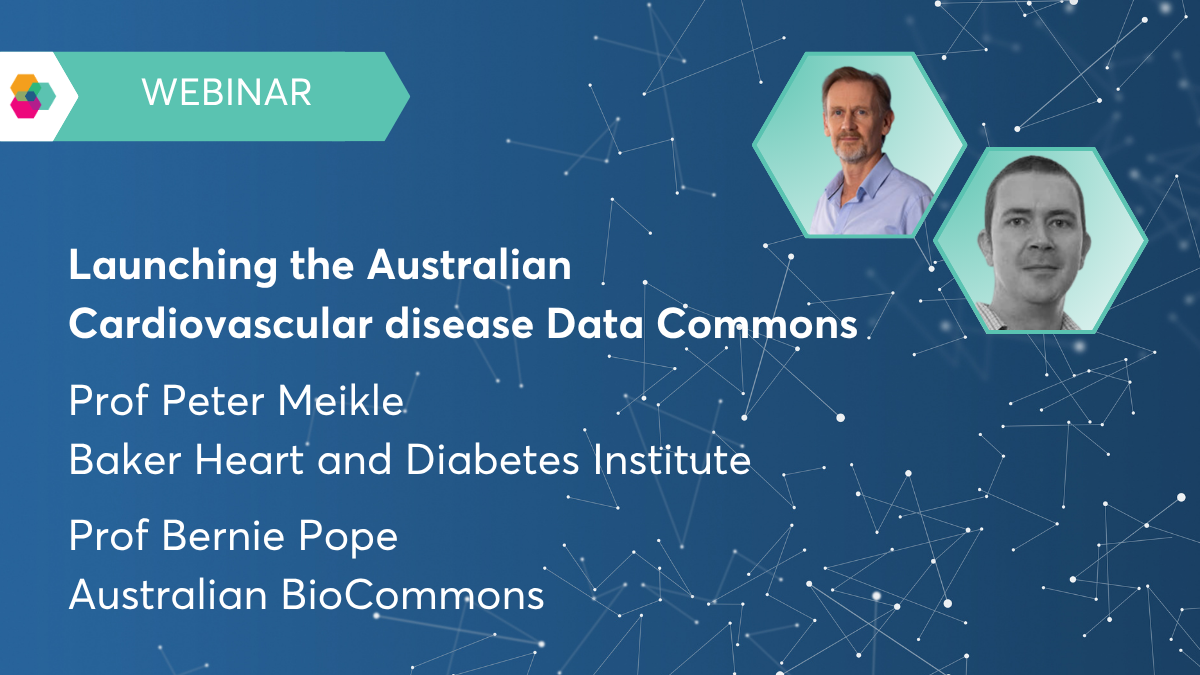
Unlocking multi-omics data to transform cardiovascular precision medicine
The Australian Cardiovascular disease Data Commons (ACDC) is launching as a cloud-based research platform built to accelerate the discovery of new risk markers for heart attack and stroke. The ACDC aims to build a secure, scalable, internationally integrated data infrastructure connected to best practice analysis platforms to enable the identification of novel insights, therapeutic targets and predictive biomarkers for coronary artery disease. Ultimately, the platform will facilitate a translational pipeline to ensure the deployment and evaluation of these predictors within clinical practice.
Why is a national data commons needed for cardiovascular disease
There is a current, known clinical gap, with up to 27% of heart attack patients having none of the well-known risk factors when they initially present to a GP. These can include high blood pressure, cholesterol, diabetes or smoking, and many people with coronary artery disease go on to have a second, life-threatening event despite optimal treatment. The ACDC aims to tackle this gap by securely pooling multi-omics data, longitudinal outcomes, and imaging from approximately 400,000 individuals across 18 Australian cohorts.
Prof Peter J. Meikle (Project Lead, Baker Heart and Diabetes Institute) highlights the urgency behind the project:
‘We need to understand what's really driving disease in these patients who are flying under the radar. This data commons will speed up how quickly new health technologies reach patients, and we expect it will generate a new precision medicine ecosystem in Australia.’
Led by the Baker Institute, contributions from a diverse group of participants are co-ordinated by BioCommons. The Baker Institute, the Australian Cardiovascular Alliance (ACvA), the University of Sydney, 23Strands, CSL Limited, BioCommons, data custodians and other partners are working together on infrastructure establishment, cohort onboarding and harmonisation, testing, validation, use case exploration, user experience, documentation, training, governance and intellectual property arrangements. BioCommons leads the implementation of the critical digital infrastructure underpinning the ACDC as part of the Australian BioCommons Human Genome Informatics activity.
Find out more at the online launch webinar
If you would like to learn more, you are invited to join a live webinar on 30 September 2026, 12 - 1 pm AEST. The session, featuring Prof Peter J. Meikle and Dr Tingting Wang (Baker Institute), and Prof Bernie Pope (Australian BioCommons), will explore how ACDC connects researchers to high-throughput data and global analysis environments.
Key topics include:
Development of the data commons: an overview of the cloud infrastructure, data harmonisation processes, and federated standards built on the Gen3 platform
Research value of the platform: how secure access to pooled multi-omics, genomic, and imaging cohorts enables researchers to discover new risk markers and test Polygenic Risk Scores.
Future clinical applications: how the ACDC will streamline translational pipelines to bring new diagnostic tools into clinical practice.