
BioShell opens a new gateway to national compute for life science researchers
A new ready-to-use virtual environment offers researchers immediate access to a curated set of bioinformatics tools and datasets. BioShell provides a command line interface that is preconfigured for bioinformatics and uses national computer resources, at no cost to researchers.
By removing the usual ‘setup friction’, BioShell allows researchers to focus on their science, rather than troubleshooting environment configuration or software installations. BioShell offers access to a safe space to experiment on the command line with more power than available on a laptop, avoiding the steep learning curve, complex allocation requests, or specialised architecture required to use high performance computing (HPC) services.

How does BioShell support life science research?
The rapid increase in the volume of available research data in the life sciences necessitates increasingly complex tools to perform effective analysis. BioShell supports researchers with a safe, pre-loaded, secure environment to upskill in the command-line environment, without the risk of breaking shared infrastructure.
BioShell’s key capabilities include:
Pre-installed workflow engines: ready-to-use software including Singularity, Nextflow, Jupyter Notebook, and RStudio
Built-in support via Shelley: an intuitive command-line agent that allows novice users to search, and run containers from containerised bioinformatics tools with one command
Full administrative control in a safe sandbox: researchers can run workflows and test pipelines with full privileges in an isolated environment.
How did BioShell evolve?
The development of this service, originally called BioImage, is evidence of sustained, national collaboration across Australian research infrastructures. Initially developed on Pawsey Supercomputing Research Centre’s Nimbus Cloud as part of a BioCommons project in 2023, it was further refined by the Sydney Informatics Hub (SIH) at the University of Sydney with regular usage for Australian BioCommons training workshops. Given how useful BioShell proved internally, the SIH team worked with the Australian Research Data Commons (ARDC) Nectar Research Cloud and National Computational Infrastructure (NCI) to ensure the BioShell environment works well with national compute resources.
Start using BioShell now
Researchers across any university or institute can access BioShell to spin up consistent virtual environments on demand. A new application for access to BioShell offers short-term access to national compute resources without the requirement for a full allocation request. For researchers with existing allocations, BioShell is also available via the image catalogue on the ARDC Nectar Research Cloud.
Find out more and request BioShell access
Australian BioCommons partners with the Sydney Informatics Hub, the University of Sydney to manage BioShell, which is underpinned by computational resources provided by the Australian Research Data Commons (ARDC) and National Computational Infrastructure (NCI), building upon original development by the Pawsey Supercomputing Research Centre. This work is enabled by NCRIS via funding from Bioplatforms Australia.
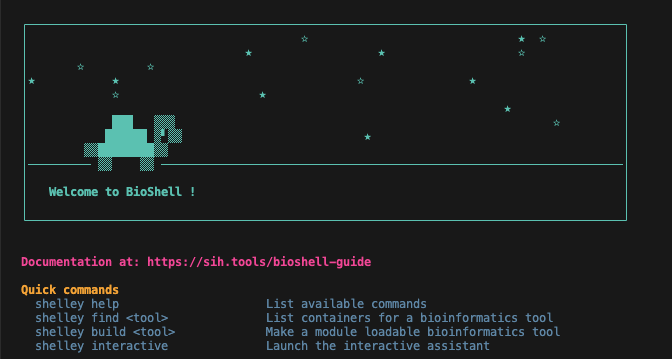
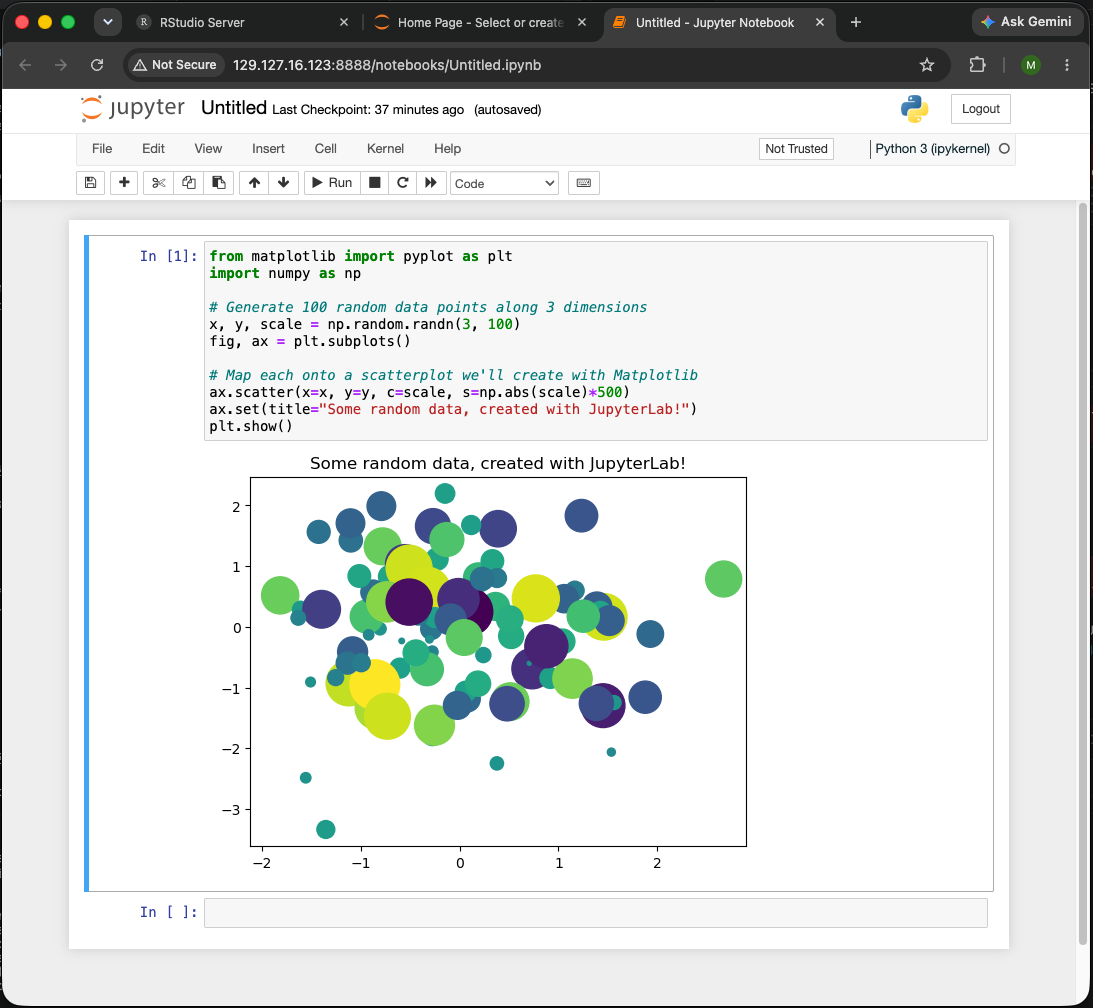
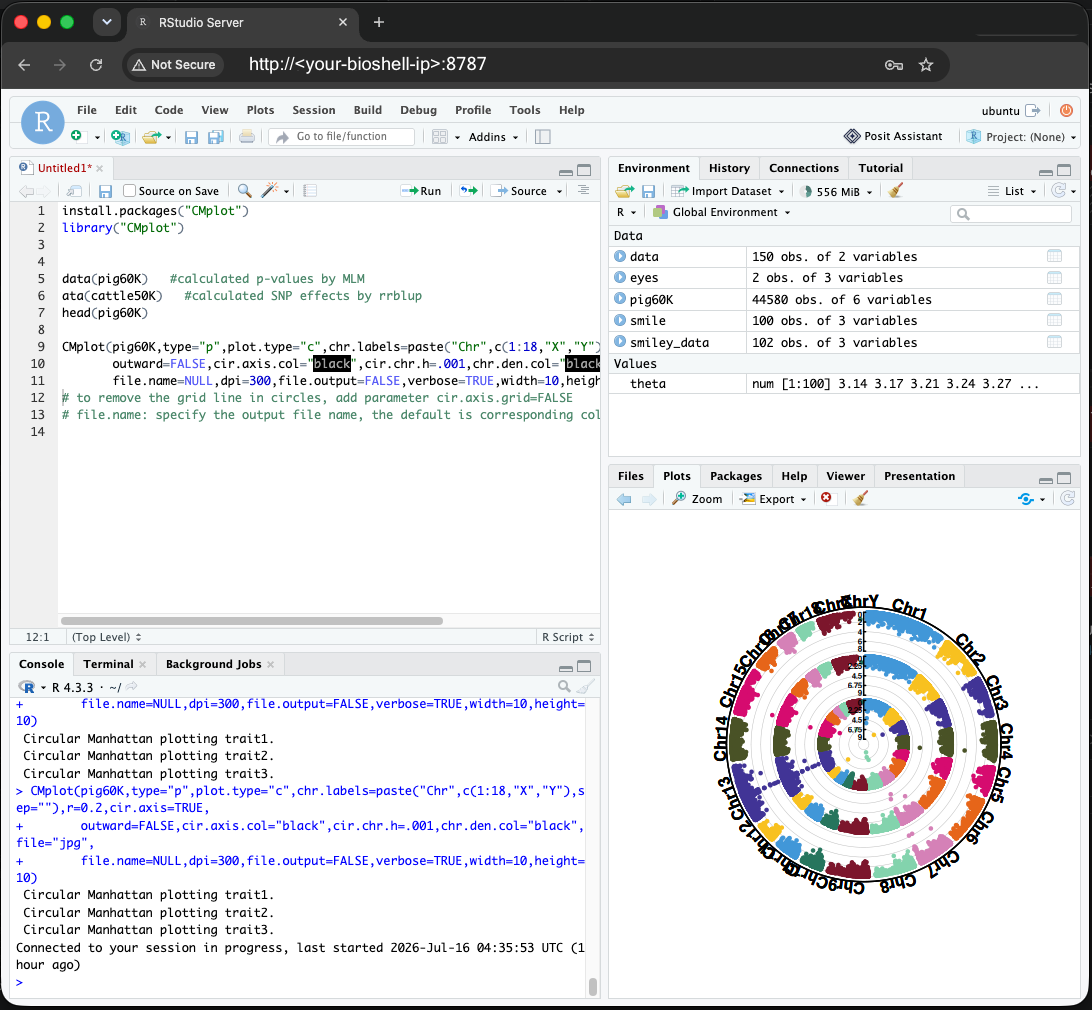
Preview of BioShell’s command line interface, a Jupyter notebook, and RStudio instance.
