
Introducing Spatial Sampler, the ‘cheat sheet’ to answering biological questions
A new tool is available to help researchers quickly answer important questions about their spatial omics data. This new resource, called Spatial Sampler, collates example R scripts for a variety of comparative analyses to fast track analysis.
QCIF Digital Research Senior Bioinformatician, Dr Sarah Williams, developed the resource for her own use, and upon realising its potential value to others she went on to share the collection of examples via the BioCommons’ Workflow Commons project.
What is Spatial Sampler?
Spatial Sampler is a collection of ‘How-To’ guides framed around testing specific biological questions.
Each How-To includes:
An example workflow using a real dataset, which explains why each step is necessary
What input data is needed
What the output looks like
A code snippet that can be copy-pasted
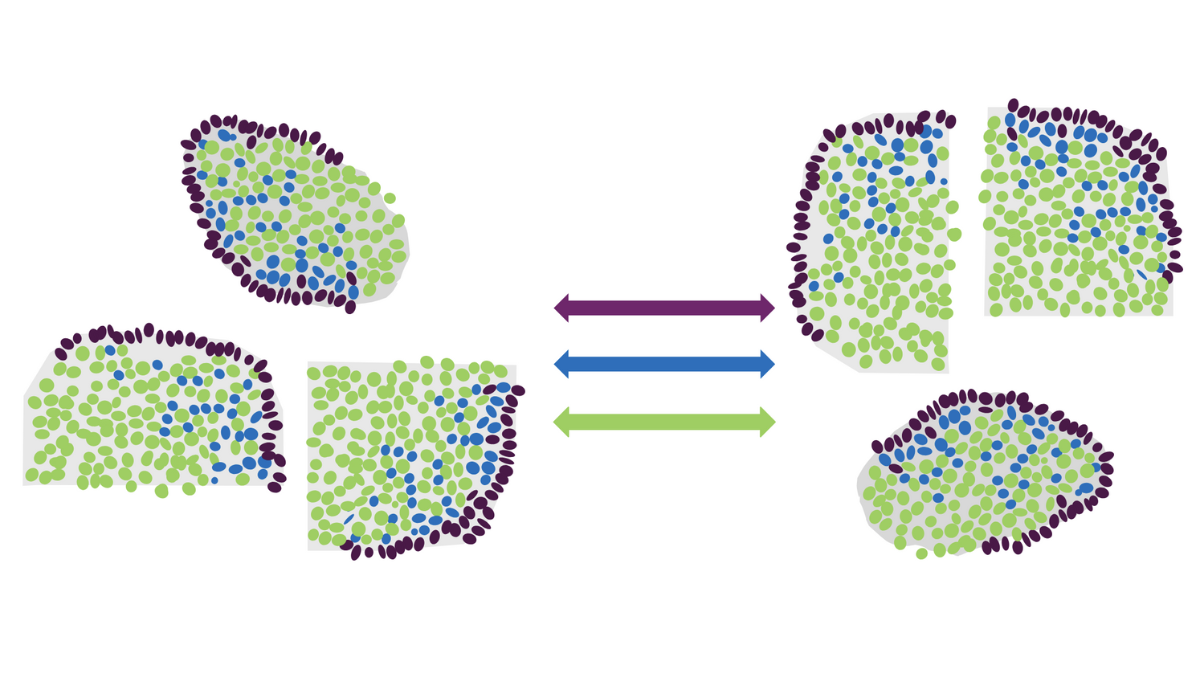
Who needs Spatial Sampler?
Spatial Sampler is a collection of complete, step-by-step workflows using real data that run comparative tests between different experimental conditions. The worked examples act as a ‘cheat sheet’ for spatial omics analysis. Most existing tutorials stop at the quality control and clustering stages, and a need for testing between groups is what inspired Sarah to develop Spatial Sampler:
When I started working with spatial data, I could find tutorials for how to load, QC and annotate my datasets. But I struggled to find complete workflows for testing experimental questions. I wanted a collection of examples using real data - so that’s what Spatial Sampler aims to provide. I had inspiration from amazing existing resources such as The R Graph Gallery. I’m now looking forward to others using Spatial Sampler and contributing more tools and resources that the community can use.”
Different elements of Spatial sampler will help different people:
Newcomers to spatial omics can apply worked examples to their own datasets
Busy bioinformaticians can use code snippets to run specific tests without rewriting code
Trainers can readily adapt open source instructions for their own training.
What is spatial omics?
Spatial omics combines the power of single-cell transcriptomics with spatial localisation, allowing researchers to measure gene expression and morphology while retaining the individual locations of transcripts within their native tissue environment. By inheriting analytical strengths from both single-cell technologies and microscopy, it enables the testing of complex new hypotheses about expression patterns and cellular interactions that are lost in data from a single modality.
This exciting new field is now moving from a niche to a fully-fledged production analysis technique, and given the rapid growth in utilisation, analysis methods are constantly being invented as new applications are discovered. Now that it is possible to generate high-quality data at scale, the downstream analysis options have expanded accordingly to help answer specific biological questions.
An example of this is in quantifying changes in the tumour microenvironment, such as changes in cell type composition between tumour subtypes, changes in immune cell migration between groups, or expression changes in different cells by experimental group or tissue region.
Spatial Sampler was initially developed by Sarah to analyse data from the Griffith Central Facility Genomics for A/Prof Nic West and Dr Amanda Cox (Griffith University) relating to their research projects in the mucosal immunology and cancer immunology spaces.
Sarah’s role at QCIF Digital Research is co-funded by Australian BioCommons.
Register now for the workshop that will provide a practical introduction to comparative analysis of spatial omics data using Spatial Sampler
