
News
Subscribe to the Australian BioCommons monthly newsletter or read previous editions
BioCommons activities at COMBINE and ABACBS conferences
The BioCommons team are sponsoring and attending the ABACBS Conference and are looking forward to hearing about the latest developments in bioinformatics and computational biology nationally and internationally.

Bioinformaticians and computational biologists are descending on Melbourne for the Australian Bioinformatics and Computational Biology Society (ABACBS) Conference.
The annual conference is one of the highlights for the Australian bioinformatics and computational biology community and gives students, academics, researchers and professionals the chance to engage with the best computational research in Australia and connect with colleagues. This year the conference incorporates a series of satellite events including the COMBINE Student Symposium, Victorian Cancer Bioinformatics Symposium (VCBS), Symposium on Bioinformatics Entrepreneurship and Industry and BioC Asia.
The Australian BioCommons and ABACBS have long supported one another's efforts to promote bioinformatics and computational biology in Australia. This year the BioCommons is proud to be a gold sponsor of the conference.
The BioCommons sponsorship will bring Jason Williams for a keynote presentation on Tue 29 Nov. Jason is the Assistant Director External Collaborations, DNA Learning Center, Cold Spring Harbor Laboratory and the Education, Outreach, and Training lead for CyVerse – the U.S. National Cyberinfrastructure for Life Science. He is instrumental in several bioinformatics and computational biology training initiatives including The Carpentries and Life Science Trainers. After the conference Jason will stay on to work with bioinformatics educators and trainers from across the country (read more about Jason’s visit).
The BioCommons team are also excited to be attending the conference and are looking forward to hearing about the latest developments in bioinformatics and computational biology nationally and internationally. There will be many opportunities to connect with our team and find out more about BioCommons projects, infrastructure and services and how we can assist the life science research community.
Training and Communications Officer, Melissa Burke is co-hosting an education/training meetup over lunch on Tue 29 Nov with the ABACBS subcommittee on education and training. Everyone interested in bioinformatics education and training can meet Jason in a more relaxed setting, network with one another, and discuss challenges and opportunities, along with BioCommons’ Associate Director - Training and Communications, Christina Hall.
There will be lots of opportunities to hear about BioCommons projects and the ways we are supporting life science communities by providing digital infrastructure. At the COMBINE Symposium, there will be a talk and poster about our efforts towards ‘Developing a User Interface for Sharing Federated Genomic and Phenotypic Data Using the Beacon v2 protocol’.
Human Genomics Data Specialist, Marion Shadbolt will present a poster on behalf of our Humans Genomes Platform Project on ‘Enhancing Australia’s capability for secure and responsible sharing of human genome research data: The Human Genomes Platform Project’. There will also be a poster on ‘Establishing a national Beacon v2 network for real-time genomics data discovery.’
Our Deputy Director Jeff Christiansen is joining a panel discussion on ‘The fine line between data science vs bioinformatics’ as part of the Symposium on Bioinformatics Entrepreneurship and Industry on Thu 1 Dec.
Please come and chat - we’re looking forward to seeing you there!
Bioinformatics training and education brings Jason Williams to Australia
The BioCommons is excited to bring Jason Williams to Australia as an international speaker at the ABACBS Conference and for a range of discussions and workshops on bioinformatics training.

Jason Williams’ passion for education and his community minded, down-to-earth approach have earned him deep respect of the international bioinformatics education and training community. The BioCommons is very excited to bring Jason to Australia in December as an international speaker at the Australian Bioinformatics and Computational Biology Society (ABACBS) conference and for a range of discussions and workshops on bioinformatics training.
Jason is the Assistant Director External Collaborations, DNA Learning Center, Cold Spring Harbor Laboratory and the Education, Outreach, and Training lead for CyVerse – the U.S. National Cyberinfrastructure for Life Science. He is instrumental in several bioinformatics and computational biology training initiatives including The Carpentries and Life Science Trainers. Jason is the chair of the BioCommons Training Advisory Group and his leadership and advice has helped us shape our Bioinformatics Training Cooperative and national training program.
Jason will deliver a keynote presentation at the ABACBS conference on the current status of bioinformatics education and training worldwide. Conference attendees can meet Jason in a more relaxed setting and network with one another during the education and training meetup at the conference. (Read more about our conference activities here).
After the conference, Jason will moderate a focus group workshop on The Bicycle Principles. This workshop is open to all Australian trainers, training providers and educators and will focus on how the Principles can be applied to deliver scalable and sustainable training in bioinformatics and digital research skills for life scientists in the Australian setting. Apply now to take part.
Jason will also be catching up with people from Melbourne Genomics, the Australian Research Data Commons, Gene Technology Access Centre, and Melbourne Bioinformatics and more to discuss and workshop ideas for bioinformatics and data science education and training.
Apply to join the focus group workshop on 6 Dec or get in touch if you’d like to meet with Jason (virtually or in person) while he’s in town.
Image source: A science career path: Jason Williams https://www.cshl.edu/labdish/a-science-career-path-jason-williams/
Remembering Simon Gladman
It is with much sadness we share that our great friend and colleague, Simon Gladman, has died suddenly. We invite you to share your memories, photos and thoughts about Simon so we can create a tribute webpage to remember Simon and the valuable contributions he made.

It is with much sadness we share that our great friend and colleague, Simon Gladman, has died suddenly. Simon has been a community leader for many years and his passing will leave a huge gap in so many ways. Simon was a role model, a generous supporter and a trusted advisor to his Melbourne Bioinformatics and Galaxy Australia team members. His many friends and admirers will ensure that his impressive legacy will live on.
It is my privilege to have known Simon for more than a decade. I would normally say that over that time we became close friends, but actually that happened in a matter of days, as it did for pretty much everyone Simon met. Simon was a people person first and foremost and made friends not just easily, but by default - if he met you, he liked you and you liked him back - that's just the way it was.
I was lucky enough to work with Simon for the whole time I knew him. It's not often someone is both a highly admired workmate and a very close friend, but Simon was to me. It gladdens me to say that Simon loved what he did, and was very very good at it. As a people person, Simon loved building things and seeing them used by lots of people for public good, and that's exactly what he did - to an extent not many others could match. He was a global leader and a bedrock of the Galaxy community, and he will leave a devastatingly large hole professionally, socially and emotionally in so many people's lives around the world.
It's hard to find a chink in Simon's armour. He was a leader if something needed leading, he was a powerhouse if something needed doing, he was a joke teller if you needed a laugh, he was a counsellor if you were upset, he was a mentor, he was a supporter, he was an extraordinary father and partner. Simon was the one who came to the pub if you needed a drink, who came to your house if you needed a hand, first to volunteer to help and last to leave. Amongst all that, Simon somehow found time for volunteer firefighting in his beloved west Melbourne and it won't surprise anyone to know that in this very demanding job, when tragedy of all types struck his community, Simon was first on hand to pick up the pieces. He wanted nothing in return.
I don't think I saw him in anything but a good mood for the entire time I knew him and it always cheered me up seeing him. He had the gift of infecting you with his optimism and motivation just by being there - whatever the challenge was, there was an upside that Simon would find and then bring everyone along.
'Blessed are the cheesemakers' - Simon would have laughed at that. To me he was a friend first and always. I will miss him enormously.
- Andrew Lonie
We know this loss will touch so many people. Our deepest condolences to Simon’s family and all of the communities he was involved in that are now in mourning. We take some comfort in knowing that his suspected heart attack happened while he was characteristically at the centre of fun with his family.
You might like to read some of the heartfelt words that Simon’s friends and colleagues have begun sharing:
International Galaxy Community Hub
There's a growing collection page for thoughts and photos from our network, and we invite you to remember some of the good times you shared with Simon. Please send your musings about Simon to christina@biocommons.org.au.
Simon’s funeral will take place on Mon 12 December at 10.30am AEDT. It will be held at the Werribee Racecourse and you can watch live via the livestream at this link.
Strategic talks bring BioCommons Hub team together in Melbourne
The BioCommons Hub team will soon meet in Melbourne in October to reflect on our rapid ‘growing up’ and plan for our busy future.
While Australian BioCommons co-funds dozens of roles hosted by partner organisations and in the last 12 months has coordinated projects and activities involving over 200 people across Australia, its Hub is made up of 20 dedicated and dispersed (and busy!) team members. Hub staff work from their homes across 5 states, and have offices at Melbourne Bioinformatics, QCIF, University of Newcastle, University of Adelaide, and CSIRO.
We regularly have ‘retreats’ to strengthen the team bonds, work through strategic approaches and to develop a shared vision for Australian BioCommons. We are so happy that we can now meet for these intensive sessions in person.
Earlier in the year we spent two days at the Melbourne Zoo, meeting new team members, workshopping ideas and planning our future - all under the watchful eyes of honorary participants in the enclosures outside our glass walls!
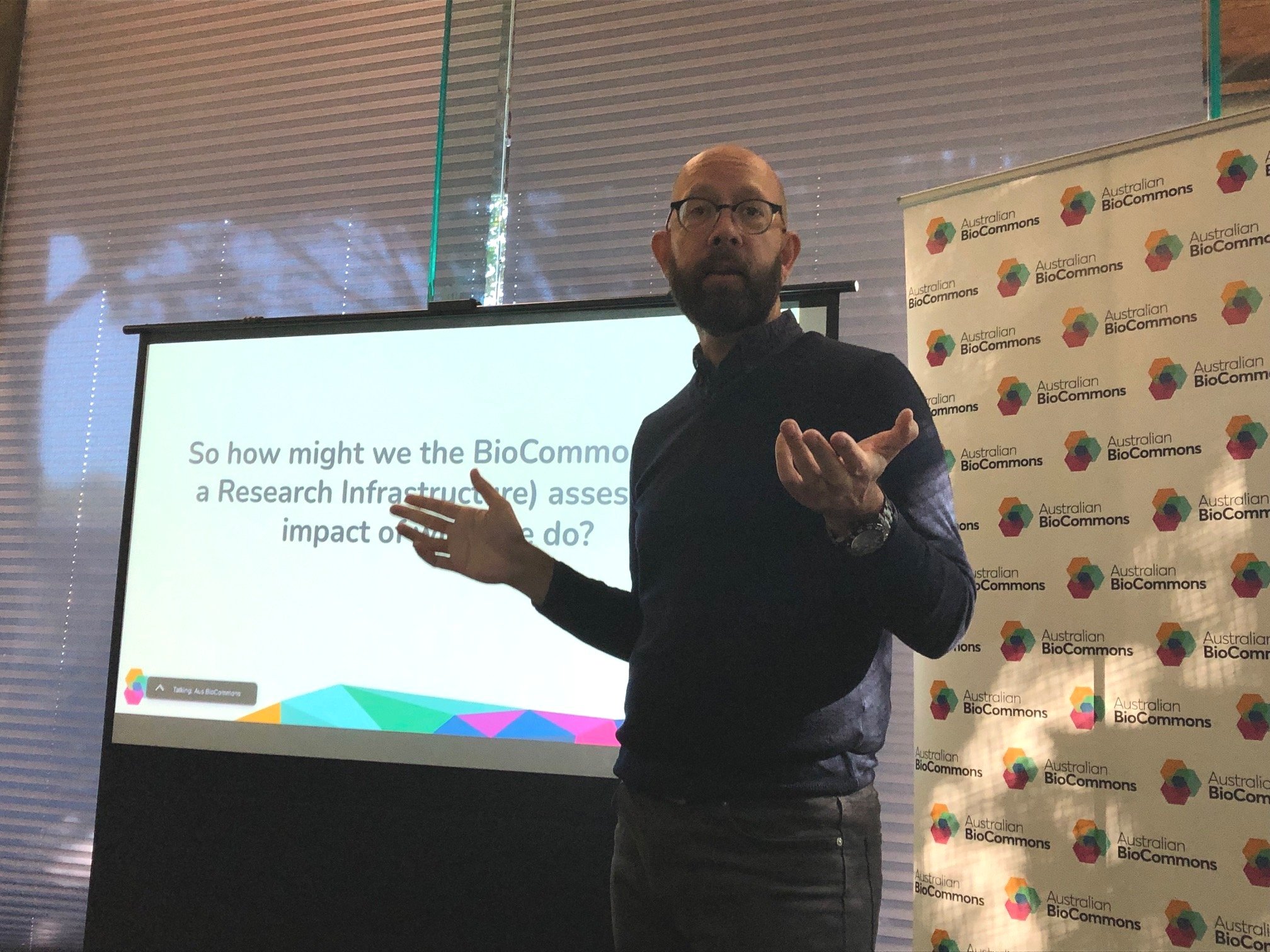
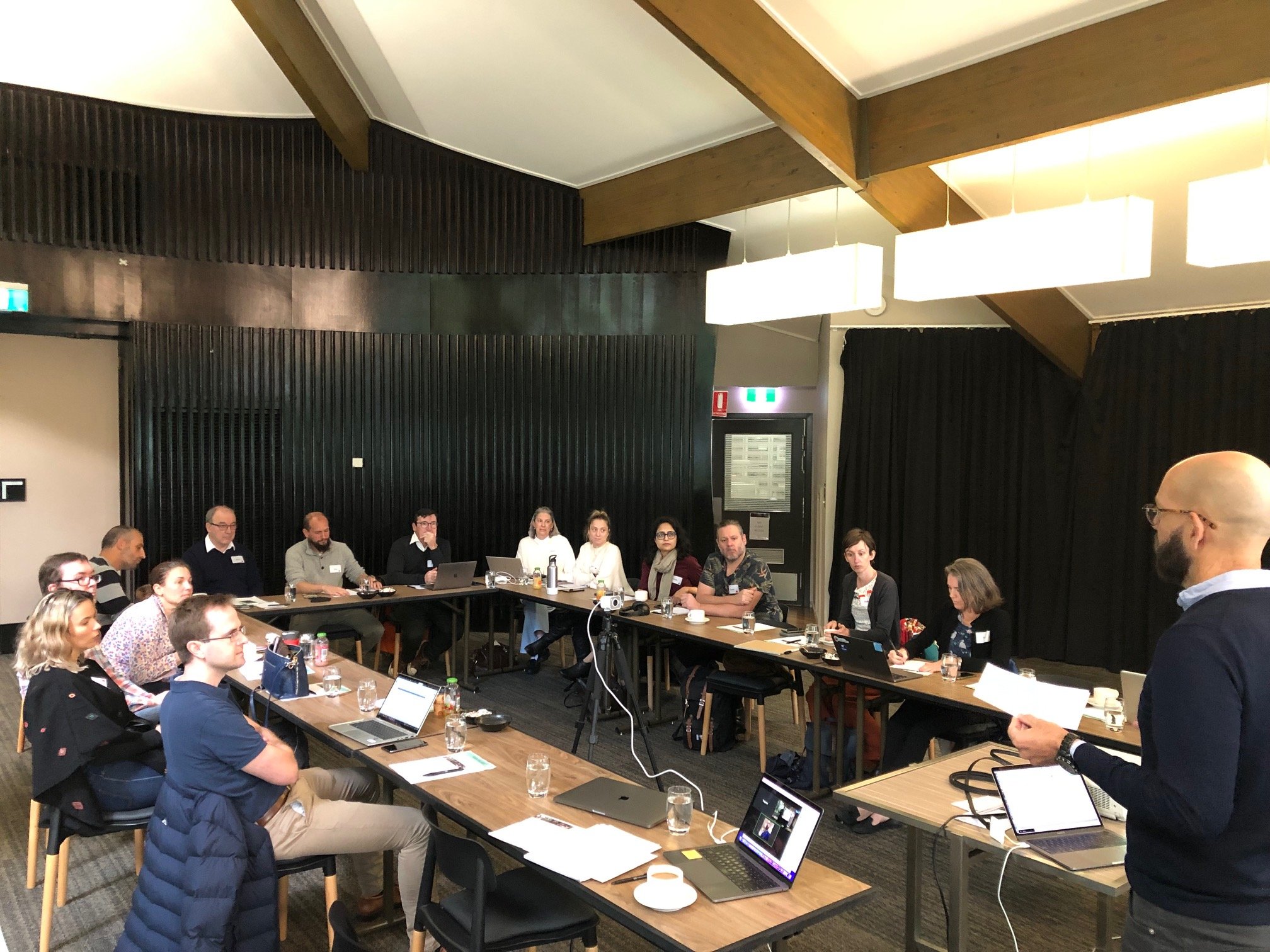
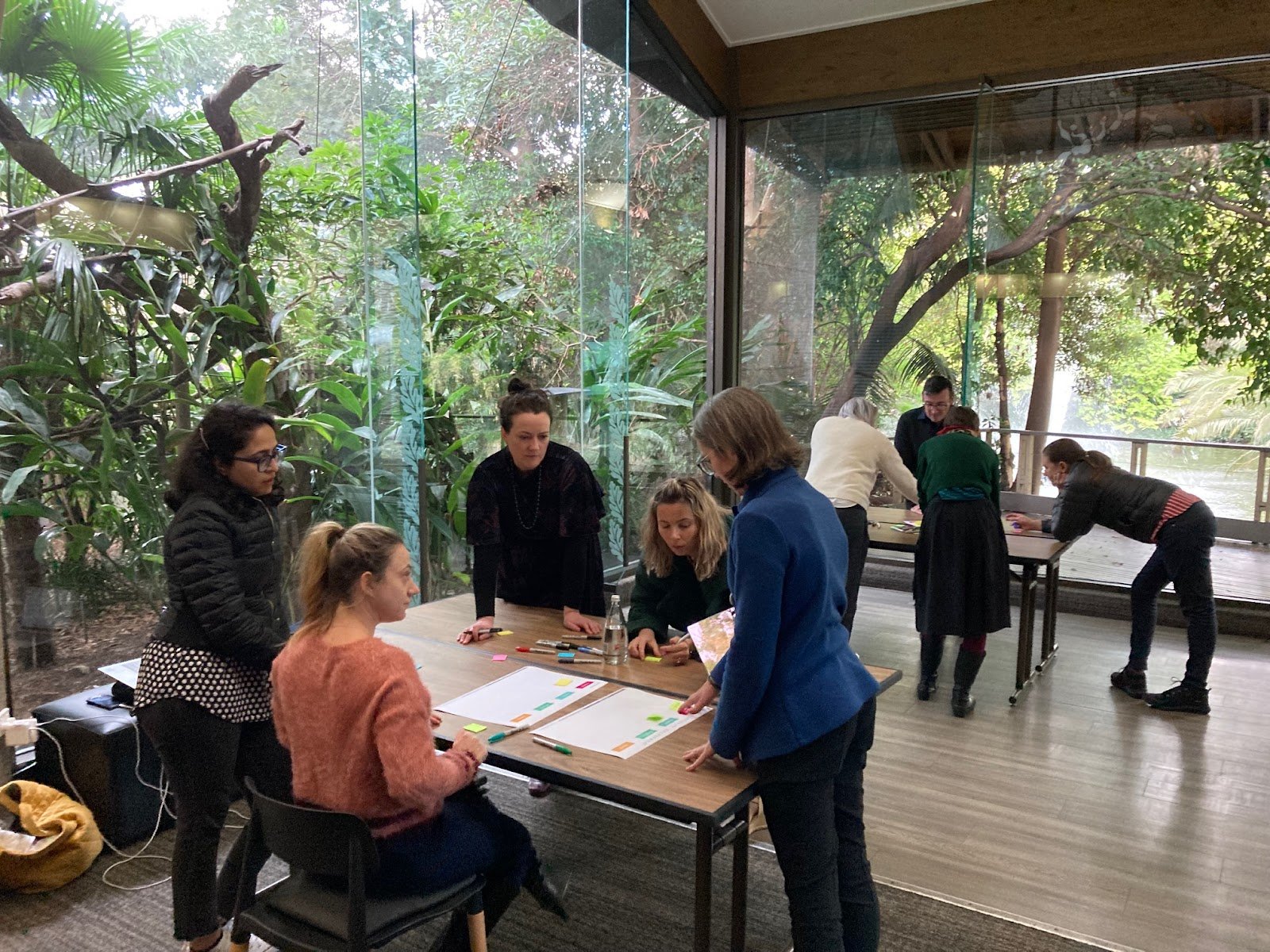
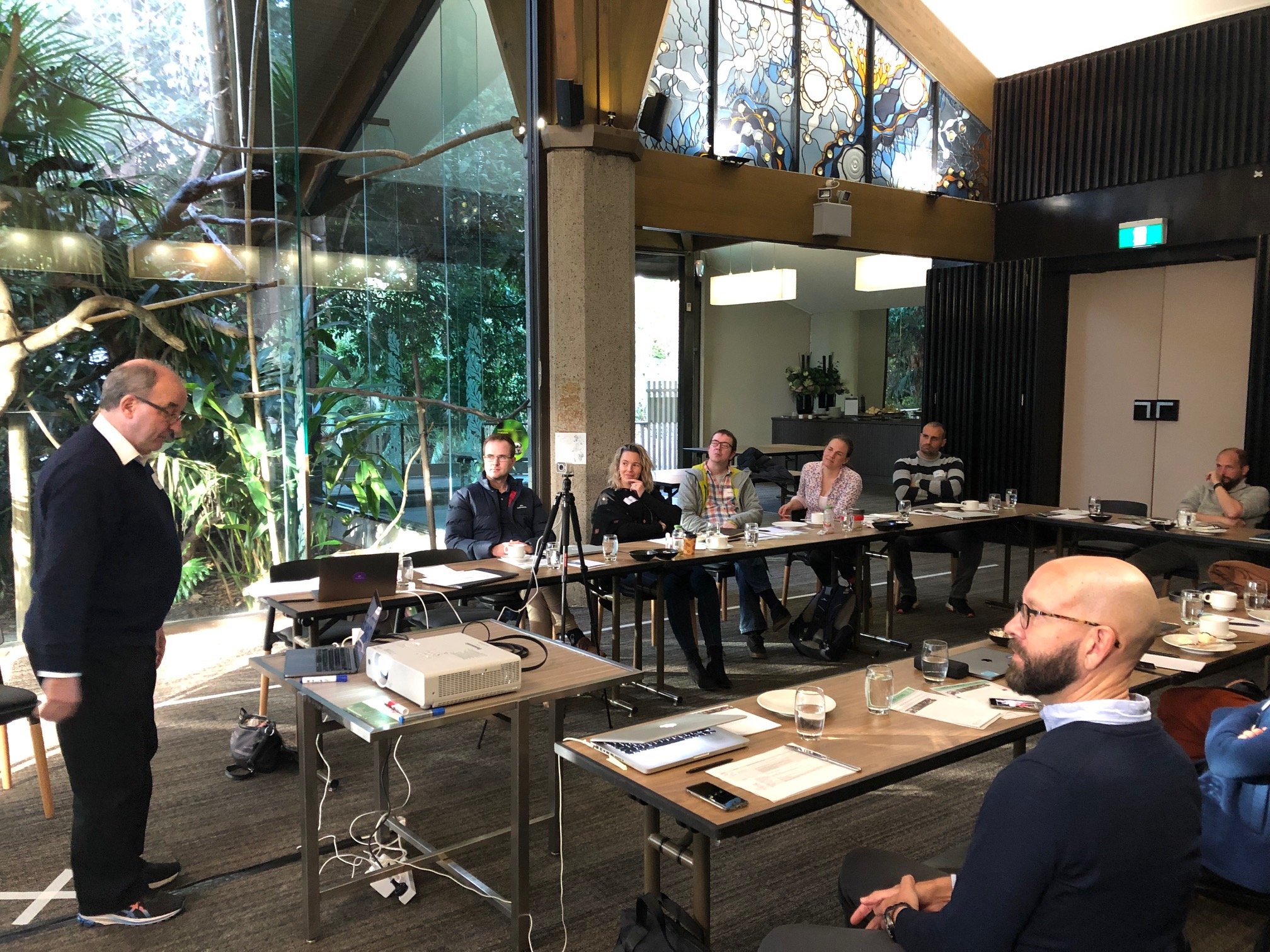
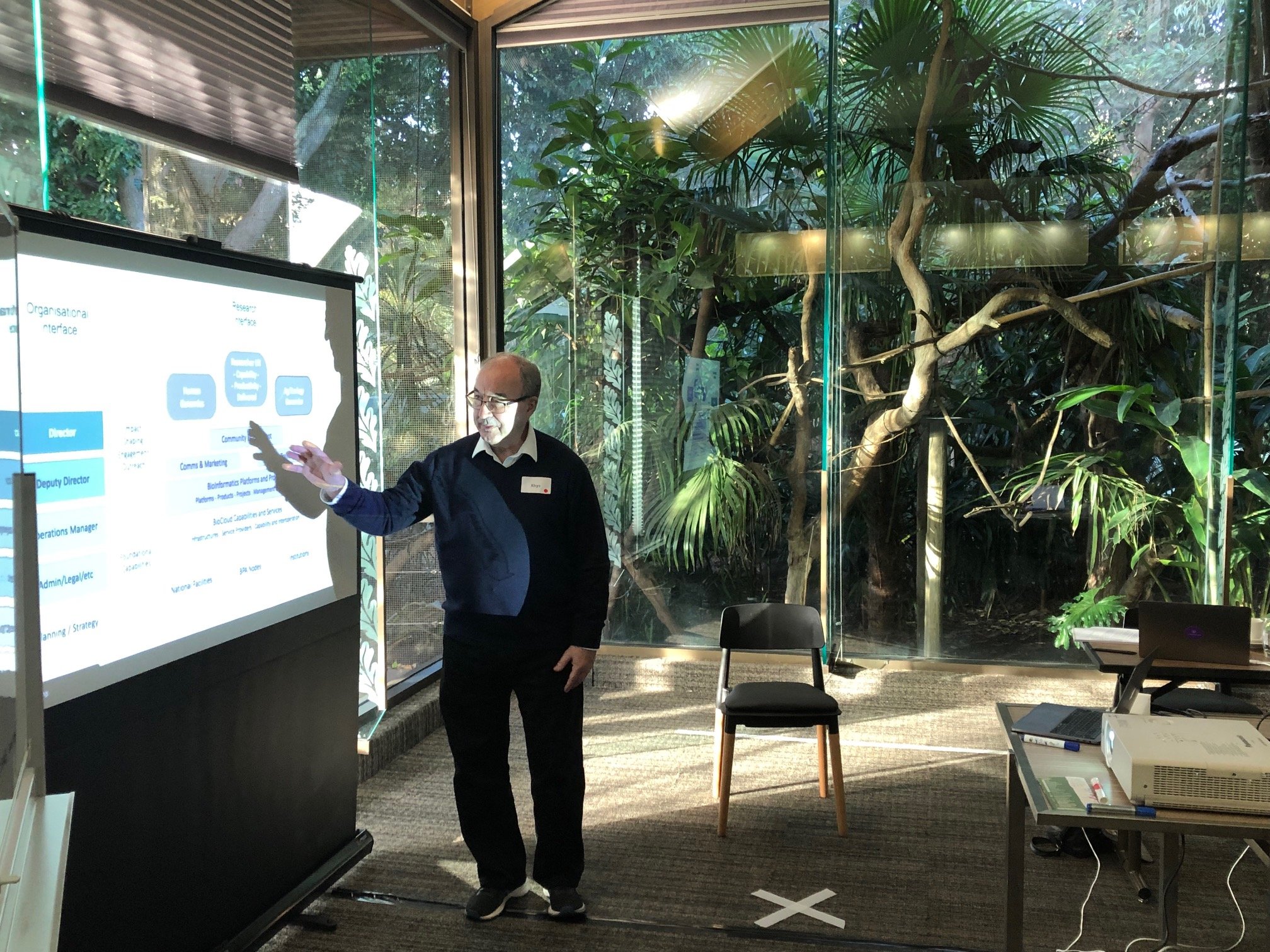
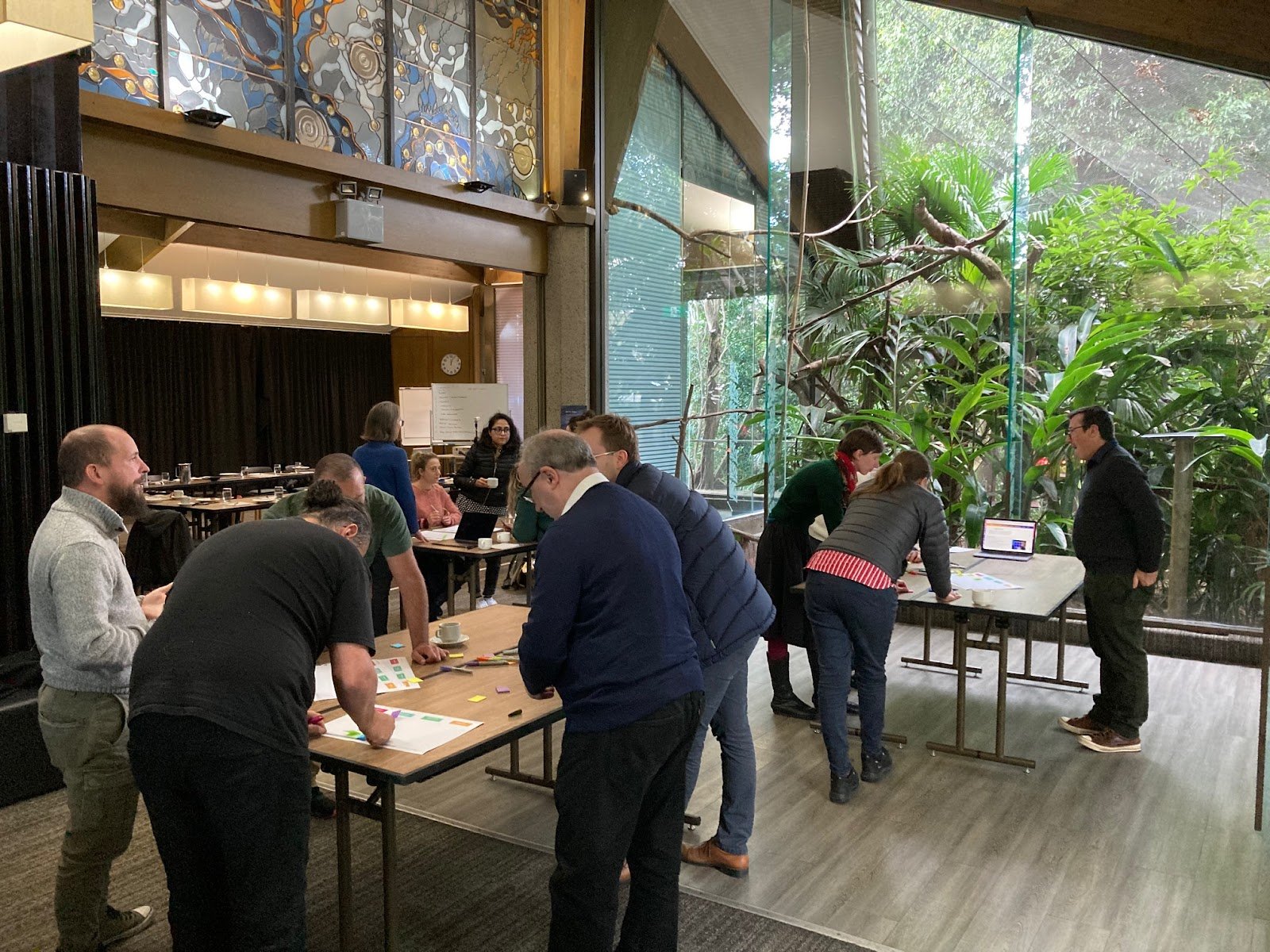
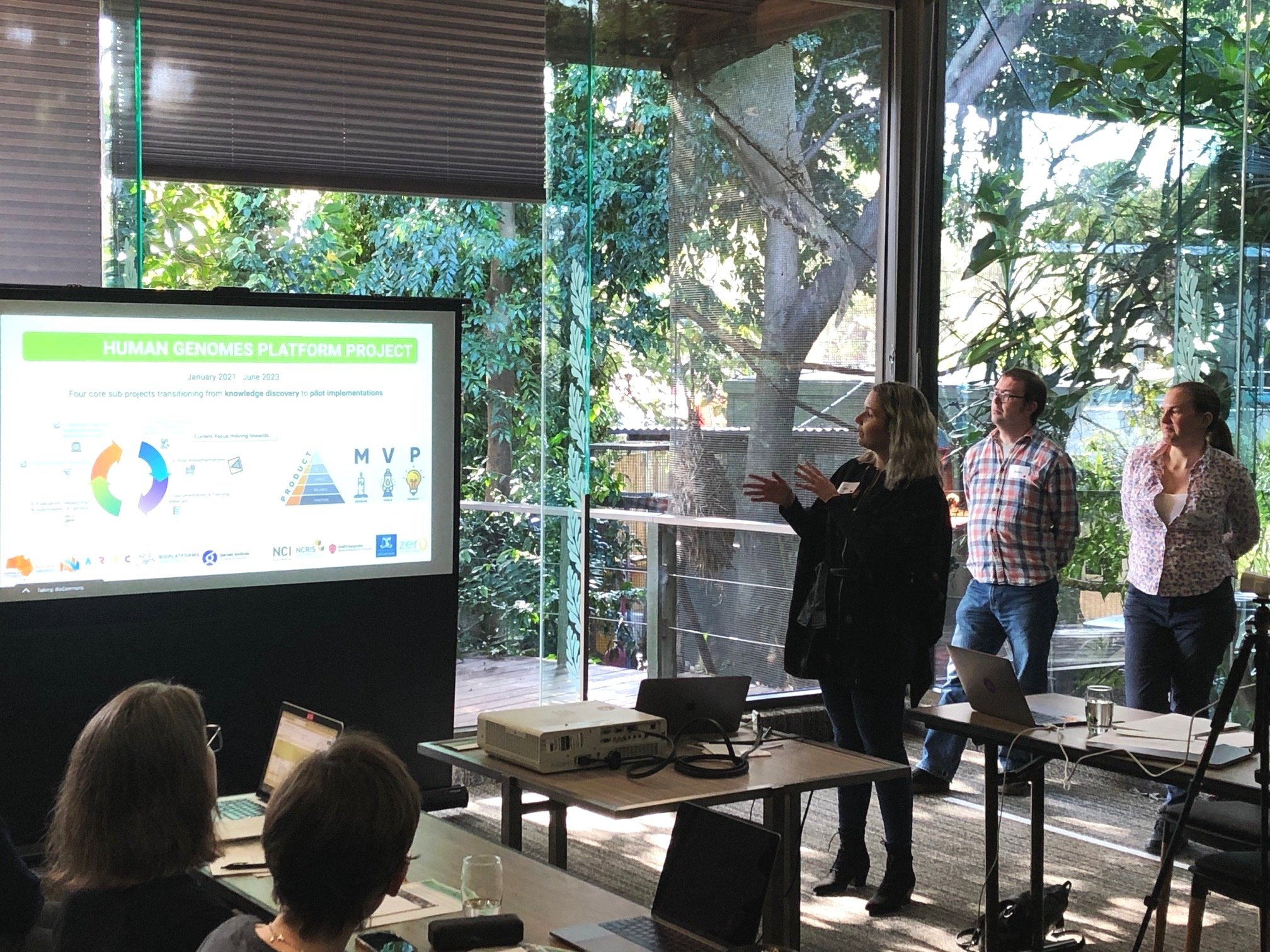
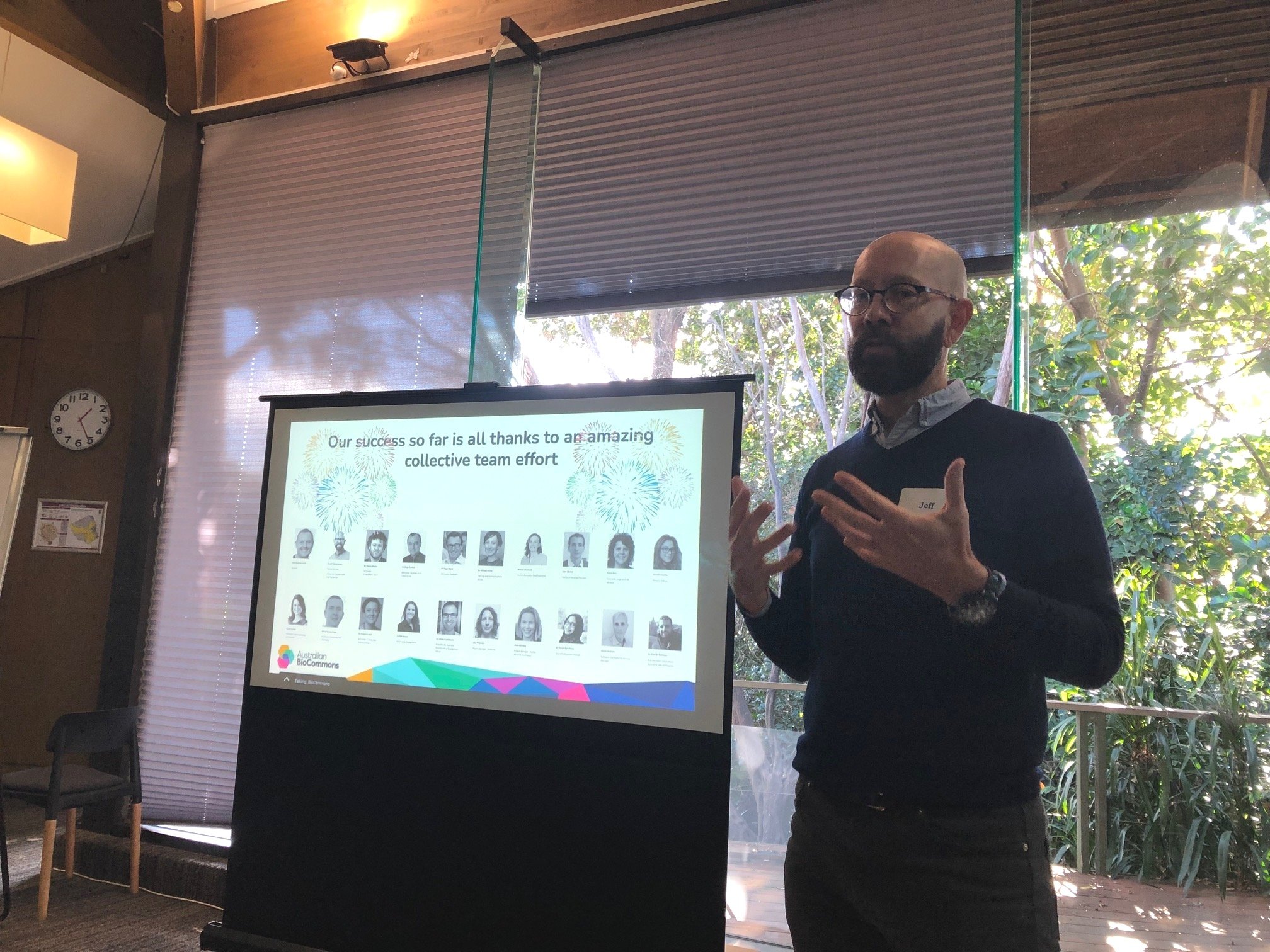
Next week we are gathering for two days in Melbourne to discuss the rapid developments in our team and projects, and to catch our breath and reflect on what ‘growing up’ has been like for our team. You may notice a lull in our activity for a couple of days, but rest assured we’ll be back on deck with fresh ideas and motivation soon after!
BioCommons team and projects well represented at eResearch Australasia 2022
The BioCommons team will be attending the 2022 eResearch Australasia Conference and sharing details of a wide range of our collaborative current activities.

The 2022 eResearch Australasia Conference which will take place in Brisbane from 17 – 20 October. Offering delegates the opportunity to re-engage, reconnect, and share ideas, eResearch 2022 will investigate information-centric research capabilities and how information and communication technologies help researchers to collaborate, collect, manage, share, process, analyse, store, find, understand and re-use information.
A large group of the BioCommons team will be attending the conference and sharing details of a diverse range of our current activities, along with many of our collaborators. Please join us at the presentations below!
Tue 18 Oct
11.40 Supporting the discovery and reuse of workflows in bioinformatics (Gareth Price)
12.00 The Biocommons Nextflow Tower Service: A user-friendly and infrastructure-flexible platform to run and monitor Nextflow pipelines (Nigel Ward and Ziad Al Bkhetan)
14.55 DReSA: Building momentum in digital research skills uptake (Melissa Burke co-presents with other members of the Digital Research Skills Australasia Working Group)
Wed 19 Oct
10.25 Galaxy Australia as a vehicle for cutting-edge biotechnology (Cameron Hyde)
10.45 Building community data assets for life sciences through ABLeS – the Australian BioCommons Leadership Share (Ziad Al Bkhetan)
15.50 The importance of requirements elicitation and analysis in setting projects up for success: a case study from the Human Genomes Platform Project (Kylie Davies, Jess Holliday)
16.30 User-led platform design - the Australian BioCommons journey (Winnie Mok)
16.50 A FAIRer future for genomics research in Australia: creating an Australian Genome Reference Atlas (Kathryn Hall)
Thu 20 Oct
9.45 Visible Research Software Interest Group (Johan Gustafsson co-leads BoF session with Paula Andrea Martinez)
Posters
Enhancing Australia’s capability for secure and responsible sharing of human genome research data: The Human Genomes Platform Project (Marion Shadbolt)
Bioinformatics training “with a little help from my friends” (Melissa Burke)
We look forward to catching up with many of you in person at the conference!
To register for the conference visit: https://conference.eresearch.edu.au/home/2022-registration/
Enabling reproducible and portable workflows: Janis
As part of the Australian BioCommons ‘Bring Your Own Data’ Expansion Project, a specialised framework is under development that creates simple workflow definitions that enables researchers and clinicians to work with different workflow languages.

Being able to repeat analytical workflows consistently and accurately is critical in transferring and scaling methodologies, whether between research groups or for large-scale clinical use.
As part of the Australian BioCommons ‘Bring Your Own Data’ Expansion Project, a specialised framework is under development that creates simple workflow definitions that enable researchers and clinicians to work with different workflow languages.
‘Janis’ provides both a consistent language for describing workflows and a framework that can translate workflows between existing languages such as CWL and WDL. Originating from the Portable Pipelines Project between Melbourne Bioinformatics, the Peter MacCallum Cancer Centre, and the Walter and Eliza Hall Institute of Medical Research, BioCommons quickly saw the potential of supporting such a useful tool.
Janis will help make the work that biomedical researchers do more portable and less dependent on any particular technology.
A/Prof Bernie Pope
Australian BioCommons A/Director: Human Genome Informatics
Melbourne Bioinformatics Human Genomics Lead
Victorian Health and Medical Research Fellow
Janis is already being used by a number of groups, such as the Molecular Pathology Laboratory at the Peter MacCallum Cancer Centre where it helps manage workflows for the analysis of clinical cancer data on a significant scale. Melbourne Bioinformatics software engineer, Grace Hall, is currently working to extend Janis's ability to convert workflows from the popular Galaxy platform. Grace points out that research groups currently invest a lot of time and effort in creating workflows; translating them with Janis will make them easier to share, and maintain with minimal effort into the future. Richard Lupat, a bioinformatics software engineer from the Peter MacCallum Cancer Centre and one of the original Janis developers, says that translating to and from Nextflow, another widely used workflow language, will be the next goal.
More information about Janis can be found here.
This story was based on a news item first published in the Melbourne Bioinformatics newsletter.
The Australian BioCommons BYOD Expansion Project project is funded through NCRIS investments from Bioplatforms Australia and the Australian Research Data Commons (http://doi.org/10.47486/PL105) that are matched with co-investments from AARNet, Melbourne Bioinformatics, NCI, Pawsey, QCIF via the Queensland Government RICF fund, The University of Sydney, AGRF, Griffith University and Monash University.
Global solutions are built on strong international connections
The Galaxy Australia team has been taking up opportunities to join the international Galaxy community in-person around the world. After years of working intensively online at all hours of the night, it is a joy to be able to meet up with global team members.

The Galaxy Australia team has been taking up opportunities to join the international Galaxy community in-person around the world. After years of working intensively online at all hours of the night, it is a joy to be able to meet up with global team members. The excellent progress made through focussing our combined efforts in a shared time and place is evidence that the benefits of working in the same room often outweigh the unfortunate costs of travel between the core Galaxy groups in Australia, Europe and the USA.
Galaxy Australia Lead Engineer, Simon Gladman, from Melbourne Bioinformatics at the University of Melbourne, will jet off today to Freiburg, Germany to contribute to the European Galaxy Days. The events offer an opportunity to drive the future progress of Galaxy, and Simon will present his recent work, discuss future improvements with other Galaxy developers and help to coordinate their efforts to fast track new features.
Several Galaxy Australia team members presented their work at GCC2022 and participated in the following hands-on “CoFest” and deep discussions about Galaxy’s development in Minneapolis, USA in July. Cameron Hyde who works in the Galaxy Australia team from QCIF at University of the Sunshine Coast, was invited by the conference hosts to stay on after the conference to discuss the GalaxyP project in detail. GalaxyP is a multi-omics informatics platform for integrative analysis of genomics, transcriptomics and mass spectrometry-based proteomics and metabolomics data that is under active development at the University of Minnesota in collaboration with the Minnesota Supercomputing Institute. The expansion into the proteomics domain is a current focus for Galaxy Australia to address the need to support Australian researchers in their proteomics analysis, as identified in Australian BioCommons’ Proteomics Analysis Infrastructure Roadmap for Australia. The insights shared between these global collaborators will help the community effort move forward to constantly improve the Galaxy platform for everyone’s benefit.
We are also thrilled to be hosting next year's international Galaxy Community Conference in Australia. The international team who develop Galaxy will be there, along with colleagues from throughout our local region who manage Galaxy instances for their own local research communities. Combining the interests of both developers and users of Galaxy, GCC2023 will be a friendly and fun meeting that is also well suited to researchers who would like to learn more about using Galaxy for their own analyses.
Keep in touch with updates about GCC2023: register your interest here.
Launching the Australian AlphaFold Service
A new service is now offering researchers the chance to accelerate their research through access to AlphaFold. The Australian AlphaFold Service delivers AlphaFold through Galaxy Australia, offering an easy to use interface coupled with the required computational resources at no cost to Australian researchers.

A new Australian BioCommons service is now offering researchers the chance to accelerate their research through access to AlphaFold. By providing this new capability through Galaxy Australia, the powerful tool is backed by the required computational resources at no cost to Australian researchers. After an intensive period of testing across many fields of biology, access is now open to the new Australian AlphaFold Service.
When the AI system, AlphaFold, was released by DeepMind it promised to reduce painstakingly laborious and time consuming experimental techniques for determining protein structures down to accurate predictions that can take minutes. Researchers jumped at the opportunity to investigate the 3D structure predictions built using only their primary amino acid sequences.
In July 2022, Deepmind partnered with EMBL’s European Bioinformatics Institute (EMBL-EBI) to release the predicted structures for nearly all catalogued proteins known to science, expanding the AlphaFold Database to over 200 million structures. With accuracy rivalling real-life experiments and the results shared freely the impact of the tool on research was felt internationally.
Galaxy Australia seized the opportunity to facilitate access to the tool for even more researchers. They made AlphaFold 2 available in their easy-to-use interface, and paired it with the GPU clusters required to power AlphaFold.
To design the best possible service, Galaxy Australia worked with a group of beta testers who provided feedback on how to improve the experience for their particular research application. A diverse group of Australian researchers who brought with them a wide range of experience with AlphaFold and Galaxy.
Dr Kate Michie runs the Structural Biology Facility at the Mark Wainwright Analytical Centre, UNSW, and has incorporated AlphaFold into her standard practice. The protein structure prediction speeds up laborious and sometimes frustrating protein crystallisation, saving time and money in the wetlab process.
“As structural biologists, we can use AlphaFold for both designing constructs and solving protein structures. It is quickly becoming the first thing you do, to inform what happens in the lab.”
Kate is currently looking at ways to sustain her ongoing use of AlphaFold in the long term. The computationally intensive jobs are expensive to run, so she was keen to sign up to become a beta tester for the new service. These types of jobs may not run as fast as on a dedicated private facility, but once submitted to the Australian AlphaFold Service they conveniently run in the background at no cost to researchers.
Another benefit of using AlphaFold in this way comes from the easy to navigate interface that is provided by Galaxy Australia. Like many of the beta testers, Kate is an experienced user already, and found using the tool in Galaxy Australia was easier.
“AlphaFold is enormously helpful for lots of different projects, and they are often led by researchers who are not structural biologists, who come to me asking “what can I understand from this esoteric protein we found in some weird organism?” So in order to really jump things forward and trim down which experiment is likely to work and which one isn’t, I become this mediator who helps interpret what AlphaFold can do for them and run their structures.
Ideally researchers could be using the Australian AlphaFold Service themselves. It is easy to navigate and it would be awesome if I don’t have to perform the AlphaFold runs for them.”
Dr Frank Sainsbury from the Griffith Institute for Drug Discovery at Griffith University had not used Galaxy Australia before, and was concerned about whether he would have the computational skills to be one of the beta testers for the new AlphaFold service. But with Galaxy Australia removing any requirement to install and compile obscure software, he had such success that he is looking at integrating it into his future research.
“We are looking at how a particular genus of plant viruses evolved to only infect plants. We make virus-like particles in order to determine the structure of viruses and also for drug discovery and biomedical use. AlphaFold was used to check for evidence of a core structural domain of a putative coat protein and the fact that it was there gave us the confidence to go on and make virus-like particles.”
The beta testers also identified other potentially powerful capabilities they would like to see, like using Alphafold to visualise and predict interactions between homo- and hetero- polymer proteins. This functionality is in the Alphafold Multimer tool, so Galaxy Australia is working to make it available in the future. The team is always open to finding new ways to support researchers, in this case to enable even greater insights into the 3D structural relationships between proteins.
If you are an Australian researcher who is keen to use AlphaFold to investigate protein structure, apply for access to the Australian AlphaFold Service now.
The Australian AlphaFold Service is part of Galaxy Australia which is managed by QCIF, Melbourne Bioinformatics and AARNet. The AlphaFold Service is specifically underpinned by scalable computational resources procured from Microsoft Azure. This service is supported by funding from the Queensland Government’s Research Infrastructure Co-investment Fund (RICF), Bioplatforms Australia (BPA) and Australian Research Data Commons (ARDC). BPA and ARDC are enabled by NCRIS.
Uncovering the secrets of parasites through AI and Cloud computing
A partnership between Australian BioCommons and Microsoft has resulted in University of Melbourne researchers being able to quickly leverage new methods through a large grant to use the Azure Cloud, with significant implications for the research community worldwide.

An exciting novel approach to investigating human and animal parasites is underway. New software and computational capabilities enabling automated structure-based genome annotation are overcoming some of the challenges of working with non-model organisms. A partnership between Australian BioCommons and Microsoft has resulted in University of Melbourne researchers being able to quickly leverage new methods through a large grant to use the Azure Cloud, with significant implications for the research community worldwide.
Conventional, primary sequence-based methods of annotation leave a large proportion of non-model organisms’ genes and proteins “unannotatable” because of the lack of known homologs in other species. But a new world of possibilities opens up by using structure to guide the search using AlphaFold, the AI system that accurately predicts the 3D structure of proteins.
Parasites that cause major human and animal suffering are prime candidates for this new structure-based approach. The research of Dr Neil Young from Prof Robin B Gasser’s laboratory at The University of Melbourne’s Faculty of Veterinary and Agricultural Sciences focuses on a range of socioeconomically important parasites. They are poised to fast track our understanding of how these complex organisms work by utilising AlphaFold to annotate all proteins encoded in the genomes of parasitic flatworms and their intermediate hosts (snails).
AlphaFold 2 is now available via the easy-to-use Galaxy Australia interface, with the platform also providing access to a rich catalogue of computational resources including the GPU clusters required to power AlphaFold. Further, Australian BioCommons has been working to deploy Galaxy Australia on commercial cloud resources, to enable massive scale-up of the platform and access specialised resources. The new Australian AlphaFold Service brings these significant developments together: researchers’ jobs are now running on the Azure Cloud thanks to an Australian BioCommons collaboration with BizData and Microsoft on Azure.
Connecting the Microsoft team with researchers who could immediately get to work, the proposal from the University of Melbourne Team to perform automated structure-based proteome annotation on a genome-wide scale was granted a massive computational boost. Jobs have already begun capitalising on the generous 12,000-hour A100 GPGPU allocation on Microsoft’s Azure cloud (equivalent to approximately $65,000 AUD).
By applying new capabilities in structure-based homology, this project will overcome the problems associated with primary sequence-based methods that have long dogged researchers seeking to annotate protein-coding genes and their products in silico. A substantial improvement in the accuracy of the functional annotation of nine parasite proteomes is expected, but this approach can be immediately applied to any other groups of eukaryotic organisms by researchers worldwide.
Read more about the work of Robin B Gasser’s Lab.
All Australian researchers can now access AlphaFold 2 through Galaxy Australia by simply applying through the Australian AlphaFold Service.
Australian BioCommons’ Australian AlphaFold Service is part of Galaxy Australia which is managed by QCIF, Melbourne Bioinformatics and AARNet. The AlphaFold Service is specifically underpinned by scalable computational resources procured from Microsoft Azure. This service is supported by funding from the Queensland Government’s Research Infrastructure Co-investment Fund (RICF), Bioplatforms Australia (BPA) and Australian Research Data Commons (ARDC).
Galaxy Australia is underpinned by computational resources provided by AARNet, Nectar Research Cloud, University of Melbourne, QCIF, National Computational Infrastructure and the Pawsey Supercomputing Research Centre. These efforts are supported by funding from The University of Melbourne, the Queensland Government’s Research Infrastructure Co-investment Fund (RICF), Bioplatforms Australia (BPA) and Australian Research Data Commons (ARDC). BPA and ARDC are enabled by NCRIS.
Join a community of data wranglers: large and complex research datasets in the cloud
To ensure bioscientists have access to essential data and tools, we've partnered with the Center for Translational Data Science, University of Chicago, USA. Working with the team behind the open-source data platform, Gen3, several data commons are currently being tailor-made for use by large numbers of Australian researchers working across national consortia. We're co-hosting the inaugural online Gen3 Community Forum 11-13 Oct and you're invited!

The ability of biologists to manage, analyse and share research data is key to making new discoveries and understanding the molecular basis of life. To ensure bioscientists have access to essential data and tools, Australian BioCommons has partnered with the Center for Translational Data Science, University of Chicago, USA. Working with the team behind the open-source data platform, Gen3, several data commons are currently being tailor-made for use by large numbers of Australian researchers working across national consortia.
The Gen3 platform consists of open-source software services that support the emergence of healthy data ecosystems by enabling the interoperation and creation of cloud-based data resources, including data commons and analysis workspaces. Gen3 aims to accelerate and democratise the process of scientific discovery by making it easy to manage, analyse, harmonise, and share large and complex datasets in the cloud.
Gen3 is now a key component of the large-scale translational medicine data ecosystem in the USA, having been used to build over 15 data commons by organisations including several NIH Institutes and Centers. Australian BioCommons is also supporting multiple deployments, helping to establish new Gen3 data commons for management and secure sharing of human omics data holdings between research collaborators. One project that supports Australian cardiovascular research is designing a system for the Precision Medicine Flagship of the Australian Cardiovascular Alliance (ACvA) that allows data to be received, managed, described, quality controlled and shared with authorised and authenticated individuals. Another project resulted in a webinar featuring partners from The University of Melbourne Centre for Cancer Research and the Zero Childhood Cancer Program who shared their experiences and progress towards Establishing Gen3 to enable better human genome data sharing in Australia.
With Gen3 use spreading globally, there is a demand to coalesce shared knowledge and activities into a community. A new Gen3 Community will meet for the first time at a virtual forum co-hosted by the University of Chicago and the Australian BioCommons. Everyone is invited to the Gen3 Community Forum 2022, taking place online 4-7 p.m. 10-12 October (CDT) / 8-11 a.m. 11-13 October (AEDT).
The inaugural Gen3 Community Forum will share knowledge about Gen3, its architecture, and the Gen3 roadmaps and priorities; strengthen the connection between the core team and those developing, operating and using Gen3 platforms; design a set of ongoing community engagement activities; and discuss and agree on key shared development priorities between the Gen3 core team and the community. The first day will showcase different examples of Gen3 data commons, and participants are welcome to attend some or all sessions.
Further details of the program and free registration is now available.