AI for Science Hackathon connects industry with research to accelerate Australian science
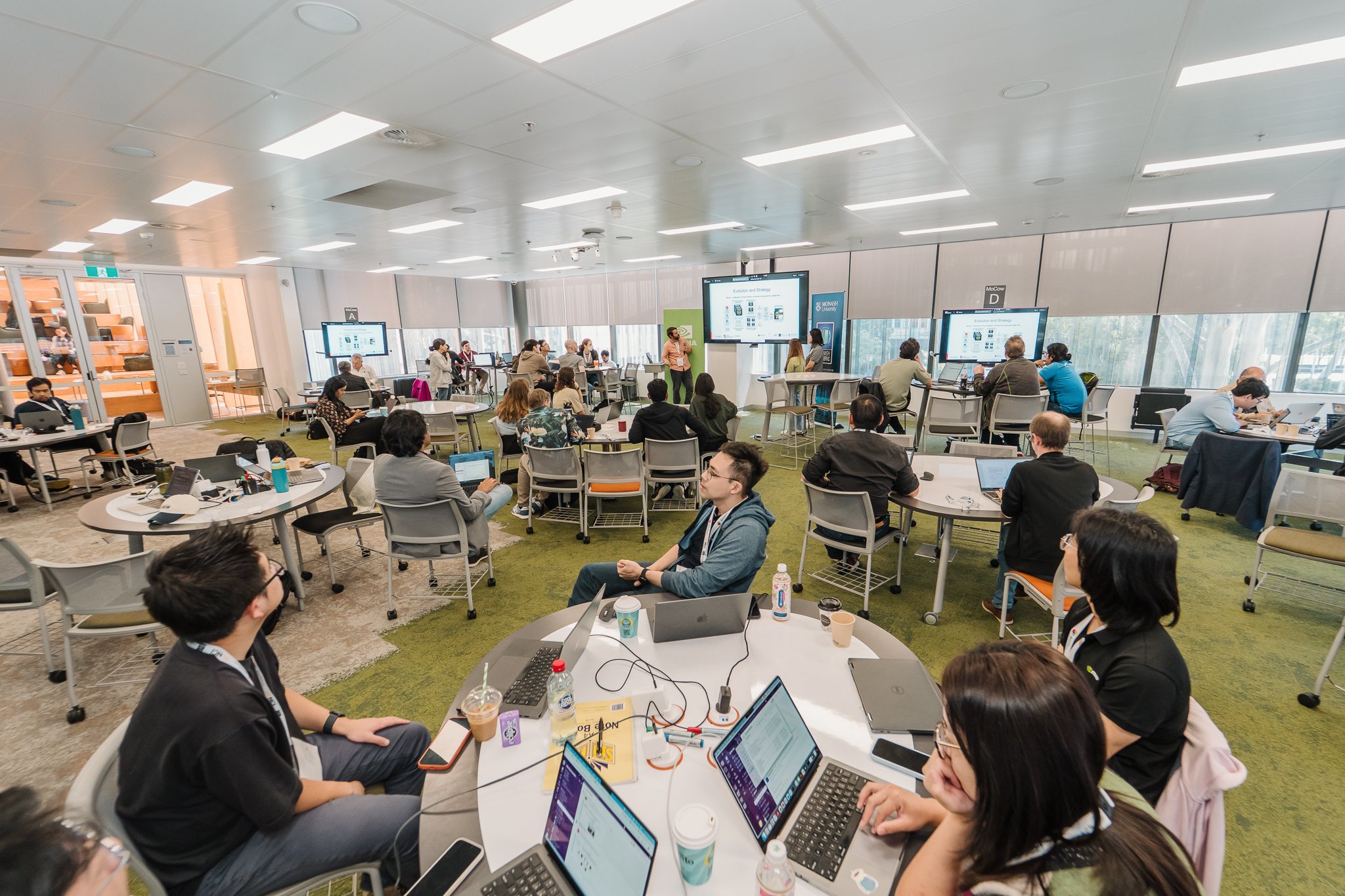
The AI for Science Australian Hackathon recently wrapped up in Melbourne, bringing together researchers and technical experts to port, accelerate and optimise research applications. The week-long event paired a select group of research projects with computational mentors and powerful compute tailored to their needs. Organised in collaboration with NVIDIA and OpenACC and hosted at Monash University, BioCommons also joined Pawsey Supercomputing Research Centre, National Computational Infrastructure and SHARON AI to boost projects across structural biology, advanced engineering, quantum chemistry and climate modelling.
What life science challenges were tackled?
Several teams leveraged the opportunity to translate software and hardware optimisations to existing medical and human health challenges. A key factor for teams applying to the event was to bring a mature project that could utilise the available mentorship and compute resources effectively.
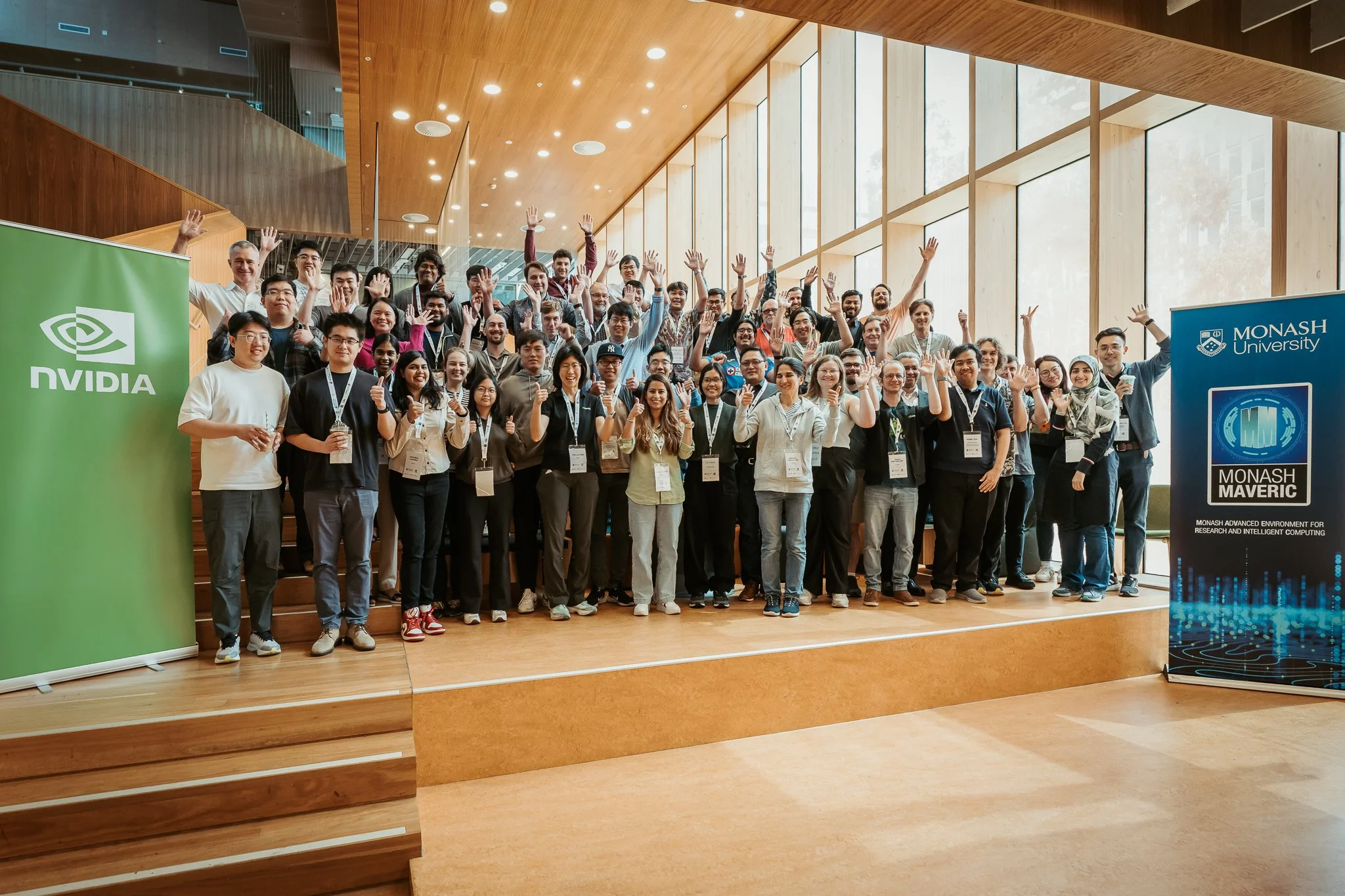
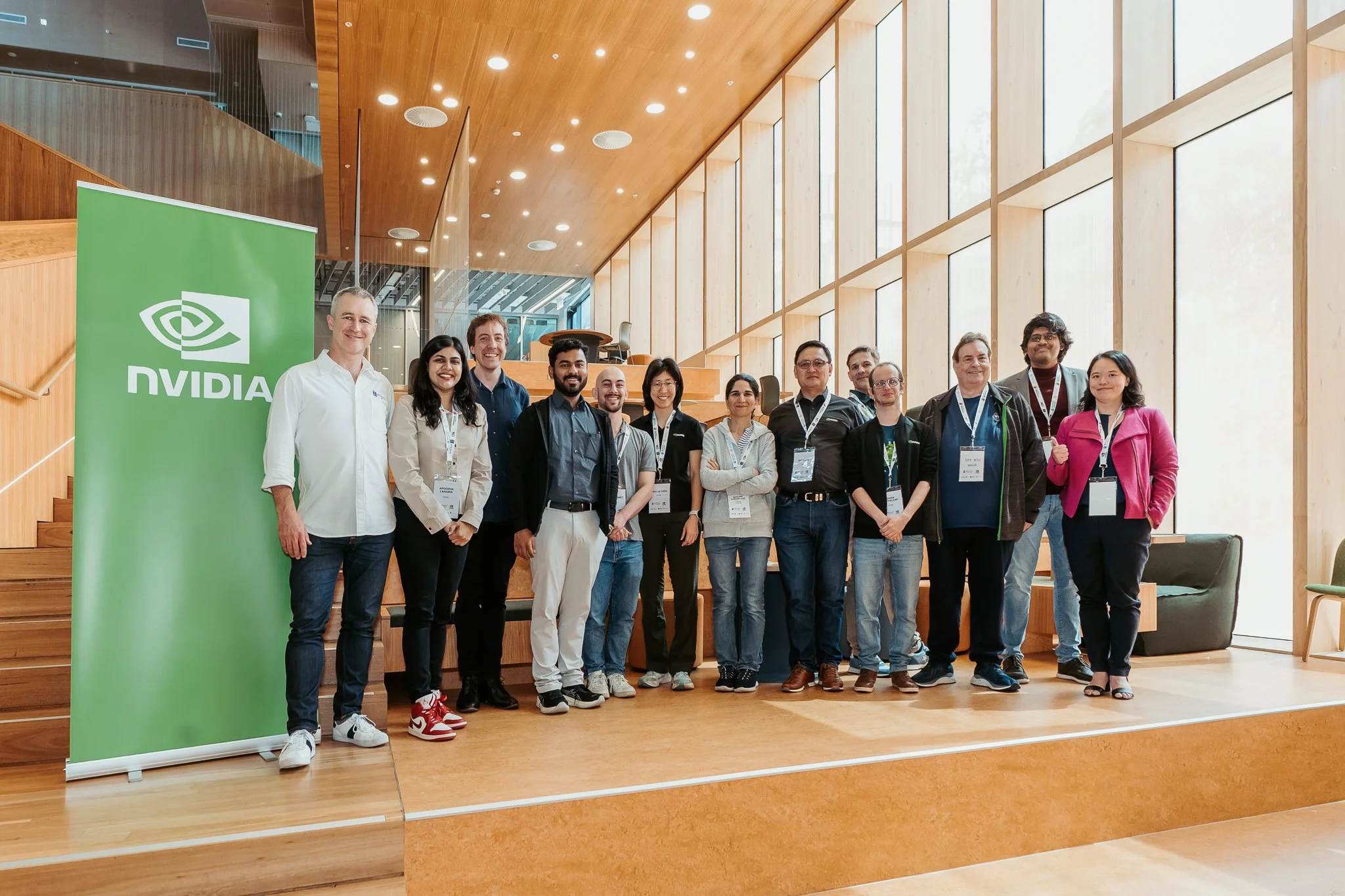
Attendees, organisers and mentors of the hackathon
A group from the Australian Structural Biology Computing (ASBC) community brought interdisciplinary expertise from UNSW’s Structural Biology Facility, WEHI, and the Monash AI Protein Design Program to optimise protein structure prediction and design workflows. The project incorporated GPU-enabled MMSeqs2 for accelerated sequence search and improved throughput and memory use of the Boltz-2 implementation for structure prediction. This work has been contributed to community-maintained Nextflow nf-core pipelines to promote efficient workflows for researchers worldwide.
A joint Australian Centre for Artificial Intelligence in Medical Innovation (La Trobe University) and Florey Institute of Neuroscience and Mental Health team tackled a highly complex 20,000-line codebase dedicated to childhood dementia research. Their project focused on predicting whether mRNA sequence data could accurately target the specific NPC1 mutation responsible for the disease. BioCommons’ AI Technical Lead, Dr Benjamin Goudey supported this work as a dedicated mentor. By bridging the gap between the hardware experts and the life science researchers, Ben helped the team navigate their massive codebase to ensure their mRNA dementia research workflows could run efficiently on the accelerated GPUs.
What technical outcomes were achieved?
By exploring batched inference strategies, some workloads in the structural biology project saw a four-fold speed increase, alleviating major predictive bottlenecks in high value protein design workflows. The team also doubled their maximum prediction size by chunking operations at key memory bottlenecks and working around overflow bugs in high-level libraries like PyTorch and trifast. With access to impressive hardware in the form of eight NVIDIA B200 GPUs, participating teams achieved substantial performance gains as well as insights into maximising the benefit of GPU acceleration within their research.
The event was a major upskilling opportunity, with researchers experimenting with agentic coding, getting introduced to GPU-accelerated data processing libraries (NVIDIA RAPIDS), and working under the guidance of expert mentors to iterate their optimisations.
Reflecting on the event, Dr Thomas Litfin, a UNSW researcher supported by Australian BioCommons and member of the ASBC community, highlighted the immense value of this hands-on support, as well as the lasting impact of the connections forged during the week:
‘The groups got an incredible amount of value from the expert mentors, who were instrumental in suggesting strategies and troubleshooting bottlenecks on the fly. The event was also a great community building exercise for our project by bringing together people from Monash, WEHI, and UNSW, and creating opportunities for ongoing collaborations.’
As AI methodologies become increasingly embedded in the life sciences, BioCommons will continue working alongside our partners to ensure researchers have both the cutting-edge digital infrastructure and the specialised skills needed to use it.
Read more about the event in the blog post by host Monash University.
Hear what the National AI Survey told BioCommons about researchers’ AI needs in the Future of AI in Life Sciences webinar.