
News
Subscribe to the Australian BioCommons monthly newsletter or read previous editions
Shaping the next phase of Australian human omics infrastructure
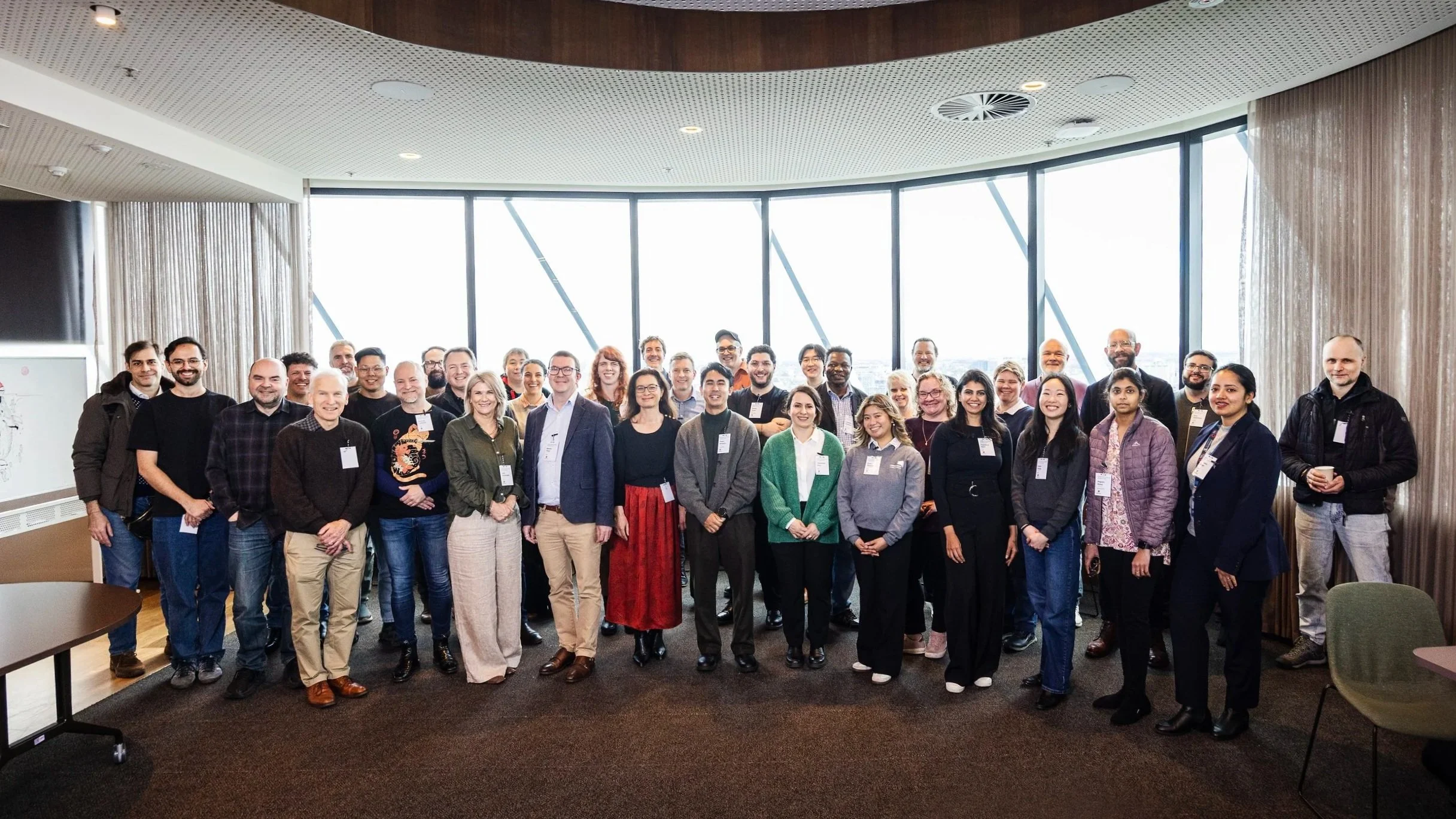
GUARDIANS program leads and project delivery partners from across Australia gathered this month for the third GUARDIANS partner meeting. Held in Melbourne, the two-day event provided a forum to showcase achievements, discuss challenges, and plan for the future of secure, responsible genomic data infrastructure in Australia.
GUARDIANS program leads and project delivery partners from across Australia gathered this month for the third GUARDIANS partner meeting. Held in Melbourne, the two-day event provided a forum to showcase achievements, discuss challenges, and plan for the future of secure, responsible genomic data infrastructure in Australia.
As this Australian BioCommons program enters its third year, the focus of the community is shifting from building the technical foundations to delivering sustainable, impactful and scalable solutions. Reflecting on the progress made so far, Prof Bernie Pope, A/Director, Human Genome Informatics at Australian BioCommons and Lead for the GUARDIANS project, noted:
‘We have reached a major program milestone - Phase I successfully demonstrates that Australia now has the production-ready digital research infrastructure, services, and expertise necessary to support human omics research at scale. We look forward to continuing our work in Phase II of the program, delivering national impact and lasting value for the broader research community.’
How do we build data systems for the future?
The meeting featured a comprehensive schedule of partner presentations, collaborative problem-solving sessions, and insightful keynotes that framed the program’s real-world applications.
The opening talk was a powerful joint presentation titled ‘Building Data Systems for Indigenous Precision Healthcare’ that explored how ethical, culturally informed data governance is driving equitable health outcomes. Delivered by Adam Heterick, Bioinformatician at Black Ochre Labs, The Kids Research Institute Australia and the National Centre for Indigenous Genomics (NCIG), Australian National University, and A/Prof Jimmy Breen, Chief Data Scientist of the Indigenous Genomics research group at The Kids Research Institute Australia in Adelaide, the presentation highlighted the key message of being ‘Open as possible, closed as necessary’ and the need for relationship building.
On the second day, Dr Matilda Haas, Director at Genomics Australia, spoke on strategic priorities for integrating genomics into healthcare, which sparked valuable discussions around data governance, infrastructure, and future touchpoints with the Precision Health Initiative. By mapping out these intersections, the partners explored how to ensure the frameworks and solutions currently being built will effectively support downstream clinical applications.
What lessons are important for the GUARDIANS Program in Phase II?
Discussions over the two days converged on two important themes:
Governance, trust and responsible data use need to be embedded from the beginning
Governance needs to be considered throughout the data lifecycle, alongside technical design, access, security and community engagement. Building trust early and establishing clear, practical governance enables collaboration rather than creating barriers to it.
Interoperability and collaboration are key to getting greater value from what we have built
The importance of shared standards, common approaches, connected services and the ability for different environments to work together. The value of the infrastructure increases dramatically when services are connected and capabilities can be reused across projects rather than developed independently.
A new GUARDIANS website has been launched that shows how all of the strategic partners and activities are coming together to shape a new Australia's human omics ecosystem. It offers a comprehensive view on individual project updates, pilot services, and collaborative achievements from across the entire network.
Join the Australian Outpost of BioHackathon Europe 2026
Are you interested in joining this year’s BioHackathon Europe, but can’t face the long haul flights? You should join the Australian Outpost team who will gather in Melbourne, while checking in regularly with our international colleagues.

Are you interested in joining this year’s BioHackathon Europe, but can’t face the long haul flights? You should join the Australian Outpost team who will gather to work locally, while checking in regularly with our international colleagues.
This is a unique opportunity to participate in a significant global event and network with your international peers while working intensively on practical bioinformatics challenges. We will cover your costs when you come to Melbourne for the duration of ELIXIR’s BioHackathon: 9 - 13 Nov 2026. Participation will work mostly within our business hours, plus catch up live in the early evening with the teams in Barcelona. We always make it fun, and you’ll get to know others from around Australia while you learn new skills.
We’ve narrowed down the projects we’re interested in, and want to hear what you want the Australian Outpost of the BioHackathon to work on:
Project 31: Nextflow to Galaxy Workflow Portability and FAIRness via Modular LLM Agent Skills
Project 10: Enabling workflows and EDAM annotations to display in community website deployments
BioHackathon aims to:
Advance the development of an open source infrastructure for data integration to accelerate scientific innovation
Engage technical people in the bioinformatics community to work together on topics of common interest
Strengthen interactions, establish and reinforce collaborations through hands-on programming activities.
Please contact us if you are interested in joining the Australian Outpost of the BioHackathon Europe, and tell us which project/s you would like to participate in, and why. You can read last year’s story and a previous participant's blog post on why attending is so valuable for inspiration. Once we get a feel for who is interested, we will select a team of people and organise our meetup. There’s no need to register for a place on the BioHackathon Europe website - they have reserved places for the Australian Outpost.
Express your interest by emailing comms@biocommons.org.au by 25 Sep 2026
Ready-to-teach Nextflow training material now available
The Sydney Informatics Hub and Australian BioCommons have developed a reusable instructor package to support trainers in delivering high quality introductory Nextflow training workshops with less preparation.
Behind every successful workshop is more than a good training content. Instructors need tested exercises, suitable data and software, and a delivery plan they can trust.
Following the successful delivery of last year’s Nextflow for the Life Sciences workshop, the Sydney Informatics Hub and Australian BioCommons developed a reusable instructor package to support trainers in delivering introductory Nextflow workshops with less preparation.
The package builds on the workshop’s openly available training content and brings together structured teaching materials, detailed instructor guidance, and the software, data and files needed for delivery. It reduces duplication of effort and gives trainers a tested starting point for planning and delivering their own workshops. Trainers can use the materials as provided or adapt them for different audiences, learning objectives and workshop formats.
The package material has already been used by Peter MacCallum Cancer Centre, WEHI and Melbourne Bioinformatics to deliver an ‘Introduction to Nextflow’ workshop in July 2026. Reflecting on the preparation involved, the workshop organiser Richard Lupat said:
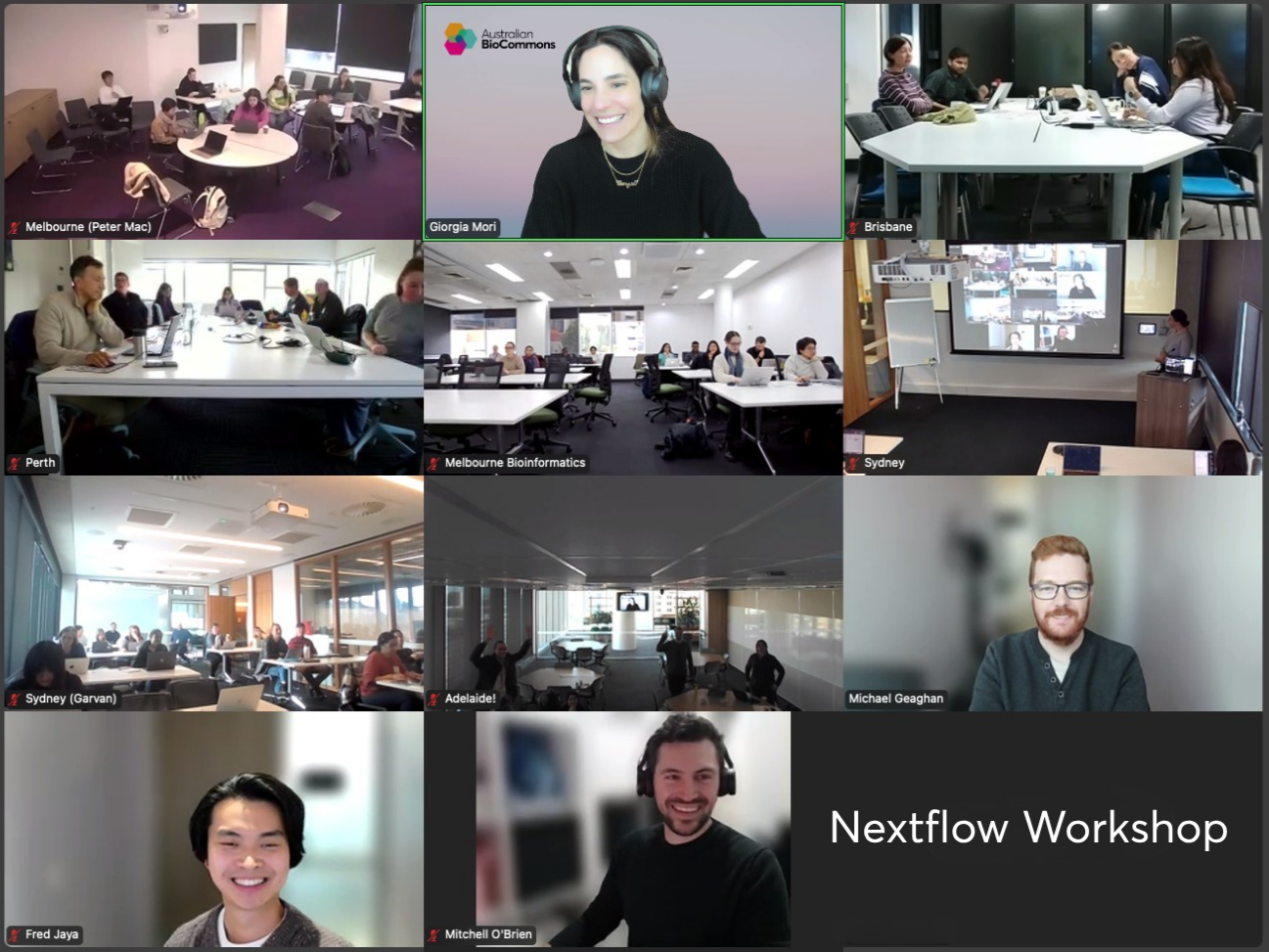
The 2025 Nextflow for the Life Sciences hybrid workshop brought together participants across multiple locations and provided the starting point for the reusable training materials available today.
“This is the least preparation required for a workshop that I have ever needed to run!”
Work is underway to explore preconfigured virtual training environments as an extra support for future workshop delivery. Further information about opportunities to test these environments will be shared as the work progresses.
The team is also working towards packaging materials from the workshops ‘Nextflow on HPC’ and ‘Customising nf-core pipelines’ in the same way, with the longer-term aim of building a reusable collection of Nextflow training resources for the Australian training community.
Interested in delivering your own introductory Nextflow workshop, adapting the materials for your community, or learning more about future opportunities to test the virtual training environments? The Australian BioCommons training team can help: training@biocommons.org.au.
Invitation to present your structural biology research
The Australian Structural Biology Computing Community is seeking Australian EMCR researchers in structural biology to share their work at a special online meeting.
The Australian Structural Biology Computing Community (ASBC) is a group for anyone who uses computing for structural biology research in Australia. They have a newsletter you can subscribe to, a website full of resources, and they meet online at quarterly meetings.
Their community talk series invites speakers from across the international structural biology community to present their work. Meetings in 2026 have featured:
Biswa Prasanna Mishra (Ve lab - Griffith University) - 11th March
Cameron Gilchrist (Steinegger lab - Korea Basic Science Institute Ochang-center) - 20th May
Roland Dunbrack (Dunbrack lab - Fox Chase Cancer Center) - 29th July
Tom Goddard (ChimeraX - UCSF) - 16th September
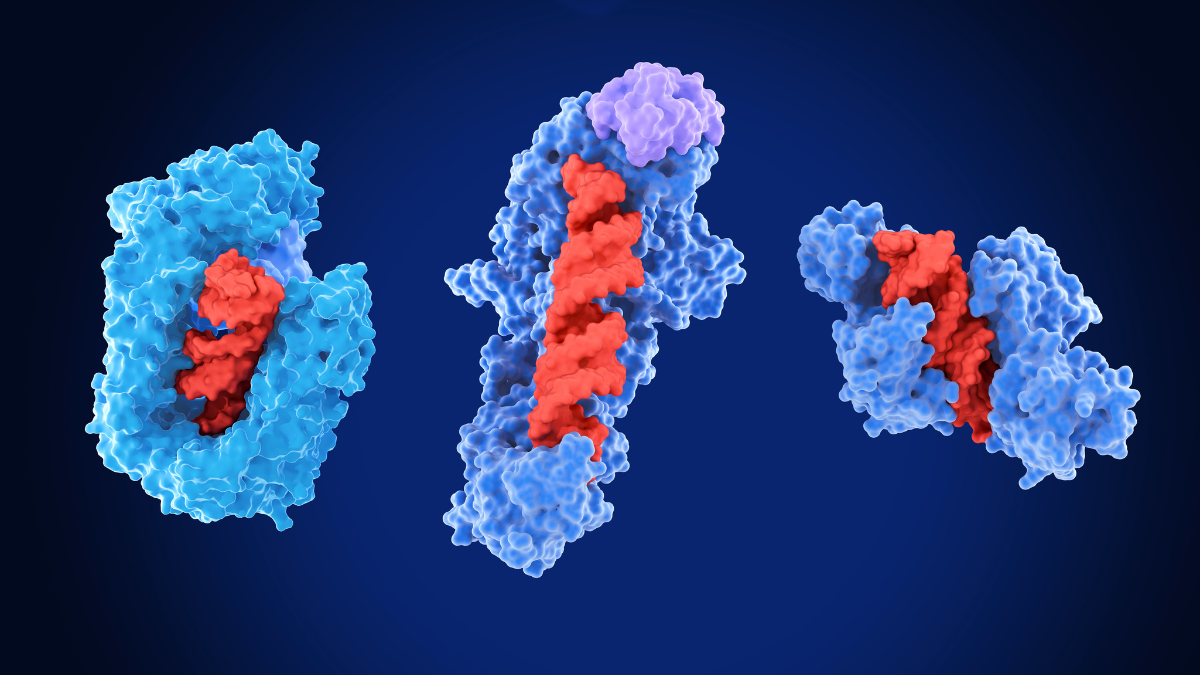
To wrap up the year, there is an invitation to Australian EMCR researchers in structural biology computing to share their work at a special edition of the ASBC community meeting on 4 Nov 2026. Whether you're in the middle of a project, have completed a project, or published a paper, you are invited to give a 15 minute talk.
Example projects could use methods related to structure prediction, structure search, protein design, functional annotation, molecular dynamics, CryoEM or other related areas. It is a great opportunity for EMCRs to promote their work with the national community and network with potential collaborators. Four talks will be selected via an informal and friendly application process.
Please send your talk title and a ~250 word abstract to asbc@unsw.edu.au by 31 Aug 2026 to be considered.
BioShell opens a new gateway to national compute for life science researchers
A new ready-to-use virtual environment offers researchers immediate access to a curated set of bioinformatics tools and datasets. BioShell provides a command line interface that is preconfigured for bioinformatics and uses national computer resources, at no cost to researchers.
A new ready-to-use virtual environment offers researchers immediate access to a curated set of bioinformatics tools and datasets. BioShell provides a command line interface that is preconfigured for bioinformatics and uses national computer resources, at no cost to researchers.
By removing the usual ‘setup friction’, BioShell allows researchers to focus on their science, rather than troubleshooting environment configuration or software installations. BioShell offers access to a safe space to experiment on the command line with more power than available on a laptop, avoiding the steep learning curve, complex allocation requests, or specialised architecture required to use high performance computing (HPC) services.
How does BioShell support life science research?
The rapid increase in the volume of available research data in the life sciences necessitates increasingly complex tools to perform effective analysis. BioShell supports researchers with a safe, pre-loaded, secure environment for working in the command-line environment, without the risk of breaking shared infrastructure.
BioShell’s key capabilities include:
Pre-installed workflow engines: ready-to-use software including Singularity, Nextflow, Jupyter Notebook, and RStudio
Built-in support via Shelley: an intuitive command-line agent that allows novice users to search, and run containers from containerised bioinformatics tools with one command
Full administrative control in a safe sandbox: researchers can run workflows and test pipelines with full privileges in an isolated environment.
How did BioShell evolve?
The development of this service, originally called BioImage, is evidence of sustained, national collaboration across Australian research infrastructures. Initially developed on Pawsey Supercomputing Research Centre’s Nimbus Cloud as part of a BioCommons project in 2023, it was further refined by the Sydney Informatics Hub (SIH) at the University of Sydney with regular usage for Australian BioCommons training workshops. Given how useful BioShell proved internally, the SIH team worked with the Australian Research Data Commons (ARDC) Nectar Research Cloud and National Computational Infrastructure (NCI) to ensure the BioShell environment works well with national compute resources.
Start using BioShell now
Researchers across any university or institute can access BioShell to spin up consistent virtual environments on demand. A new application for access to BioShell offers short-term access to national compute resources without the requirement for a full allocation request. For researchers with existing allocations, BioShell is also available via the image catalogue on the ARDC Nectar Research Cloud.
Find out more and request BioShell access
Australian BioCommons partners with the Sydney Informatics Hub, the University of Sydney to manage BioShell, which is underpinned by computational resources provided by the Australian Research Data Commons (ARDC) and National Computational Infrastructure (NCI), building upon original development by the Pawsey Supercomputing Research Centre. This work is enabled by NCRIS via funding from Bioplatforms Australia.
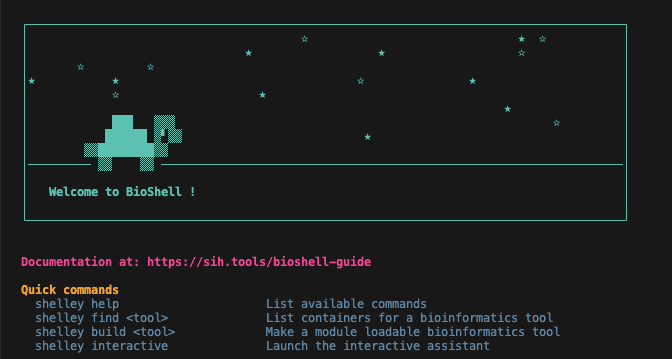
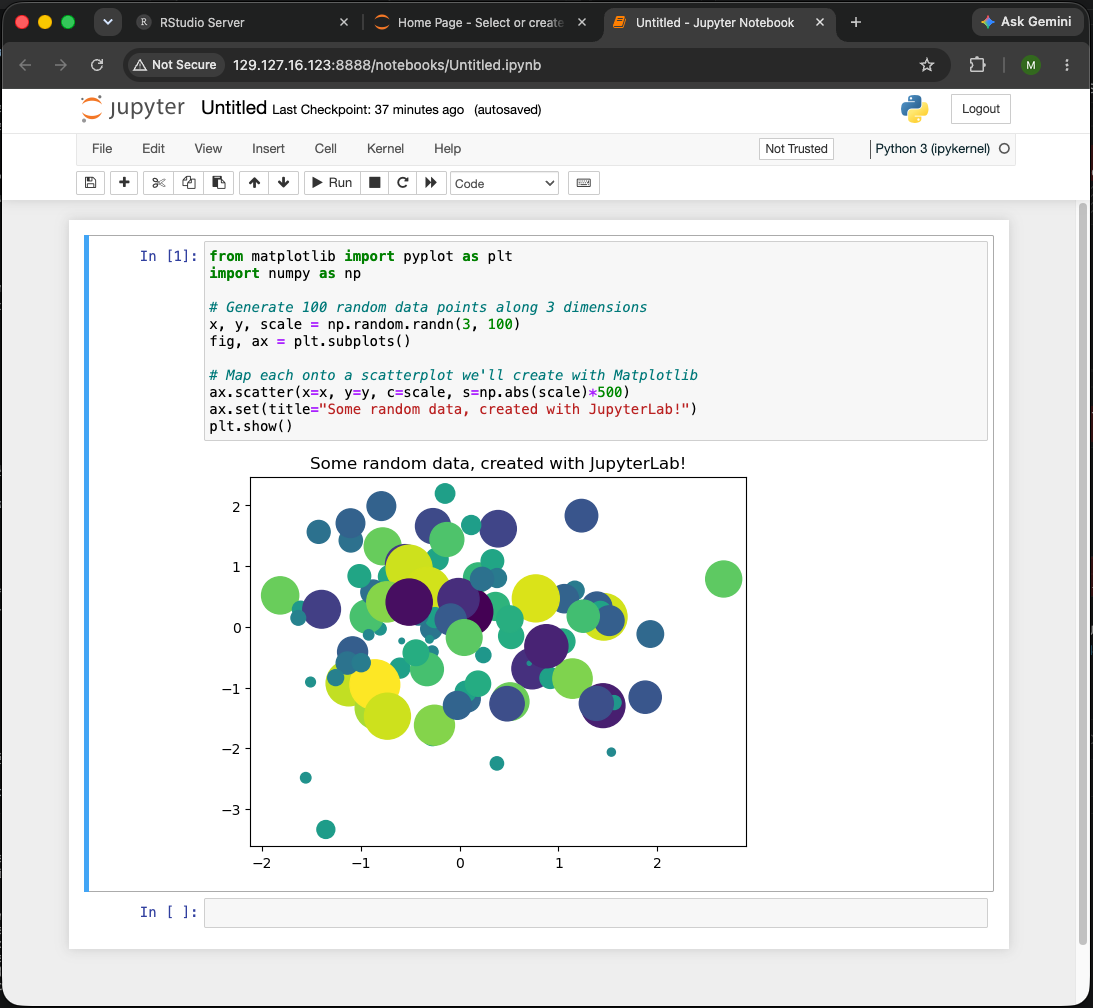
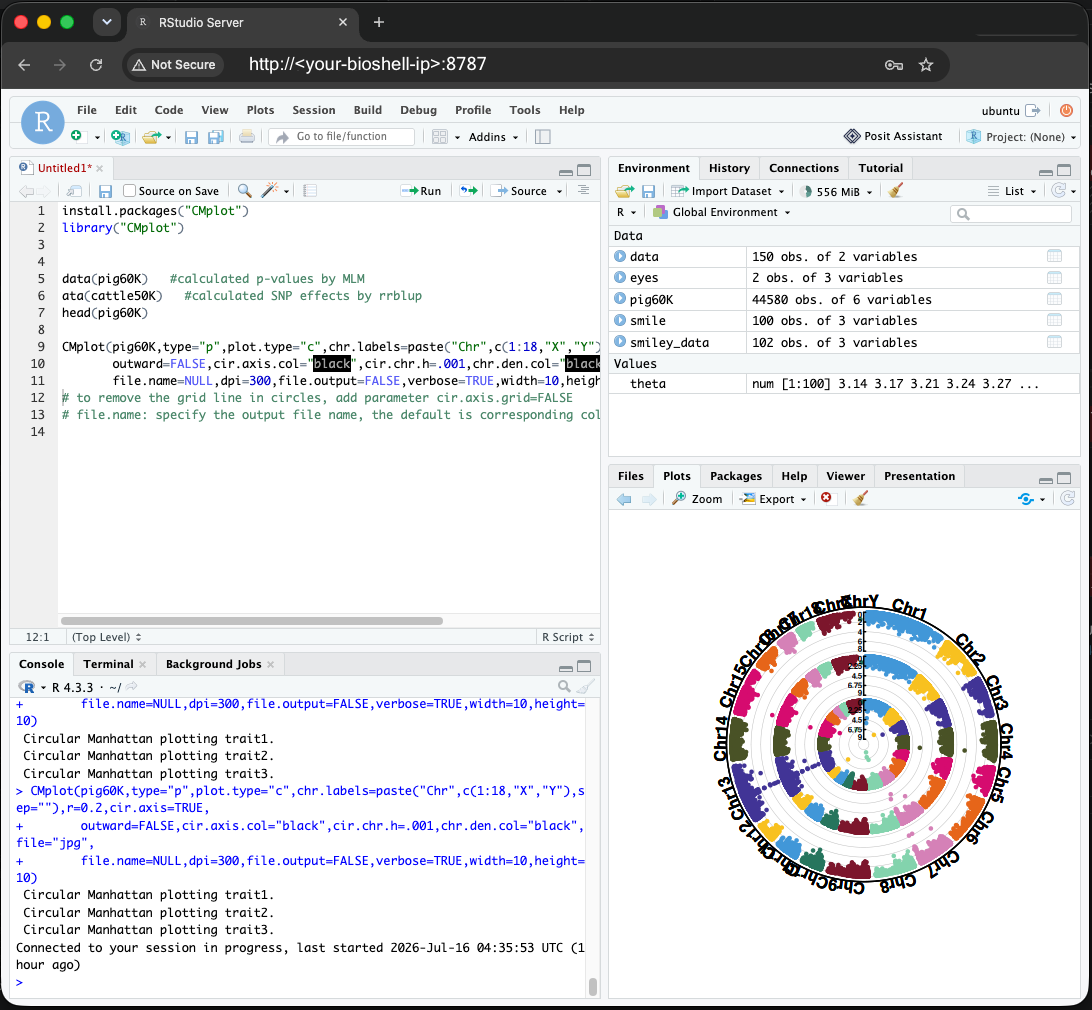
Preview of BioShell’s command line interface, a Jupyter notebook, and RStudio instance.
Scaling bioinformatics and compute access for Australian molecular science research
Seqera has released a new case study featuring Australian BioCommons: Australian BioCommons Standardizes Bioinformatics and Scales Compute Access Nationwide with Seqera.
Seqera has released a new case study featuring Australian BioCommons: Australian BioCommons Standardizes Bioinformatics and Scales Compute Access Nationwide with Seqera. It showcases how BioCommons enables the research community to analyse molecular and biological data at scale through the Australian Nextflow Seqera Service. By leveraging Nextflow and the Seqera Platform, and combining the right bioinformatics expertise and computational infrastructure, the service is driving real-world impact.
“We scaled national access to compute infrastructure. As a result, we now support more than 340 users from more than 40 different Australian organisations.”
— Ziad Al-Bkhetan, Product Manager, Bioinformatics Platforms, Australian BioCommons
The team at Australian BioCommons provides bioinformatics expertise, researcher support, and technical consultations to help researchers effectively utilise bioinformatics software and computational infrastructure for their work. This has standardised bioinformatics analysis nationwide, scaled compute access and capacity beyond institutional limits, and reduced costs by eliminating duplicated infrastructure and set up burdens for individual research groups.
“Seqera Platform has helped us a lot. We've been able to invite our researchers to jump in and see if the platform meets their needs. With the support of the BioCommons, we've had 15 researchers across 7 of our different research groups try it out. It's made launching pipelines easy for researchers who are not familiar with linux systems and command line.
— Julie Iskander, WEHI's Research Computing Platform Engineering team
The success of the Australian Nextflow Seqera Service has earned the team an invitation to present at the upcoming Nextflow Summit. They hope to share the journey of building this nationwide service, highlighting the collaborative effort required to coordinate multiple partners and the transformative impact delivered to researchers. The presentation, “Nextflow Across Australian BioCommons: From Community Training to National Research Infrastructure”, will cover how over the past few years BioCommons has taken a leading role in accelerating Nextflow adoption. Coordinated national activities have spanned live training, reusable training resources, community engagement, and establishing national-scale services for several general-purpose and specialised applications, such as molecular biology and biosecurity. Importantly, it will also describe how these complementary investments have supported the growth of a sustainable national Nextflow ecosystem and the importance of building community capability alongside production research infrastructure.
Explore the Australian Nextflow Seqera Service or read the full case study at Seqera.io.
Australian BioCommons operates the Australian Nextflow Seqera Service in collaboration with Pawsey Supercomputing Research Centre, National Computational Infrastructure (NCI), and Seqera. The Service was established as an output of the Australian BioCommons Bring Your Own Data Expansion Project and is hosted on Amazon Web Services (AWS). These efforts are enabled by NCRIS via funding from Bioplatforms Australia.
Deep learning meets genome annotation: rapid gene prediction tool now available
The deep learning-based genome annotation tool, Tiberius, is now available in Galaxy Australia. After being wrapped and extensively tested, it is freely available for everyone’s use in the Genome Lab.
The deep learning-based genome annotation tool, Tiberius, is now available in Galaxy Australia. After being wrapped and extensively tested, it is freely available for everyone’s use in the Genome Lab.
Tiberius offers gene structure prediction from genomic sequences alone (ab initio). With accuracy that matches tools using extrinsic data, it provides end-to-end prediction of protein-coding genes. Tiberius can be installed and run by individuals, and also parallelised on HPC systems. But now that the wrapper is available in the Galaxy toolshed, it can easily be used by Australian researchers in the Galaxy Australia platform (or installed on any other international Galaxy instance). Tiberius has been trained on organisms in Bacillariophyta, Chlorophyta, Fungi, Insecta, Mammalia, Mesangiospermae, and Vertebrata, and all of those models are available on Galaxy.

During an internship with the Australian Tree of Life Bioinformatics team, University of Queensland PhD candidate, Jane Tung, did much of the initial work to get Tiberius up and running. She benchmarked the performance of three traditional and two machine learning-based eukaryotic genome annotation pipelines using datasets spanning fungi, plants, insects, fish, lizards, amphibians, birds and mammals. Tiberius completed the annotation in a fraction of the time and used fewer resources compared to the traditional pipelines, without a negative effect on quality metrics. Jane will be discussing these findings further in November via the webinar Benchmarking the latest annotation pipelines on Australian reference genomes.
The performance of Tiberius without RNAseq data made this tool the perfect candidate for rapid gene prediction on assemblies produced by the Genome Engine in the Australian BioCommon’s Australian Tree of Life (AToL) project. It has become an essential part of the Genome Engine that will enable rapid, automated assembly, annotation and publication of genomes.
While Tiberius was prioritised for inclusion because it’s an important part of the AToL project, individual researchers can also request the installation of new tools or datasets in Galaxy Australia. For researchers wanting to contribute to the international open source Galaxy community directly, there are supportive guidance videos for DIY tool wrapping. Proactive community members recently took up the challenge, and collaborated with BioCommons to make the first dedicated glycomics tool and workflow available on Galaxy.
Try out Tiberius in the Galaxy Australia Genome Lab
Register for the webinar Benchmarking the latest annotation pipelines on Australian reference genomes
Dr Sarah Beecroft recognised with national award for research enablement
Australian BioCommons is proud to announce that Dr Sarah Beecroft has been awarded the 2026 Early Career eResearch Excellence Prize by AeRO. The prize recognises Sarah’s excellence in research enablement, technical innovation, collaboration, and community leadership.
Australian BioCommons is proud to announce that Dr Sarah Beecroft has been awarded the 2026 Early Career eResearch Excellence Prize by AeRO. The prize recognises Sarah’s excellence in research enablement, technical innovation, collaboration, and community leadership.
After many years of productive collaboration with Sarah, BioCommons now invests directly into Sarah’s role as Lifescience Applications Specialist at the Pawsey Supercomputing Research Centre. BioCommons co-funds this role with Pawsey in recognition that her work to support bioinformatics users through workflow development and optimisation, training, and advocacy is so integral to the success of life science research in Australia.
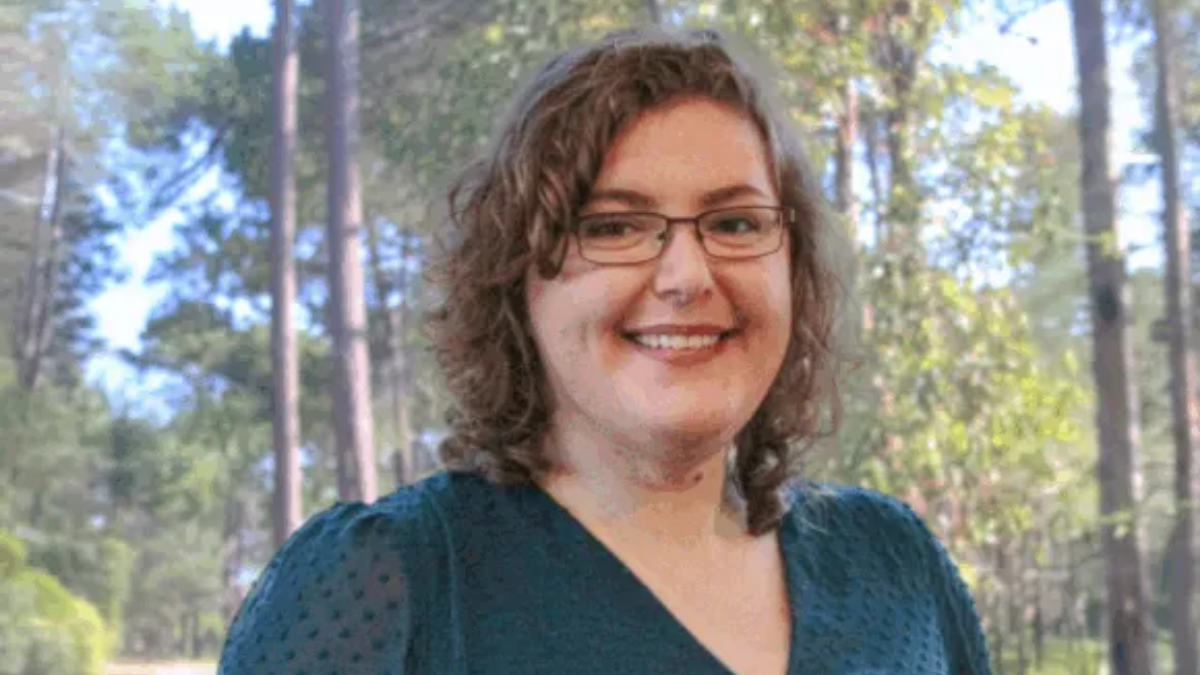
Sarah’s participation has been key to the delivery of many significant research outcomes, including the recent extraordinary addition of 17 million protein predictions to an international open access database by an Australian researcher, made possible by Sarah’s porting of workflows to enable usage of Setonix's AMD GPUs at Pawsey.
It is wonderful to see that Sarah’s outstanding contributions to the eResearch community have been recognised with one of the AeRO awards. Congratulations Sarah, and keep up the good work!
Sarah regularly shares her expertise via BioCommons training events. You can join her Getting started with GPUs for bioinformatics webinar live in September or catch up on the recording of her recent Using Containers in Nextflow session.
Powering discovery: diverse outputs from ABLeS-enabled research
The Australian BioCommons Leadership Share (ABLeS) has been providing access to infrastructure and computational resources for over 5 years, enhancing the capacity of life scientists to readily harness national infrastructure to accelerate their discoveries. The publications generated by 73 projects involving 471 ABLeS users provide a fascinating insight into the diversity of research requiring large-scale computational power for bioinformatics.
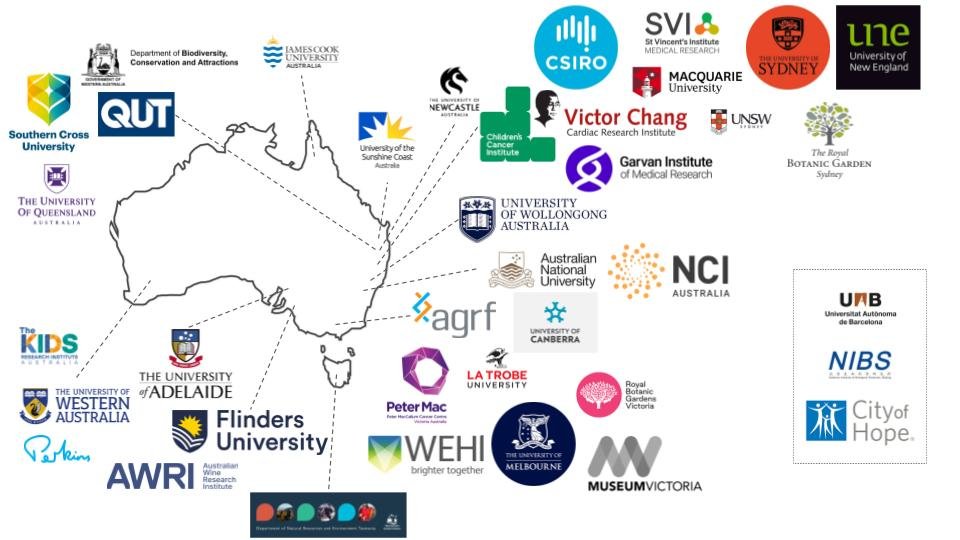
The Australian BioCommons Leadership Share (ABLeS) has been providing access to infrastructure and computational resources for over 5 years, enhancing the capacity of life scientists to readily harness national infrastructure to accelerate their discoveries. Working with Australia’s Tier 1 high-performance computing facilities, Pawsey and NCI, this Australian BioCommons program provides computational resources, specialist expertise, and a shared repository of tools and software, tailored to support life science research communities.
The publications generated by 73 projects involving 471 ABLeS users provide a fascinating insight into the diversity of research requiring large-scale computational power for bioinformatics. Project leads have shared outputs from the first half of the year, offering a snapshot of how ABLeS is supporting research across a diverse range of areas.
As part of the Australian Amphibian and Reptile Genomics initiative (AusARG), Dr Ian Brennan, ANU, leveraged Pawsey compute to document the phylogenomics of native animals:
Prof Benjamin Schwessinger (ANU) from the Plant Pathogen Omics Initiative has used NCI to create outputs that report on stripe rust, the economically significant pathogen of barley and wheat:
Over the years, access to the right national facilities has underpinned the ability of research groups to analyse and process their data. Dr Patricia Agudelo-Romero, and her team The Kids Research Institute, have been utilising their Pawsey resources to great effect, with publications across domains:
Exploring the complexity of the human respiratory virome through an in silico analysis of shotgun metagenomic data retrieved from public repositoriesConservation of gene expression patterns between the amniotic and nasal epithelium at birth
Programming of the respiratory epithelium in utero — insight from the amniotic epithelial methylome
Dr Agudelo-Romero remarked:
“Through ABLeS computing resources, the research I lead at The Kids Research Institute Australia has enabled multi-omics analyses in paediatric respiratory research, including epigenomics, transcriptomics, and metagenomics. This support has facilitated studies ranging from characterising the human respiratory virome to understanding early-life epigenetic programming of the airway, as well as building sustainable bioinformatics capacity through Nextflow and nf-core training.”
Australian BioCommons encourages ABLeS project teams to share publications, software, datasets and other outcomes arising from their allocations so they can be showcased across the community. These examples represent only a small sample of the diverse research communities currently supported through ABLeS. As the BioCommons’ Product Manager, Bioinformatics Platforms, Dr Ziad Al Bkhetan has been thrilled to see the ABLeS service grow:
The publications that are rolling in clearly demonstrate the uplift that happens when ABLeS connects researchers directly to the computational resources they need. Now in its fifth year, ABLeS continues to expand, enabling more projects to take full advantage of the excellent research infrastructure available to Australian researchers.
Learn how ABLeS can support your research
ABLeS is co-funded by Bioplatforms Australia, National Computational Infrastructure and Pawsey Supercomputing Research Centre
Exchanging ideas with European research infrastructures at ELIXIR All Hands
Australian BioCommons join ELIXIR’s All Hands meeting in France this month, an international gathering to share insights and address the challenges of building and sustaining distributed life science data infrastructure.
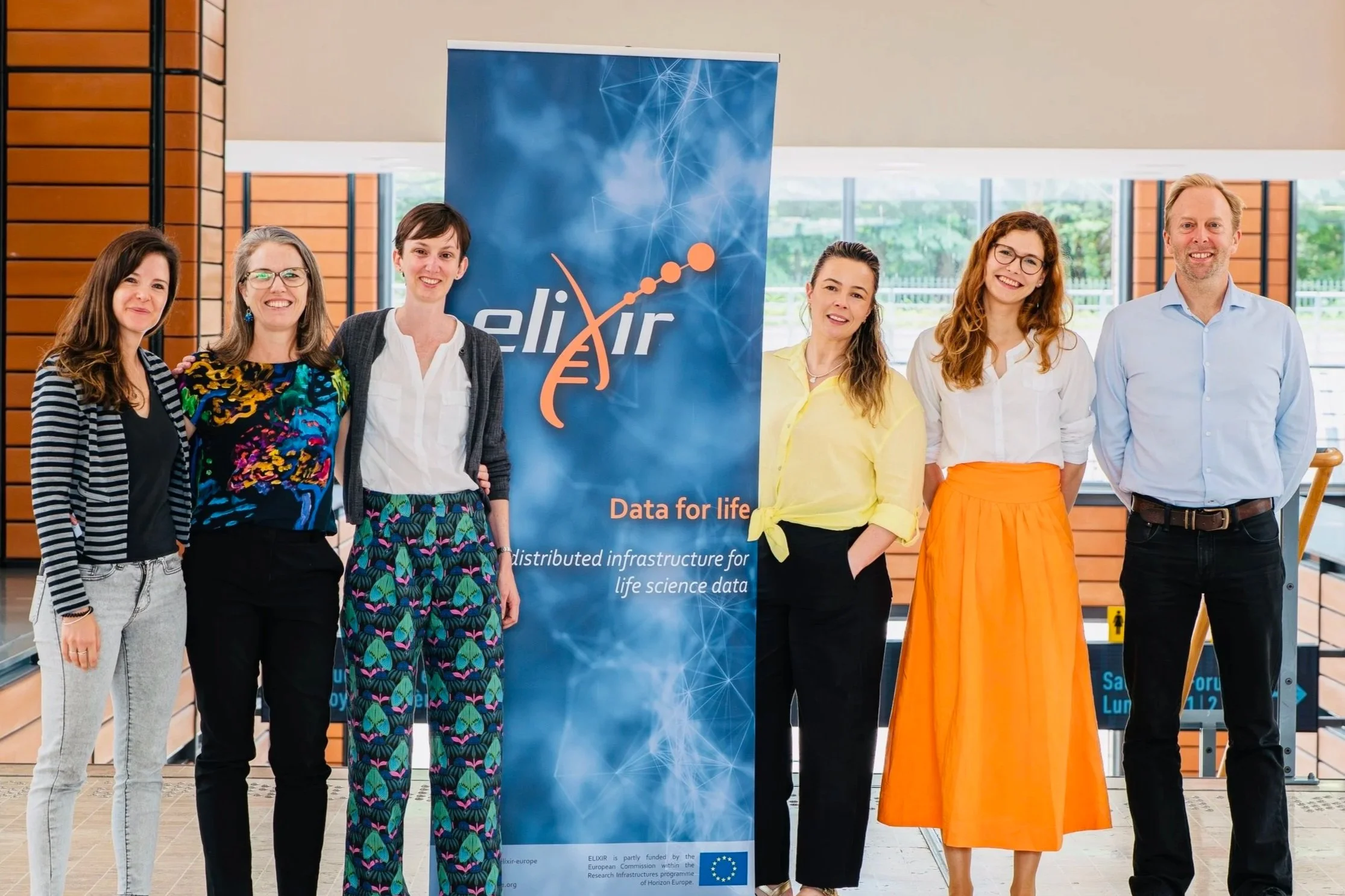
L-R: Jo Wingender, Tiff Nelson, Melissa Burke, Jess Holliday, Flora Foltanyi, Andy Smith
Key members of the Australian BioCommons team travelled to the ELIXIR All Hands meeting in June to share our insights in building and sustaining distributed life science data infrastructure with European peers. Each year, three staff represent Australia’s activities to more than 500 professionals from over 25 countries. Participants share their successes and seek ways to collaboratively address ongoing challenges facing life science research infrastructures.
ELIXIR, as Europe’s life science research infrastructure, has a mission that is closely aligned with that of Australian BioCommons, and we have maintained a collaboration strategy since 2020. With ongoing face to face interactions a key component of the strategy, Australian BioCommons was well represented at the 2026 All Hands meeting with Dr Melissa Burke, Dr Tiff Nelson, and Jess Holliday attending in Lyon, France.
Immersion in the international life science research infrastructure landscape offered insights across the board, from the technical to the policy level. The opportunity to connect with colleagues in person benefits our normal late-night online meetings across different time zones, making global collaboration possible, more fun and ultimately more successful.
Training Manager, Melissa, reflected, “Collaboration and ‘people infrastructure’ was a standout theme of the meeting. Keynote presentations, symposia and workshops showcased how the networks and collaborations established by ELIXIR are driving cross-border tech solutions like AI factories and federated healthcare data, and influencing European Open Science policy. Investing in people infrastructure by developing research infrastructure staff was noted as key to long term sustainability and strength.”
With the GUARDIANS program entrusted with building national-scale capabilities to support biomedical research using sensitive human omics data, Human Genome Informatics Program Manager, Jess, was keen to hear how international peers are tackling aligned challenges. The opportunities to exchange ideas with the experts gathered from many countries did not disappoint, and Jess returned with nuanced insights into complex national collaborations.
Community Engagement Lead, Tiff, led a workshop to collectively examine current practices and identify opportunities for improving engaging user communities for better services: Building and Operating Fit-for-purpose Services and Platforms through Collaborative User Engagement. It was a wonderful opportunity to highlight the importance of scientific community engagement and showcase the widely-respected process that BioCommons undertakes to build valuable services for life scientists. Tiff was excited to see new tools that have been developed for ELIXIR communities and looks forward to sharing what she’s learnt with Australian researchers.